

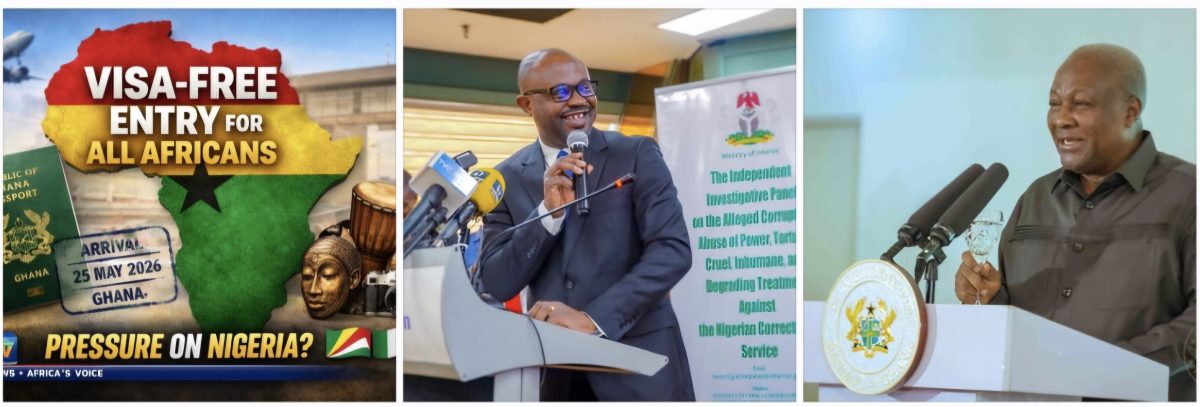
 Ghana has taken a bold continental step by announcing visa-free entry for all Africans, a policy expected to commence under the administration of President John Mahama as part of a broader African integration agenda tied to Africa Day celebrations. The move places Ghana among a small but growing number of African countries opening their borders more freely to fellow Africans, joining Rwanda, Benin, Seychelles and The Gambia, all of which have adopted similar policies to encourage continental movement and economic cooperation.
For Ghana, this decision is more than immigration reform; it is an economic strategy. Easier entry means more Africans can visit for business, conferences, family connections, education, culture and tourism without the delays and costs often associated with visa applications. This immediately improves the attractiveness of Ghana as a destination for short-term travel and continental investment. Hotels, transport operators, restaurants, tour services, local markets and airlines are all likely to benefit as visitor numbers increase, especially through Kotoka International Airport, which remains one of West Africa’s busiest entry points. Ghana also stands to gain stronger conference traffic because many African organisations and private sector bodies increasingly prefer countries with easier travel access when selecting venues for summits and regional meetings.

The policy further strengthens Ghana’s position as host of the African Continental Free Trade Area Secretariat, because easier movement directly supports trade discussions, commercial partnerships and SME participation across borders. Investors often consider travel simplicity before choosing destinations, and Ghana is signalling that it wants to remain at the centre of Africa’s future business architecture. Beyond direct tourism income, the wider gain includes stronger foreign confidence, improved regional image and increased repeat travel by diaspora Africans who may use Ghana as a first point of continental entry.
Countries such as Rwanda have already demonstrated that visa openness can translate into stronger conference economies, aviation growth and international visibility. Rwanda’s hosting of major African and global meetings became easier partly because travel barriers were reduced. Seychelles has similarly used openness to strengthen its tourism brand globally, while Benin benefits from increased regional commercial movement. These examples show that border flexibility, when properly managed, can become an economic tool rather than simply a diplomatic gesture.
For Nigeria, Ghana’s move may intensify policy conversations. Nigeria remains Africa’s largest market by population and one of the continent’s strongest cultural and business magnets, yet many African visitors still face administrative entry difficulties. If Nigeria were to introduce a carefully managed visa-free or simplified African entry framework, it could significantly expand conference hosting, medical tourism, creative industry visits, religious tourism, regional trade and diaspora return traffic into cities such as Lagos, Abuja, Abeokuta, Kano and Calabar. The hospitality industry alone could see major gains, while airlines, local transport and event sectors would also benefit. Hence, the energetic Minister of Interior, Honourable Ojo could revitalise the sector and allow even wider policy direction on visa issues.
 Dr. Olubunmi Tunji-Ojo is recognised for major reforms in immigration, passport processing, and correctional facility welfare. He has prioritized strengthening border security and other reforms such as:
Immigration Reform: Has significantly accelerated passport processing and spearheaded digitisation efforts within the Nigeria Immigration Service (NIS).
Personnel Welfare: He oversaw the promotion of over 32,000 personnel across the Ministry’s agencies and approved the establishment of other progressive policies.
International Agreements: Recently, he clarified a migration agreement with the UK, ensuring the dignified return of Nigerians with no legal right to remain, while addressing border security concerns.
As known for a proactive approach, including unexpected inspections of immigration offices to ensure performance standards one can expects such a positive outcomes on visas.
At political level, Ghana’s decision reinforces a Pan-African message long advocated by continental thinkers including Kwame Nkrumah, that Africa’s future strength depends partly on reducing internal barriers among Africans themselves. The real test now is whether other major African economies, particularly Nigeria, South Africa and Kenya, will respond with similar boldness or remain cautious because of security and migration concerns. For now, Ghana has secured both continental attention and strategic goodwill, and the economic outcome may prove highly rewarding if implementation remains efficient and secure.
—————————————————————————————————————————————
Your help to our media platform will support the delivery of the independent journalism and broadcast the world needs. Support us by making any contribution. Your donation and support allows us to be completely focus, deeply investigative and independent. It also affords us the opportunity to produce more programmes online which is a platform universally utilised.
Thank you.
Please click link to make – DONATION