


ABUJA — The Federal Government and key stakeholders in Nigeria’s peacebuilding sector have begun work on a new National Peace Policy designed to shift the country from reacting to conflicts after they erupt to preventing them through early warning, coordination and timely intervention.
The proposed policy is expected to build on efforts initiated in 2012 and provide a stronger national framework for conflict prevention, resilience and social cohesion.
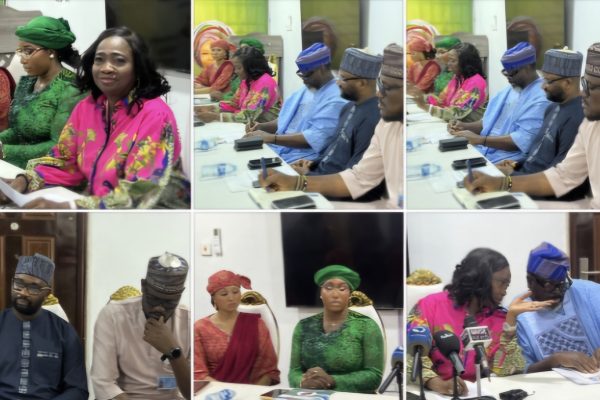
The initiative was launched at a three-day technical workshop in Abuja jointly convened by the Office for Strategic Preparedness and Resilience (OSPRE), the Institute for Peace and Conflict Resolution (IPCR) and Triple Peace Africa.
The workshop, themed “Building an Inclusive National Infrastructure for Peace and Resilience,” brought together representatives of federal ministries, departments and agencies, lawmakers, state peace commissions, subnational institutions, civil society organizations and peacebuilding practitioners.
Director-General of OSPRE, Chris Ngwodo, said the review was necessary to align Nigeria’s peacebuilding architecture with emerging realities and lessons learned since the previous policy process.
He said the new framework would strengthen coordination among institutions involved in preventing and managing conflicts across the country.
The Director-General of IPCR, Dr Joseph Ochogwu, described the proposed policy as the “normative and operational spine” of Nigeria’s peacebuilding architecture.
According to him, the framework would provide a common direction for government institutions and other stakeholders working to promote peace, prevent violence and strengthen national resilience.
Special Adviser to the President on Homeland Security, Major General Adeyinka Famadewa (rtd.), said the policy would institutionalize a more proactive approach to security and peacebuilding.
He said Nigeria needed to move away from waiting for conflicts to escalate before responding, towards anticipating risks and addressing them before they develop into crises.
Participants at the workshop called for a whole-of-government and whole-of-society approach, with stronger links between federal and state institutions, local governments, peace commissions, civil society organizations and community actors.
Chairman of the House Committee on Peacebuilding and Social Cohesion, Sadiq Abbas Tafida, pledged the commitment of the House of Representatives to supporting the policy and providing the necessary funding for its implementation.
He stressed the importance of ensuring that the proposed framework moves beyond policy documents to practical interventions capable of addressing the root causes of conflict.
Closing the workshop, Director-General of the National Orientation Agency (NOA), Lanre Issa-Onilu, urged stakeholders to place national values, civic responsibility and social cohesion at the center of the new policy.
He said the framework should serve not only as a government instrument but also as a platform for mobilizing citizens towards peaceful coexistence and national unity.
Participants subsequently signed a communiqué committing their institutions to stronger coordination and collaboration in the development and implementation of the policy.
Further consultations are expected to take place across the country before the National Peace Policy is finalized.
The proposed framework is expected to strengthen Nigeria’s capacity to identify emerging threats, address underlying drivers of conflict and deploy early interventions before disputes escalate into violence.
—————————————————————————————————————————————
Your help to our media platform will support the delivery of the independent journalism and broadcast the world needs. Support us by making any contribution. Your donation and support allows us to be completely focus, deeply investigative and independent. It also affords us the opportunity to produce more programmes online which is a platform universally utilised.
Thank you.
Please click link to make – DONATION