

By reflecting on the recent message of the Catholic Bishops to President Bola Ahmed Tinubu, Ambassador M. J. Abubakar-Waziri offers more than a commentary on a national event. He presents a timeless reflection on leadership, moral responsibility and the indispensable role of courageous voices in safeguarding democracy. His central argument is clear: moments of national difficulty require honest counsel, not comfortable silence.
Rather than viewing the Catholic Bishops’ intervention through a religious or political lens, Ambassador Waziri invites readers to recognise it as an expression of moral leadership rooted in humanity, patriotism and the enduring responsibility to place the welfare of citizens above all other considerations. Throughout history, he reminds us, nations have depended on principled individuals and institutions willing to speak truth to those in authority, ensuring that power remains accountable to the people it is meant to serve.
His message extends far beyond the Church. Ambassador Waziri argues that every pillar of society—including traditional institutions, Islamic and Christian leaders, professional associations, labour movements, civil society organisations, student bodies, cultural groups and respected elder statesmen—shares a collective duty to offer sincere guidance whenever the national interest is at stake. At defining moments in a country’s journey, he contends, neutrality ceases to be wisdom and instead becomes an abdication of responsibility.
Against the backdrop of Nigeria’s economic hardship, insecurity, rising cost of living and growing uncertainty facing millions of citizens, the Ambassador underscores that suffering recognises no ethnic, religious or regional boundaries. It touches every community, making national unity, compassionate leadership and constructive engagement more essential than ever. In such circumstances, silence from those entrusted with influence and moral authority risks becoming complicity.
Yet Ambassador Waziri’s reflection is not one of despair but of hope. He maintains that constructive criticism, offered respectfully and in good faith, is not an attack on government but one of the highest expressions of patriotism. Governments, he argues, become stronger when they listen to honest advice rather than surround themselves with comforting applause. Speaking truth to power is therefore neither rebellion nor opposition; it is an affirmation of loyalty to the nation and a commitment to its long-term stability.
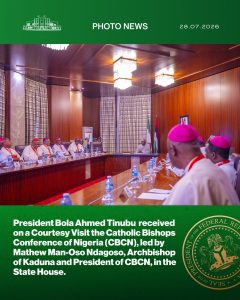
Bishops with President
His message resonates well beyond Nigeria. Across the world, history consistently demonstrates that the strength of democratic societies depends not only on elected leaders but also on citizens, faith leaders, academics, journalists, business leaders and community voices prepared to defend truth, justice and accountability. Great nations are sustained when institutions retain the courage to question, advise and guide those who govern.
Ambassador Waziri concludes with a profound reminder that history judges not only the actions of governments but also the choices of those who witness events unfold. Nations are weakened as much by the silence of principled people as by the errors of those in power. His closing reflection captures the essence of responsible leadership: while authority may come from office, legitimacy is earned through truth, integrity and service. It is this courage to speak with sincerity, especially during difficult times, that ultimately strengthens democracy, preserves national unity and secures the promise of a better future for generations to come.
When Silence Becomes Complicity: A Call for Nigeria’s Leaders to Speak Truth to Power
The Ambassador’s Desk
By Ambassador M. J. Abubakar-Waziri
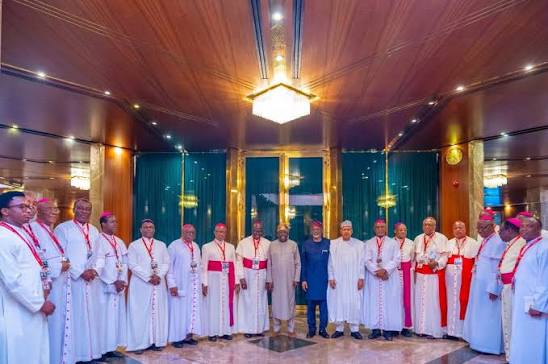
The recent message of the Catholic Bishops to President Bola Ahmed Tinubu should not be viewed through the narrow prism of religion. It was neither a denominational declaration nor an attempt to score political points. It was, fundamentally, a moral intervention rooted in humanity, patriotism and the sacred obligation of leadership.
Throughout history, societies have relied on men and women of conscience to remind those in authority that power exists to serve the people, not the other way round. The Catholic Bishops merely discharged that timeless responsibility. Whether one agrees with every word they spoke is secondary. What cannot be denied is their courage in giving voice to the anguish of millions of Nigerians.
Their intervention should not end with the Church.
It ought to serve as a wake-up call to every responsible institution and every conscientious leader across our nation. Traditional rulers, Islamic scholars, leaders of Christian denominations, cultural organisations, professional associations, labour unions, student bodies, civil society organisations and elder statesmen all have a duty that transcends protocol and personal comfort. At defining moments in a nation’s history, neutrality is not wisdom; it is abdication.
Nigeria is passing through one of the most difficult periods in its contemporary history. Poverty has become widespread. Hunger has ceased to distinguish between ethnicity, religion or social status. The cost of living continues to rise while hope steadily diminishes. Insecurity persists in many parts of the country. Millions of young Nigerians face an uncertain future, while many families struggle daily to meet even the most basic needs.
 These realities do not discriminate. They affect Muslims and Christians alike. They afflict the North and the South. They spare neither the rich nor the poor entirely, though they weigh most heavily on the vulnerable. Suffering has become an equal-opportunity burden.
At such a time, silence from those entrusted with moral and societal leadership becomes increasingly difficult to justify.
Leadership is not merely about occupying prestigious positions or receiving public honours. It is about accepting the responsibility to defend truth, justice and the welfare of the people, especially when doing so is uncomfortable. Respect for government should never require the abandonment of honesty. Patriotism should never demand the suppression of truth.
Indeed, one of the greatest services any leader can render to a government is to tell it what it needs to hear, not merely what it wishes to hear. Constructive criticism offered in good faith is not an act of hostility; it is an act of patriotism. Governments become stronger, not weaker, when they listen to sincere voices of concern.
Speaking truth to power is not an act of rebellion. It is an act of responsibility. It is not a declaration of war against government; it is a declaration of loyalty to the nation and to its people.
Nigeria belongs to all of us. Its pains must concern all of us. Its future depends on the courage of all of us.
The time to act is now.
It is always better to be proactive than reactive. Problems ignored today become crises tomorrow. A nation that continually suppresses honest counsel risks reaching a point where avoidable tensions become irreversible tragedies. By then, expressions of regret will be too little and too late.
Nations are not destroyed merely by the mistakes of those who govern. They are also diminished by the silence of those who know better. May Nigeria never lack men and women with the courage to speak truth to power—for therein lies the hope of our democracy and the promise of our future.
History will not remember those who remained comfortably silent. It will remember those who had the courage to speak when their nation needed them most.
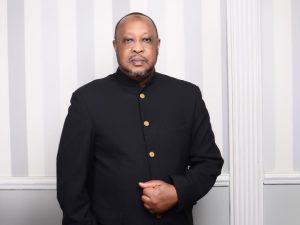
Ambassador’s Reflection
Power commands authority, but truth commands legitimacy. When those entrusted with the moral conscience of a nation speak with courage and sincerity, they do not weaken the state—they strengthen its foundations. The silence of good people has never built a great nation; their courage has.
—————————————————————————————————————————————
Your help to our media platform will support the delivery of the independent journalism and broadcast the world needs. Support us by making any contribution. Your donation and support allows us to be completely focus, deeply investigative and independent. It also affords us the opportunity to produce more programmes online which is a platform universally utilised.
Thank you.
Please click link to make – DONATION