

The Universal Basic Education Commission (UBEC) has constructed more than 4,600 classrooms and renovated over 6,100 classrooms across Nigeria as part of ongoing efforts to improve access to quality basic education.
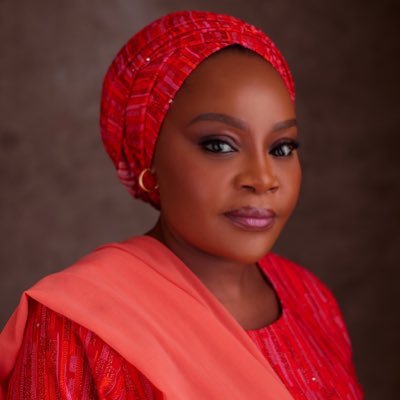
The Executive Secretary of UBEC, Hajiya Aisha Garba, disclosed this on Thursday during a Media Luncheon with Education Correspondents in Abuja, where she highlighted the Commission’s achievements under its 2025–2031 Strategic Blueprint, which aligns with the Federal Government’s Renewed Hope Agenda.
Garba said the classroom projects were made possible through UBEC’s successful mobilisation of over ₦100 billion in previously unaccessed matching grants by states and the Federal Capital Territory (FCT), noting that the funds are now being invested in critical educational infrastructure nationwide.
According to her, UBEC, in partnership with State Universal Basic Education Boards (SUBEBs), has also provided 2,780 toilets, 678 boreholes and more than 334,000 pieces of school furniture, creating safer and more conducive learning environments for pupils.
She added that the Commission has established over 2,300 Early Childhood Care Development and Education (ECCDE) Centres, aimed at strengthening foundational learning for young children.
The UBEC boss said teacher quality remains central to the Commission’s reforms, revealing that more than ₦20.4 billion has been invested in teacher professional development to improve classroom instruction, school leadership and accountability through the Effective Schools Programme and strengthened School-Based Management Committees.
Garba also outlined UBEC’s efforts to prepare learners for the digital age through the expansion of Digital Literacy Centres, Smart Schools and the integration of Artificial Intelligence, coding and robotics into basic education.
She disclosed that the Commission has distributed over 7.8 million instructional materials to schools across the country to enhance literacy, numeracy and foundational learning.
Beyond infrastructure and technology, Garba said UBEC is expanding access to education through Open Schooling, Integrated Qur’anic and Tsangaya Education, girl-child education and inclusive education programmes to ensure that every Nigerian child has access to quality learning opportunities.
She noted that the Commission has also introduced institutional reforms to improve transparency, strengthen project monitoring and promote data-driven decision-making, ensuring that public investments deliver greater value.
Describing the media as a vital partner in the transformation of Nigeria’s education sector, Garba urged education correspondents to continue supporting the Commission through balanced, factual and constructive reporting.
She reaffirmed UBEC’s commitment to building a resilient, inclusive and future-ready basic education system that guarantees every Nigerian child, regardless of background or location, access to safe, equitable and quality education.
—————————————————————————————————————————————
Your help to our media platform will support the delivery of the independent journalism and broadcast the world needs. Support us by making any contribution. Your donation and support allows us to be completely focus, deeply investigative and independent. It also affords us the opportunity to produce more programmes online which is a platform universally utilised.
Thank you.
Please click link to make – DONATION