

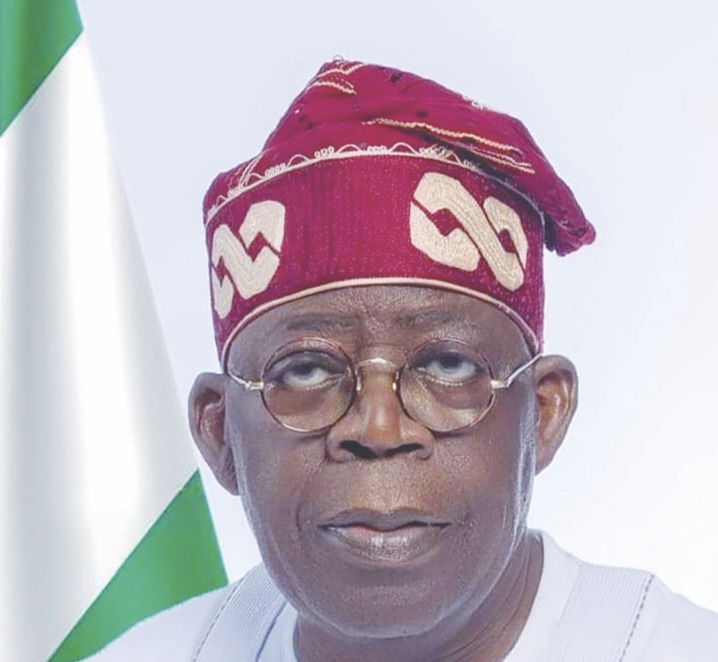
In one of the boldest economic decisions in Nigeria’s recent history, President Bola Tinubu, upon assuming office, removed the fuel subsidy regime that had for years placed enormous pressure on government finances.
The decision came with immediate pain for millions of Nigerians. Fuel prices rose, transportation costs increased and household budgets came under severe pressure.
But three years into the reform, the central question is no longer simply whether subsidy removal was painful. It is whether the resources freed by the reform are being redirected towards investments capable of improving the lives of Nigerians.
The Federal Government says the answer is increasingly evident in investments in education, healthcare, infrastructure and other critical sectors.
For years, my position has remained clear: take the burden of education and healthcare off ordinary Nigerians, and you will have addressed a significant part of the poverty challenge.
For many Nigerian parents, the greatest sources of anxiety are not abstract economic statistics. They are school fees, hospital bills and the uncertainty of what tomorrow holds for their children.
This is why the governance philosophy of the late Chief Obafemi Awolowo remains relevant to the Nigerian development conversation.
Awolowo’s Four-Cardinal Programme
Awolowo’s development model was anchored on four cardinal programmes: free education, free healthcare, gainful employment, and rural-urban integration.
As Premier of the Western Region in the 1950s, Awolowo pursued an ambitious programme of mass education and healthcare while investing in roads, industries, markets, housing and agricultural development.
His administration also established farm settlements and other institutions designed to stimulate economic activity outside the major urban centres.
The philosophy was straightforward: government must create the conditions for ordinary people to live productive and dignified lives.
The model was subsequently sustained by the governors of the Unity Party of Nigeria in the Second Republic, but the momentum was largely lost after 1983.
Today, the argument can be made that the Tinubu administration is attempting to revive elements of that philosophy—this time within the realities of a modern Nigerian economy.
Education and Healthcare: Putting the People First
One of the most significant areas of focus is tertiary education.
Through the Nigerian Education Loan Fund, NELFUND, the government has created a financing mechanism designed to reduce the burden of tuition and other education-related costs on students and their families.
About 1.5 million Nigerian students are reportedly benefiting from the scheme.
The principle is important: a child should not have to abandon higher education simply because his or her parents cannot immediately afford the cost.
This is what I describe as Easy Education—a system where access to education is increasingly determined by ability and aspiration rather than the size of a parent’s bank account.
Healthcare requires the same urgency.
The Federal Government has been investing in the revitalisation of primary healthcare facilities, strengthening medicine supply chains and expanding health insurance coverage.
But federal intervention alone cannot deliver the healthcare system Nigerians deserve.
The real test will be whether states and local governments match these efforts with sustained investment.
The Responsibility of States and Local Governments
The increased revenues available to sub-national governments following the removal of fuel subsidy must translate into visible improvements in the lives of citizens.
States should take greater responsibility for delivering quality and affordable secondary education, while ensuring access to functional primary and secondary healthcare.
Local governments, in turn, must make primary education and basic healthcare available in communities across their wards.
This is not an impossible ambition.
Awolowo demonstrated what a sub-national government could achieve with political will. The UPN governments subsequently built on that foundation.
Today, with significantly increased allocations from the centre, state and local governments must justify those resources through investments that citizens can see and feel.
The classroom and the hospital should become the first places where Nigerians experience the benefits of government revenue.
Employment and Rural-Urban Integration
The other two pillars of the Awolowo model—gainful employment and rural-urban integration—are equally important.
Across the country, infrastructure remains a major determinant of economic opportunity.
Roads, water systems, schools, healthcare facilities and other infrastructure can connect communities to markets and create opportunities for farmers, traders, artisans and entrepreneurs.
In the Federal Capital Territory, the administration of FCT Minister Nyesom Wike has placed significant emphasis on extending infrastructure beyond Abuja’s urban core to satellite towns and rural communities.
At the federal level, major road projects, including the Lagos-Calabar Coastal Highway and the proposed Lagos-Maiduguri corridor, are intended to improve connectivity, facilitate movement of agricultural produce and strengthen links between communities and markets.
If properly executed and sustained, such infrastructure can do more than reduce travel time. It can stimulate investment, expand markets and create employment.
That is the essence of gainful employment and rural-urban integration.
The Purpose of the Pain
The fundamental argument behind subsidy removal was that Nigeria could no longer continue spending enormous public resources on subsidising consumption while struggling to finance essential public services and productive investment.
The reform has undoubtedly imposed hardship on households and businesses. That reality cannot be ignored.
But if the resources released by the reform are effectively converted into human capital and productive infrastructure, the long-term objective becomes clearer.
The pain was at the pump. The gain must be in the classroom, the clinic, the factory, the farm and on the highway.
That is the real test of subsidy reform.
Awolowo provided a development philosophy built around human capital, healthcare, employment and infrastructure. The Tinubu administration is attempting to adapt some of those principles to contemporary Nigeria.
But the Federal Government cannot do it alone.
States and local governments must play their part.
If increased public revenues are translated into better schools, functional hospitals, productive infrastructure and more opportunities for citizens, then subsidy reform would mean more than a change in the price of petrol.
It would represent a shift from consumption to investment.
That is the promise of Awolowo 2.0—a Nigeria where government revenue is converted into opportunities, where education and healthcare are not privileges of the wealthy, and where development reaches beyond the major cities.
That is how the pain of reform can ultimately produce public gains.
And that is how Nigeria can move closer to the true federalism and inclusive development its citizens have long demanded.
—————————————————————————————————————————————
Your help to our media platform will support the delivery of the independent journalism and broadcast the world needs. Support us by making any contribution. Your donation and support allows us to be completely focus, deeply investigative and independent. It also affords us the opportunity to produce more programmes online which is a platform universally utilised.
Thank you.
Please click link to make – DONATION