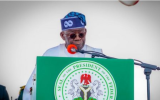



President Bola Tinubu has approved a new investment framework aimed at unlocking up to $50 billion in deep offshore oil and gas investment and reviving major capital-intensive projects that have remained stalled for years.
According to a statement issued by presidential spokesperson Bayo Onanuga, the reform replaces project-by-project negotiations with a transparent, rules-based framework designed to provide greater certainty for investors and strengthen Nigeria’s competitiveness for global capital.
The framework is expected to support the next generation of deep offshore developments, beginning with the approximately $10 billion Bonga South West project.
The decision followed Tinubu’s engagement with Shell Chief Executive Officer, Wael Sawan, during which the President directed the development of measures to unlock the country’s deep offshore investment pipeline.
Rather than pursuing individual solutions for specific projects, the Federal Government converted the directive into a comprehensive framework applicable to qualifying developments across the sector.
The reform is given effect through the Deep Offshore Oil and Gas Projects Incentives (Tax Remission) Order, 2026, which establishes clear eligibility criteria, implementation processes and fiscal incentives for investors.
The approval also authorises NNPC Limited, as the government’s nominated counterparty under Production Sharing Contracts, to make the necessary amendments to eligible contracts to implement the framework.
Tinubu said countries that attract long-term investment are those that provide certainty, stressing that the reform was designed to create an investment environment based on clear rules, strong institutions and enduring partnerships.
“We are creating the conditions for capital to flow, for Nigerian businesses to grow, for our people to prosper and for our natural resources to deliver lasting national value,” he said.
Special Adviser to the President on Oil and Gas, Olu Arowolo-Verheijen, said the framework also places strong emphasis on developing Nigerian industrial capacity.
She said qualifying projects would be expected to maximise execution in Nigeria where commercially and technically feasible, thereby strengthening domestic engineering, fabrication, marine logistics, technical services and project management.
According to her, the objective is not only to increase investment and production but also to create skilled jobs, deepen local supply chains and position Nigeria as a regional hub for deep offshore project execution.
A review of the Deep Offshore Oil and Gas Projects Incentives (Tax Remission) Order, 2026, showed that the new fiscal regime provides production tax credits of up to $11.50 per barrel for qualifying oil projects.
The Order, signed on August 6 and published in the Federal Government Official Gazette on August 10, provides incentives for existing deep offshore leases where Final Investment Decisions are taken between the effective date and December 31, 2029, as well as qualifying future leases.
For oil projects with producible reserves of up to 400 million barrels of crude oil equivalent, the Standard Production Tax Credit is $3 per barrel or 20 per cent of the fiscal oil price, whichever is lower, up to cumulative production of 150 million barrels.
For projects with reserves exceeding 400 million barrels, the credit rises to $4.50 per barrel or 20 per cent of the fiscal oil price, whichever is lower, up to cumulative production of 500 million barrels.
Future leases may also qualify for an additional $1 per barrel Standard Production Tax Credit from commencement of production up to the applicable cumulative production threshold.
However, where the fiscal oil price falls below $50 per barrel in a particular month, the applicable tax credit for that month will be reduced by 50 per cent.
The government has also introduced a Supplementary Production Tax Credit that could raise the total incentive to as much as $11.50 per barrel for qualifying oil projects and $8 per barrel of oil equivalent for non-associated gas projects.
The Nigeria Revenue Service will determine the supplementary credit on a case-by-case basis, taking into account the economic profile of each qualifying project.
For gas projects, the Standard Production Tax Credit is set at $1 per thousand standard cubic feet of gas sold or 30 per cent of the fiscal gas price, whichever is lower, for projects with hydrocarbon liquids content of not more than 30 barrels per million standard cubic feet.
The incentive falls to $0.50 per thousand standard cubic feet where the liquids content is above 30 barrels but does not exceed 100 barrels per million standard cubic feet, and does not apply where the content exceeds 100 barrels per million standard cubic feet.
The Order also introduces a “Profit Oil Reset” for eligible deep offshore developments.
Under the provision, qualifying new developments can have their profit-oil sliding scale reset, with the contractor and government starting at a 70:30 profit-oil ratio.
The provision allows an eligible new development in a mature contract area to be treated separately for profit-oil sharing, cost recovery and tax purposes.
However, the Profit Oil Reset applies only to qualifying greenfield projects for which no Final Investment Decision had been taken when the Order commenced, provided the FID is taken on or before December 31, 2029.
The government has also established a profit-gas sharing formula for existing non-associated gas deep offshore Production Sharing Contracts, with the government’s minimum allocation rising progressively from 20 per cent for production up to one trillion cubic feet to 60 per cent for production exceeding seven trillion cubic feet.
The framework further attaches local-content requirements to the supplementary incentives and Profit Oil Reset.
Activities relating to qualifying project developments are expected to be performed in Nigeria, except for critical-path activities, such as long-lead items, or activities that would cost more than 10 per cent to execute domestically.
Where activities are carried out outside Nigeria under the permitted exceptions, they must comply with a Nigerian Content Plan approved by the Nigerian Content Development and Monitoring Board.
Companies applying for supplementary incentives must also submit a full open-book economic model containing relevant cost, price, production and fiscal assumptions.
The Nigeria Revenue Service is required to consider complete applications within 45 days in consultation with the Federal Ministry of Finance and other relevant institutions.
The Order also stipulates that the tax credits are non-refundable, non-transferable and cannot be converted to cash or used to offset another person’s tax, levy, royalty, penalty or other liability.
The Federal Government said the reform is intended to provide the certainty required to attract long-term capital, revive major offshore projects, increase oil and gas production, strengthen local capacity and deliver greater long-term value from Nigeria’s petroleum resources.
—————————————————————————————————————————————
Your help to our media platform will support the delivery of the independent journalism and broadcast the world needs. Support us by making any contribution. Your donation and support allows us to be completely focus, deeply investigative and independent. It also affords us the opportunity to produce more programmes online which is a platform universally utilised.
Thank you.
Please click link to make – DONATION