

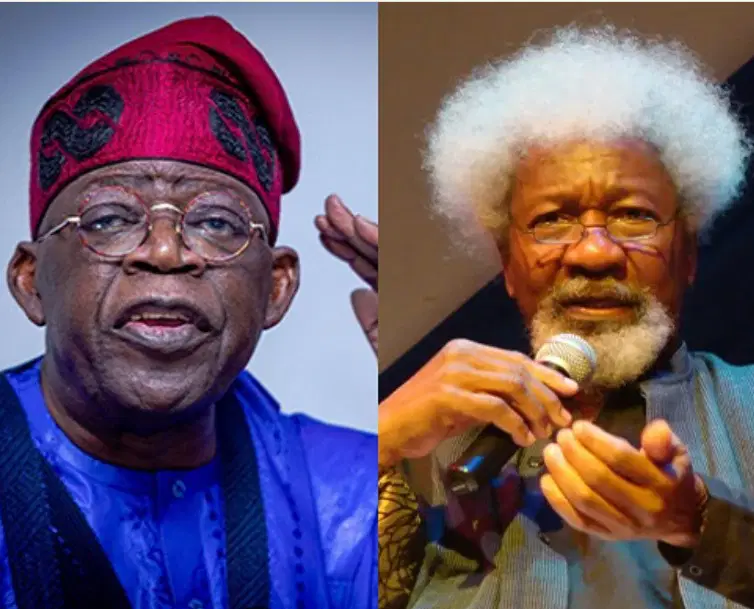
Nobel Laureate Wole Soyinka has called on President Bola Tinubu to end extrajudicial killings and other forms of violence perpetrated by state actors, warning that the silence of citizens has emboldened perpetrators and deepened Nigeria’s human rights crisis.
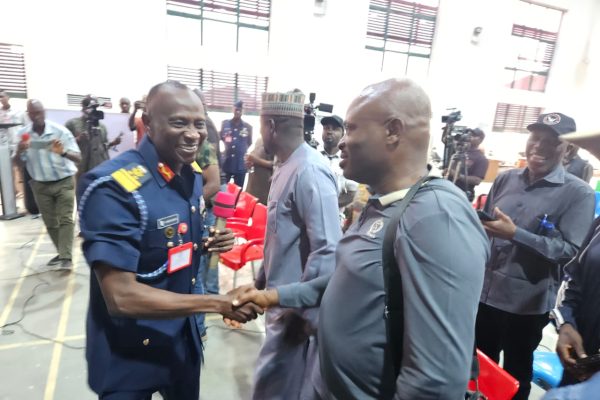
Speaking at the 28th Wole Soyinka Lecture in Port Harcourt, themed “Reclaiming the Nigerian State through Accountability, Justice and Civic Courage,” Soyinka dedicated the 2026 edition to victims of extrajudicial killings and state abuses, describing the continued devaluation of human life as one of Nigeria’s gravest failures.
He argued that beyond the killings themselves, the nation’s collective silence has enabled injustice and allowed perpetrators to evade accountability.
“Today is dedicated to the 18 Ughelli residents butchered by state agencies for no reason at all, simply for minding their own business; to the young man shot dead in broad daylight by a policeman while under suspicion; and to Deborah, the youth hunted through the city by her own classmates, necklaced and set ablaze,” Soyinka said.
“The crime is the silence of the rest of us—that such a thing is possible and that the killers of that girl can actually go on television, hold up a match and say, ‘This is the match with which I set her on fire.’ And there the system of justice fails us completely.”
Soyinka dismissed accusations that he fuels religious tension whenever he speaks against such abuses, insisting that discussions like the Port Harcourt lecture are necessary to remind Nigerians that the sanctity of human life must remain the foundation of any society.
He urged citizens to closely monitor the case of a policeman accused of fatally shooting a young man in southern Nigeria and to ensure the justice system delivers accountability.
Delivering the keynote address, former Minister of Aviation Osita Chidoka argued that justice begins long before a case reaches the courtroom.
According to him, justice starts when police officers decide whether complaints are investigated based on merit rather than external influences.
Highlighting challenges within Nigeria’s criminal justice system, Chidoka said about 64 per cent of inmates in custodial centres—more than 50,000 people—are awaiting trial despite not being convicted of any offence.
“Each of these 50,000 is a life in suspension, a job lost, a family destabilised, someone’s health failing. When the state causes that delay and citizens pay for it in lost liberty, the delay is not inefficiency; it is a form of violence carried out by the state itself,” he said.
He maintained that justice must apply equally to every citizen, regardless of identity or political affiliation, stressing that prosecutions should be evidence-driven and that detainees must have unhindered access to legal representation.
“A citizen who defeats government in court must not face a second battle to compel obedience. Justice is also tested by how society treats those it dislikes. The law is not established when it protects only our friends. Justice must defend the accused, the unpopular, the political opponent and the minority because citizenship does not depend on agreement. Where justice is negotiable, citizenship becomes hierarchical,” he added.
Earlier, chairman of the occasion and former Managing Director of the Niger Delta Development Commission, Timi Alaibe, urged participants not to treat the annual lecture as a ceremonial event but as an opportunity for honest reflection and national renewal.
Drawing from his years in public service, Alaibe said sustainable development cannot thrive where accountability is absent.
“Nations are not reclaimed by rhetoric alone; they are reclaimed when conscience triumphs over confidence, when institutions are stronger than individuals, and when citizens summon the courage to do what is right, even when it is difficult,” he said.
—————————————————————————————————————————————
Your help to our media platform will support the delivery of the independent journalism and broadcast the world needs. Support us by making any contribution. Your donation and support allows us to be completely focus, deeply investigative and independent. It also affords us the opportunity to produce more programmes online which is a platform universally utilised.
Thank you.
Please click link to make – DONATION