

By Festus Fifen
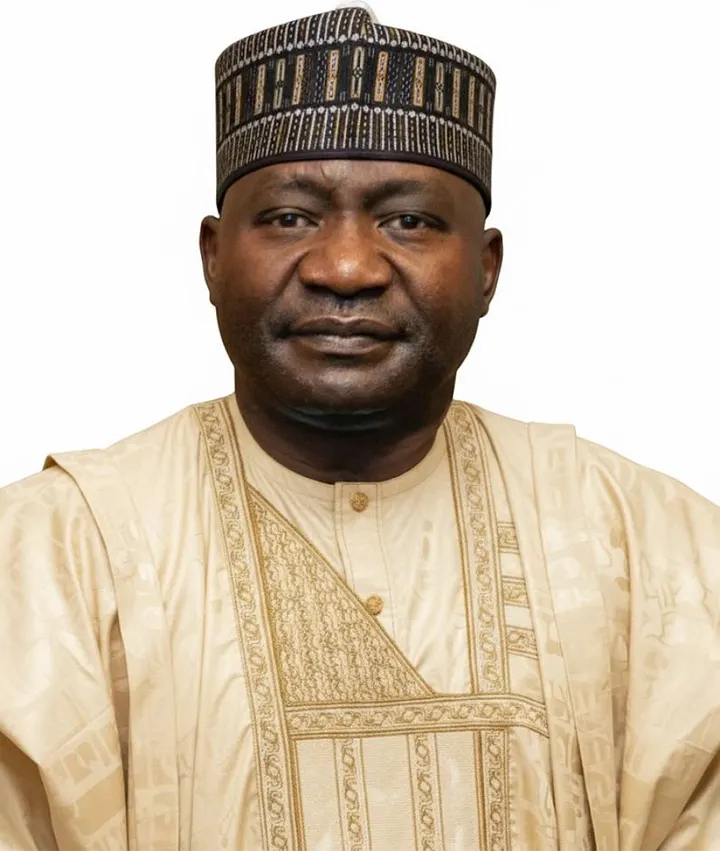
The Nigeria Minister of Defence, General Christopher Gwabin Musa (retd), has said Nigeria’s security challenges can no longer be addressed by military strength alone, stressing that the country’s response must combine effective combat operations with timely intelligence, modern technology, sound planning and closer cooperation among security institutions.
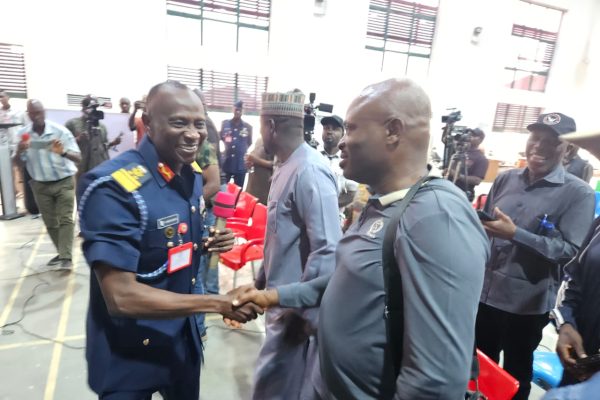
Speaking at the third Edition of the Defence Correspondents Association of Nigeria (DECAN) Conference on National Security and Awards Ceremony in Abuja on Monday, the minister said official responsibilities prevented him from attending in person.
The conference, themed “Beyond Kinetic Warfare: Harnessing Technology and Intelligence-Led Operations for Nigeria’s National Security.” The minister said things have changed greatly globally.
General Musa represented his Special Adviser on Foreign Relations, Air Commodore Steven Ogunmodede (Rtd), said the theme speaks to an operational reality confronting the Armed Forces and other security agencies. Public understanding of security, he noted, has long been shaped by visible action such as troop deployments, engagements, recovered territory and arrests, but these do not tell the whole story.
He said today’s threats are increasingly complex, adaptive and interconnected, with terrorist groups, criminal networks and other adversaries exploiting information, technology, financial systems and gaps in coordination.
In his words “Our response must combine effective combat operations with timely intelligence, technological capability, sound planning and cooperation among relevant security institutions,” he said in essence.
The minister described intelligence-led operations as the ability to identify a threat early, understand its networks, anticipate its intentions and act with precision, which he said can mean the difference between preventing an attack and responding after lives are lost.
While technology can strengthen surveillance, reconnaissance, communications and analysis, he cautioned that it must be backed by trained personnel, reliable systems, effective doctrine and sound judgement. Technology, he said, is a force multiplier that cannot replace human discipline and professional competence.
He said the Ministry of Defence and the Armed Forces continue to pursue approaches that improve situational awareness, intelligence coordination and operational effectiveness, and must keep learning, adapting and innovating so that technology investments translate into real gains in protecting lives and defending territorial integrity. He added that no single institution holds all the information or capabilities needed to meet today’s challenges, making cooperation across the security architecture essential.
Turning to the press, the minister said the public’s right to information and the operational needs of security agencies should not be seen as inherently incompatible. Responsible journalism, he said, strengthens public understanding, promotes accountability and sustains confidence in institutions.
He noted that intelligence-led operations are often invisible. An operation that prevents an attack may produce no dramatic images, and some successes may never become public because the information must be protected. The absence of a visible engagement, he said, should not be read as an absence of action.
At the same time, he acknowledged that security institutions must communicate accurately, promptly and responsibly, as far as operational considerations permit, to build public confidence.
General Musa described scrutiny of the Armed Forces as legitimate and necessary, but urged correspondents to exercise care with unverified reports and sensitive operational details whose premature disclosure could expose personnel, compromise operations or endanger civilians.
“My expectation is not that the media should abandon legitimate scrutiny,” he said, but that the pursuit of information be balanced with an appreciation of its consequences in a security environment.
The minister congratulated the award recipients, saying their recognition reflects the dedication, courage and professional standards required to report on defence and national security. He urged them to uphold accuracy, fairness, independence and responsibility.
“Nigeria’s security challenges require more than military strength alone,” he said, calling instead for the intelligent application of that strength, effective use of technology, stronger institutional cooperation and the confidence of citizens. He added that these must be matched by a media profession that understands the significance of national security while remaining faithful to its duty to inform the public.
He thanked DECAN for the honour, said he welcomed stronger engagement between the Ministry of Defence and the association, and wished participants fruitful deliberations.
—————————————————————————————————————————————
Your help to our media platform will support the delivery of the independent journalism and broadcast the world needs. Support us by making any contribution. Your donation and support allows us to be completely focus, deeply investigative and independent. It also affords us the opportunity to produce more programmes online which is a platform universally utilised.
Thank you.
Please click link to make – DONATION