

By Festus Fifen
In the heart of Abuja and most cities in northern Nigeria, as the sun dips below the horizon, the city’s pulse is no longer measured just by the movement of its people, but by the relentless pinging of smartphones. Across the country, from the jittery suburbs of Kaduna and Katsina to the bustling markets of Lagos, Ibadan into the thick forests of the Niger Delta and across the South East and South West, millions of Nigerians are tied to a digital umbilical cord. Within seconds, a grainy video of a roadside kidnapping in the North-Central or a voice note detailing a purported insurgent advance goes viral. Before the dust of the event has even settled, the narrative has been written, shared, and amplified ten thousand times over.
A few days ago a video clip of Police officers allegedly hailing bandits that were in a motorcycle procession was trending heavily online with many social media commentary attributing such development to a negative collaboration between bandits and the Nigeria Police Force.
Thankfully, the Nigeria Police was quick in debunking the claims and setting the records straight.
It was also reported recently that the bandits or criminal gang that kidnapped the late former Director of Defence Information Major General Rabbe (Rtd) did not know who he was until the media exposed his real identity which later led to unrealistic demands by his kidnappers, unfortunately the retired general did not make it out alive, he died in a bery questionable circumstances, a situation that portrayed the security efforts of our troops in bad light,
These and many others are numerous examples and instances where the social media has been used to propagate false and malicious stories aimed at undermining the efforts of security forces in the country.
As it is today, Nigeria is currently navigating one of its most precarious security eras. Between the decades-long insurgency of Boko Haram, the terrifying rise of banditry and mass abductions, and the secessionist agitations in the South-East, the nation’s security architecture is stretched thin. However, a new, invisible front has opened in this war: the media landscape. As traditional journalism battles for relevance against the tide of “citizen journalism,” a harrowing question emerges: Is the media, in its current unbridled form, fueling the very flames it seeks to report?
One begins to wonder if this current reality is the democratization of Information or the Death of Truth.
For decades, the Nigerian media was a gatekept sanctuary. Professional editors, bound by the Nigerian Union of Journalists (NUJ) code of ethics and media ethics, decided what was fit for print or broadcast based on public interest, national security, and factual accuracy. Today, that gate has been torn off its hinges and left eide open for anyone with a smart phone and Internet connectivity.
The rise of citizen journalism—the phenomenon where every person with a smartphone and a data plan becomes a reporter, was initially hailed as a victory for democracy. It promised to give voice to the voiceless and expose government inertia. But in the context of Nigeria’s fragile security, this democratization has birthed a monstrous sibling: the death of ethical restraint.
In the rush to be the first to “break” a story on X (formerly Twitter), WhatsApp, or Facebook, the fundamental tenets of journalism—verification, balance, and context—have been sacrificed. For the citizen journalist, the reward is not the pursuit of truth, but the dopamine hit of “likes,” “retweets,” and “shares.”
In this economy of ‘virality’, the more shocking the content, the more profitable it becomes. Consequently, the line between reporting a crisis and aggravating it has become dangerously blurred.
The question of the Cost of Sensationalism in journalism which is mostly “Aiding the Enemy” in the Nigeria context is yet to be discussed in the right tables and forums
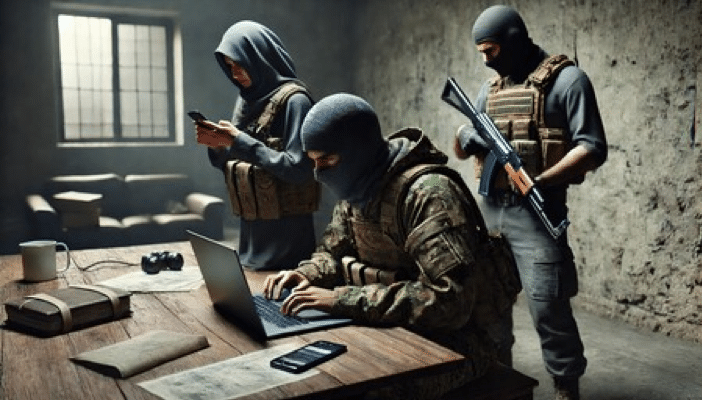
Security is as much a psychological game as it is a tactical one. Insurgents, bandits, and terrorists thrive on fear; it is their primary currency. By providing these groups with a massive, unedited megaphone, the media, particularly the citizen-led variety is inadvertently doing the terrorists’ PR work for them. These developments have become a means of spreading fear free of charge by the enemies of the state.
When a citizen journalist shares a raw, unverified video of bandits brandishing sophisticated weapons or taunting victims, they are not merely “informing” the public. They are projecting the power of the criminal and the helplessness of the state. This creates a psychological paralysis among the citizenry.
More dangerously, the lack of censorship has led to the inadvertent disclosure of tactical information. There have been instances where live-streaming or real-time reporting of military movements has alerted insurgents to the arrival of security forces.
In the quest for “exclusive” content, the locations of safe houses, the identities of undercover operatives, and the specifics of ransom negotiations are often leaked. This is not journalism; it is a tactical liability that costs lives.
More worrisome today is the fact that even some law enforcement agencies and their spokespersons in abid to be seen as working also revealed their security strategies in the social media which overtime has become counter productive.
The Erosion of Ethics and the Gore Culture which ised to be scanty in the media space before now, has taken a prominent place in the scheme of things.
In the traditional newsroom, the “Dignity of the Human Person” is a sacred rule. Photos of mutilated bodies or the harrowing screams of kidnap victims are typically edited or withheld to prevent trauma and out of respect for the victims’ families.
Citizen journalism, however, has ushered in a “gore culture.” Uncensored images of carnage at blast sites or the desperate pleas of hostages are circulated without a second thought. This desensitizes the public to violence while simultaneously heightening the collective trauma of the nation. When ethics are reduced to nothing, the victim is victimized twice: first by the perpetrator, and second by the camera lens of a bystander seeking social media clout and followership
The spread of misinformation or “fake news” is the most lethal byproduct of this ethical void.
During various security crises in Nigeria, false reports of “impending attacks” on specific neighborhoods have led to stampedes, vigilante mob justice against innocent “suspects,” and local economic shutdowns. In a multi-ethnic and multi-religious society like Nigeria, a single unverified post about an “attack by one group on another” can ignite reprisal killings within hours. The media, in this sense, becomes a match dropped into a drum of gun powder.
Another issue plaguing the media space in Nigeria is the “Copycat” Effect and the Incentive for Crime
Sociologists have long noted the “contagion effect” of media coverage on crime. When the media provides exhaustive, sensational coverage of kidnappings, detailing the amount of ransom paid and the apparent ease of the operation, it inadvertently provides a template for others to experiment
In Nigeria, as the media focuses heavily on the “successes” of bandits in the North-West, similar patterns of criminality have begun to sprout in previously quiet regions. The constant media spotlight turns criminals into anti-heroes of a sort, or at the very least, makes the “business” of kidnapping seem lucrative and low-risk.
By failing to self-regulate, the way these stories are framed, the media is subtly signaling to the unemployed and the desperate that crime does, in fact, pay—and it gets you fame in no time.
The major solution to these issues surrounding the role of the media in Eulogizing crime and criminal activities is the Urgent Need for Self-Regulation
The instinctive reaction of the state is often to call for government censorship or to shut down the internet. However, history shows that government-led media crackdowns usually serve to silence political opposition rather than enhance security. The true solution lies in a robust, industry-wide commitment to “Self-Regulation”
There is a need for A New Code of Conduct for the Digital Age.
The Nigerian Press Council and the NUJ must collaborate with digital and online publishers to create a “Security Reporting Protocol.” This protocol should mandate a delay in reporting ongoing tactical operations, the anonymization of victims, and a strict ban on publishing propaganda videos from recognized terror groups. Traditional media houses must lead by example, refusing to pick up stories from social media until they have been independently verified through a “Security Verification Desk.”
Digital Literacy for the “Smartphone Reporter” is another way out.
The burden does not lie with professional journalists alone. There is a desperate need for a national digital literacy campaign. The average Nigerian must be taught that “sharing” is an act of responsibility. Before hitting the share button on a sensational video, citizens should be encouraged to ask if the news sources or story Is verified. Does sharing this help the criminal or the victim? Will this cause panic? If the answer to any of these is questionable, the chain should stop there.
The Method of “Starving the Beast ” by engaging online in Responsible Framing must be adopted.
The media must shift its focus from the “theatre” of the crime to the consequences for the criminal. Instead of sensationalizing the bandit leader’s bravado, the narrative should highlight the resilience of affected communities and the prosecution of offenders. By “starving the beast” of the attention it craves, the media can reduce the psychological dividends of terrorism.
Conclusively, the media is often referred to as the “Fourth Estate,” the watchdog of society. But a watchdog that barks at the wrong shadows—or worse, bites the hand of those it is meant to protect—becomes a threat itself.
The security situation in Nigeria is dire, but it is not insurmountable. However, the path to peace is obstructed by a digital fog of unverified reports, sensationalist gore, and ethical bankruptcy. We must recognize that the smartphone is as much a weapon of war as the AK-47 when used recklessly.
The media choice is clear: it can either remain a bellows fanning the flames of insecurity, or it can become a cool stream of verified, responsible, and ethical information. Self-regulation is not an act of surrender or a curtailment of free speech; it is an act of patriotism. In the battle for Nigeria’s soul, the most powerful weapon is not the one that shouts the loudest, but the one that speaks the truth with the wisdom to know when silence—or restraint—is the greatest service of all.
Is the media causing more harm? In its current, unregulated state, the answer is uncomfortably close to “yes.” But it is a trend that can, and must, be reversed before the very stories we tell consume the nation entirely.
—————————————————————————————————————————————
Your help to our media platform will support the delivery of the independent journalism and broadcast the world needs. Support us by making any contribution. Your donation and support allows us to be completely focus, deeply investigative and independent. It also affords us the opportunity to produce more programmes online which is a platform universally utilised.
Thank you.
Please click link to make – DONATION