

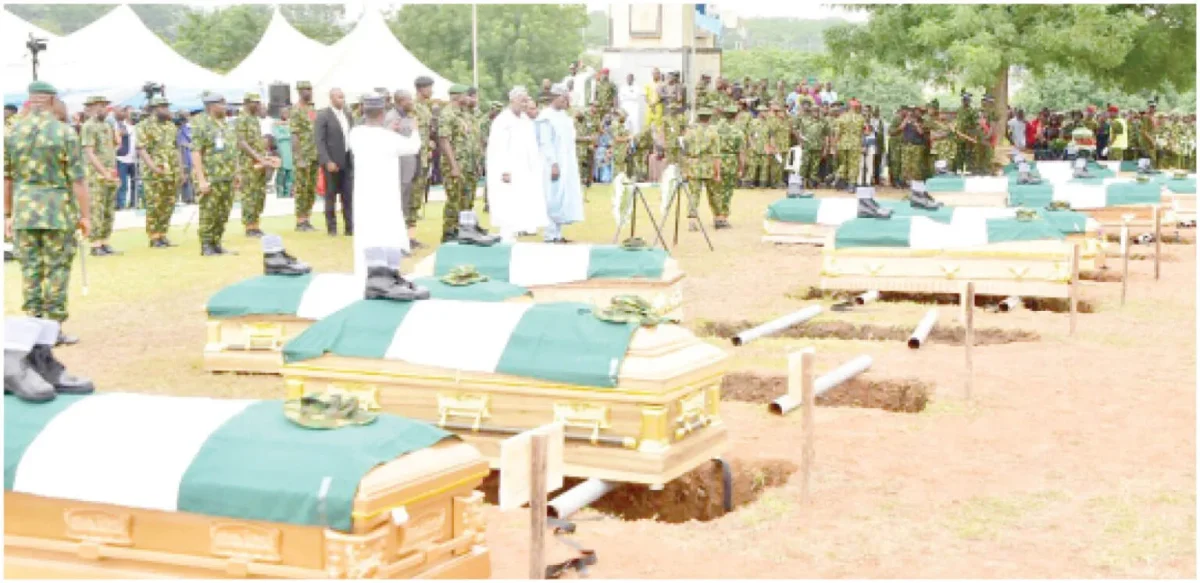
The Defence Identification Centre (DIC) of the Nigerian Armed Forces, in collaboration with the International Committee of the Red Cross (ICRC), has commenced a five-day Battlefield Mortuary Affairs Training in Kaduna aimed at strengthening the military’s capacity to identify soldiers killed or declared missing during operations.
The training, which began on Monday at the Nigerian Air Force Base, Kaduna, will run until August 1 and is designed to enhance the Armed Forces’ ability to recover, identify and manage the remains of personnel who die in combat.
Speaking at the opening ceremony, the Deputy Director of the DIC, Air Commodore Chukwuma Ohanele, described the programme as a landmark collaboration between the Defence Headquarters and the ICRC to address the challenges of identifying military personnel killed in action while ensuring the dignified handling of the dead.
He noted that battlefield casualties had become an inevitable reality due to the intensity of ongoing military operations, stressing that managing the dead is not only a technical responsibility but also a moral and humanitarian obligation.
According to Ohanele, the training is intended to strengthen the Armed Forces’ professionalism, accountability and respect for human dignity.
Participants drawn from the Nigerian Army, Navy and Air Force will receive both theoretical and practical instruction on battlefield mortuary affairs, international humanitarian law, search and recovery operations, explosive ordnance disposal awareness, and the proper storage, transportation, repatriation and temporary burial of human remains.
The programme also includes indoor and field exercises to prepare participants for real-life operational environments.
Ohanele commended the Chief of Defence Staff, General Olufemi Oluyede, for supporting the initiative and acknowledged the contributions of the Defence Headquarters, the Defence Identification Centre, the Nigerian Air Force School of Medical Sciences and Aviation Medicine, the Regiment Training School and the ICRC.
He urged participants to fully engage with the training, noting that honouring fallen personnel not only preserves the dignity of the deceased but also provides reassurance and closure to their families while reinforcing the military’s core values of discipline, respect and humanity.
The Commandant of the Nigerian Air Force School of Medical Sciences and Aviation Medicine, Air Vice Marshal Anthony Ekpe, described the training as timely, given the complexities of ongoing military operations.
He said personnel are sometimes lost under difficult battlefield conditions, making the recovery and identification of bodies or body parts particularly challenging.
According to him, the skills acquired during the programme will improve the military’s ability to identify personnel killed in action and provide much-needed answers and closure to bereaved families.
Ekpe thanked the Defence Headquarters and the ICRC for selecting the institution to host the programme and welcomed participants from South Africa.
Speaking on behalf of the ICRC, Forensic Manager Dr Habib El TaKach said the training was the outcome of engagements that began in Pretoria, South Africa, in 2024.
He described it as the first global training programme of its kind, saying it would improve the identification of soldiers who die in conflict, reduce the number of missing persons and help families learn the fate of their loved ones.
TaKach explained that the identification process involves careful planning, systematic recovery of remains, secure transportation and comprehensive documentation, including photographs, videos and biological samples.
“All these steps are essential in helping us successfully identify the deceased and provide closure to their families,” he said.
—————————————————————————————————————————————
Your help to our media platform will support the delivery of the independent journalism and broadcast the world needs. Support us by making any contribution. Your donation and support allows us to be completely focus, deeply investigative and independent. It also affords us the opportunity to produce more programmes online which is a platform universally utilised.
Thank you.
Please click link to make – DONATION