

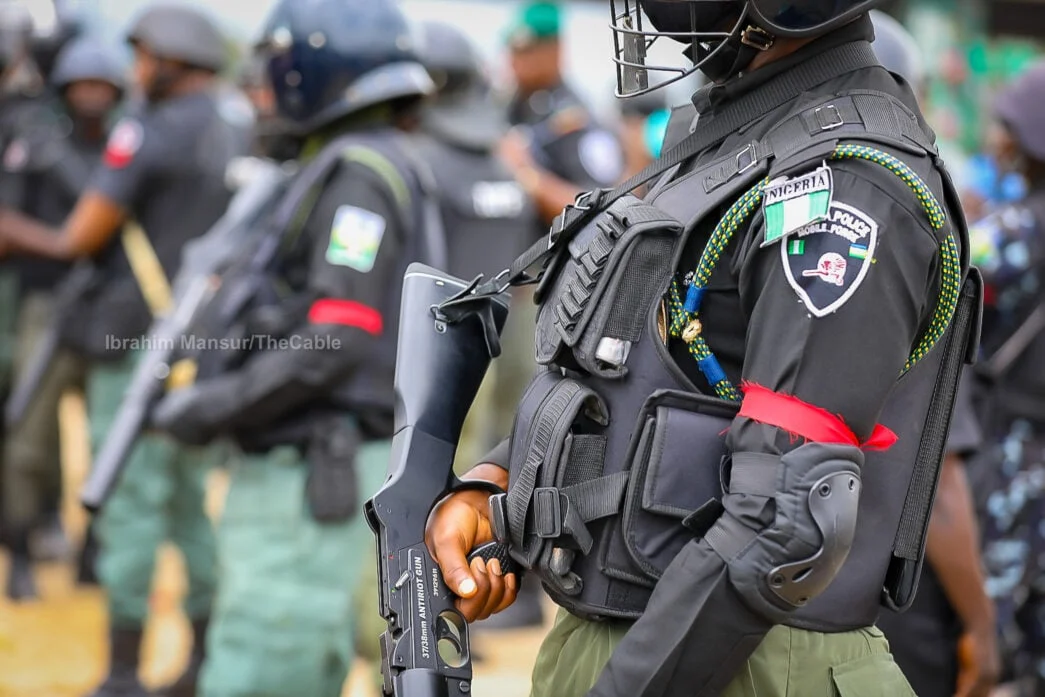
At least 31 state governments spent an estimated N252.26 billion on security-related activities in the first six months of 2026, as killings, kidnappings, banditry and other criminal activities continued to pose a major challenge across the country.
An analysis of state fiscal performance reports for the first and second quarters of 2026, obtained from Open Nigerian States, a BudgIT-backed platform that tracks government budget data, showed that Kogi recorded the highest security expenditure during the period.
Kogi spent N34.67 billion, representing 13.74 per cent of the total expenditure captured in the data.
Plateau followed with N23.69 billion, while Bauchi recorded N22.35 billion.
The three states alone accounted for about N80.7 billion, representing roughly 32 per cent of the total expenditure recorded across the states.
Other states with security-related expenditure included Abia, Adamawa, Anambra, Bayelsa, Benue, Borno, Cross River, Delta, Ebonyi, Ekiti, Enugu, Gombe, Imo, Jigawa, Kaduna, Kano, Katsina, Kebbi, Kwara, Lagos, Nasarawa, Niger, Ogun, Ondo, Oyo, Sokoto, Taraba and Zamfara.
The expenditure covered areas including security equipment, homeland security personnel, security votes and operations, ministries responsible for security, special advisers and security trust funds.
The data further showed a significant increase in state-level security spending, with expenditure rising from N75.84 billion in 2025 to N252.26 billion in the latest dataset.
However, a year-on-year comparison involving only the 22 states for which comparable 2025 figures were available showed that their combined spending increased from N75.84 billion to approximately N144.44 billion, representing a rise of about N68.61 billion, or 90.5 per cent.
The comparison does not represent a like-for-like assessment of all 36 states because the latest dataset contains figures for more states than the 2025 data supplied.
Security spending rises amid persistent attacks
The increase in expenditure comes against the backdrop of persistent insecurity across the country.
The National Human Rights Commission reported that its Human Rights Observatory documented 651 kidnapping incidents and 492 killings between January and March 2026.
The North-Central, North-West and North-East regions were among the areas most affected.
The situation remained challenging in the second quarter, with a SARI Global report recording 792 deaths in 882 security incidents across the 36 states and the Federal Capital Territory in June alone.
Official mid-year operational figures also indicated that security agencies carried out about 14,000 operations during the first half of the year, killing 1,597 terrorists and insurgents and rescuing 1,516 kidnapped victims.
Despite the scale of operations and increased spending, insecurity continues to raise questions about the effectiveness, transparency and accountability of public funds allocated to security.
Where the money went
Of the N252.26 billion captured in the analysis, N37.08 billion was spent on security equipment, while N26.89 billion went to homeland security personnel.
Security votes and related homeland security operations accounted for N135.61 billion.
Expenditure under ministries of security and special advisers stood at N42.15 billion, while security trust funds received N10.53 billion.
Security votes and related expenditure recorded one of the largest increases, rising from N47.67 billion to N135.61 billion.
Spending under ministries of security and special advisers also increased from N14.95 billion to N42.15 billion.
Security trust fund expenditure rose from N6.82 billion to N10.53 billion.
Kogi leads as Zamfara, Borno record lower spending
Kogi’s N34.67 billion was the highest expenditure recorded, followed by Plateau with N23.69 billion and Bauchi with N22.35 billion.
Bayelsa ranked fourth with N17.49 billion, while Ekiti spent N14.83 billion.
Anambra recorded N13.40 billion, followed by Sokoto with N11.27 billion, Ondo with N10.54 billion and Kaduna with N10.37 billion.
Kebbi spent N10.14 billion, while Adamawa recorded N9.95 billion.
Zamfara, one of the states most affected by banditry, spent N9.07 billion, while Borno, a major theatre of insurgency, recorded N8.29 billion.
Kano spent N8.26 billion, Katsina N7.21 billion, Niger N5.36 billion and Nasarawa N5.18 billion.
At the lower end of the table, Benue recorded N1.58 million, while Gombe spent N48.02 million.
Akwa Ibom, Edo, Osun, Rivers and Yobe had no expenditure recorded in the listed categories in the supplied data.
Spending does not always match security threats
The analysis shows that states with some of the highest levels of insecurity did not necessarily record the highest security expenditure.
Zamfara, Borno, Katsina, Kaduna, Sokoto and Kebbi collectively recorded about N56.04 billion, representing approximately 22.2 per cent of the total captured expenditure.
Kogi alone, however, recorded N34.67 billion—more than the combined expenditure of several states facing serious security challenges.
The top five spenders—Kogi, Plateau, Bauchi, Bayelsa and Ekiti—accounted for approximately N112.15 billion, or 44.8 per cent of the total.
The top 10 states accounted for about two-thirds of the expenditure captured in the analysis.
The disparity has renewed questions over whether security spending is being driven by clearly defined security needs and measurable outcomes.
Retired general calls for patience
Speaking on the rising expenditure, retired Brigadier-General Bashir Adewinbi commended the authorities for dedicating resources to tackling terrorism and other security threats.
He, however, said it was too early to determine whether the funds would achieve the desired results.
According to him, while some public officials may be sincere in their efforts, others could have been compromised.
He urged Nigerians to give the initiative an opportunity and assess the outcome based on implementation.
Adewinbi said increased funding could enable governments to acquire technology and other resources needed to confront terrorism and criminality.
He added that the effectiveness of the spending would ultimately depend on how the funds were deployed.
Ex-AIG advocates result-based security budgeting
A former Assistant Inspector-General of Police, Wilson Inalegwu, called for a shift from large, unspecified security allocations to result-based budgeting.
He urged state Commissioners of Police to prepare annual policing plans outlining the security challenges in their respective states and the resources required to tackle them.
According to Inalegwu, such plans should cover threats including kidnapping, banditry, farmers-herders clashes, insurgency, separatist violence, cultism and election-related security challenges.
He argued that governors should be able to measure the impact of every major security expenditure.
“If we give you all this, you are going to reduce it to five,” he said, explaining that security officials should be held accountable where crime figures rise despite increased funding.
Inalegwu also advocated stronger community policing, noting that the amended Police Act 2020 provides for Community Policing Committees at various levels of the police structure.
He said governors should ensure that the committees were functional and adequately supported.
While supporting the use of technology in policing, he said governments should first identify specific security needs before purchasing equipment such as surveillance cameras and drones.
Security spending must produce results — CSOs
Civil society organisations have also raised concerns over the transparency and effectiveness of the expenditure.
The Executive Chairman of the Centre for Anti-Corruption and Open Leadership, Debo Adeniran, said Nigerians had the right to demand accountability for security funds.
He questioned whether the money was reaching security personnel and agencies that needed it, particularly amid complaints about poor welfare and inadequate equipment.
Adeniran said the effectiveness of security spending should ultimately be measured by whether Nigerians feel safer.
Similarly, the Executive Director of the Civil Society Legislative Advocacy Centre, Auwal Musa Rafsanjani, questioned how the N252 billion was spent.
He asked what procurements were made with the funds and what equipment was acquired.
Rafsanjani also argued that the figure might not represent the total amount spent on security because it did not include all security votes controlled by governors and local governments.
He called for a detailed breakdown of security expenditure, including procurements and projects funded with the money.
The CISLAC executive director also criticised the National Assembly for what he described as inadequate oversight of security spending.
Accountability remains key
While the rising expenditure reflects the growing pressure on state governments to complement federal security efforts, the figures also highlight the need for stronger accountability.
With billions of naira being committed to security while attacks, kidnappings and killings persist, stakeholders say governments must demonstrate that increased spending is translating into better intelligence, improved equipment, faster response and greater protection for citizens.
The debate, therefore, is no longer only about how much governments spend on security, but also about where the money goes, how it is spent and whether it is producing measurable improvements in public safety.
—————————————————————————————————————————————
Your help to our media platform will support the delivery of the independent journalism and broadcast the world needs. Support us by making any contribution. Your donation and support allows us to be completely focus, deeply investigative and independent. It also affords us the opportunity to produce more programmes online which is a platform universally utilised.
Thank you.
Please click link to make – DONATION