

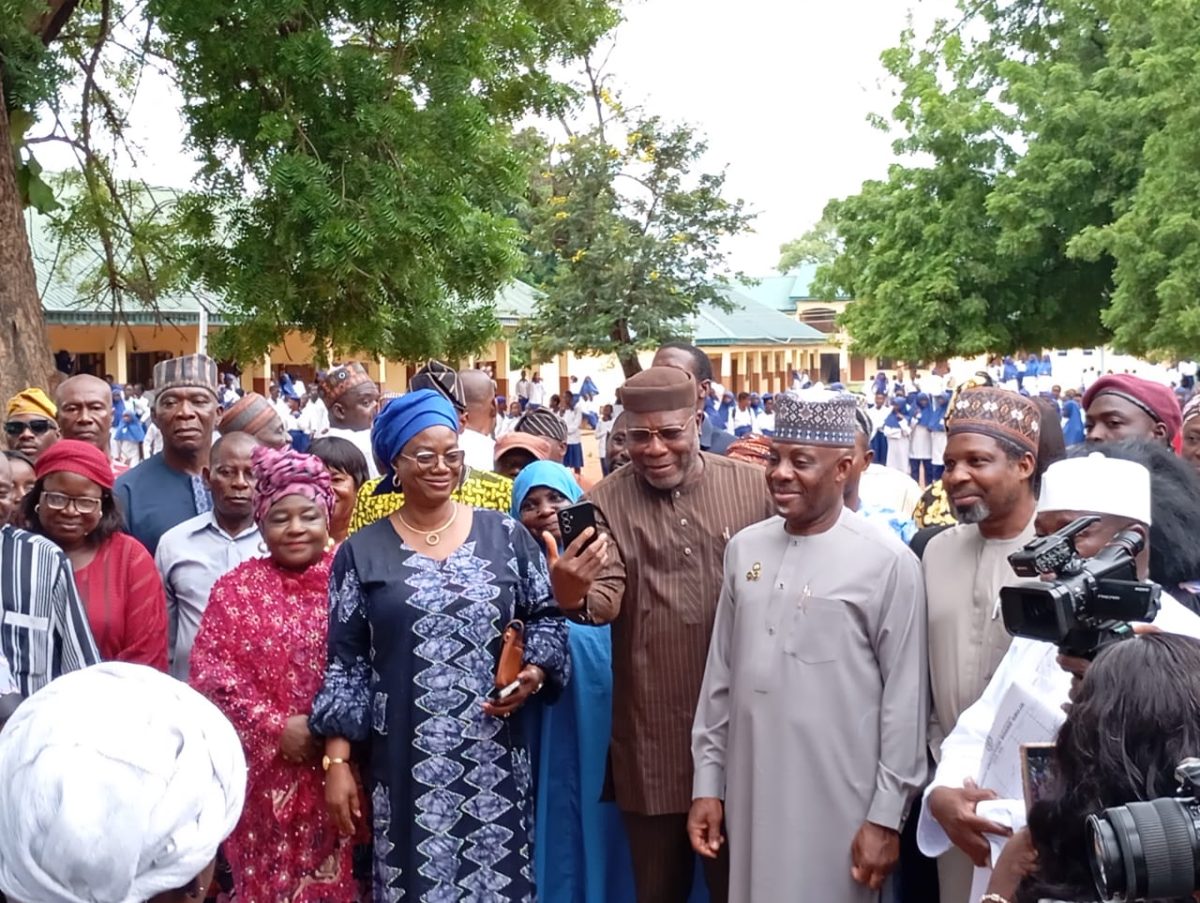
The Federal Government has intensified efforts to address Nigeria’s learning crisis with the commencement of a nationwide National Learning Assessment designed to evaluate pupils’ literacy, numeracy and cognitive skills across the country.
Minister of Education, Maruf Tunji Alausa, said the exercise would generate credible data to guide evidence-based reforms and improve learning outcomes in Nigeria’s education sector.
The minister made the remarks on Friday after monitoring the assessment exercise at Government Secondary School, Kuje, Government Junior Secondary School, Kuje Central and Topaz Model Primary School.
According to Alausa, the assessment covers Primary Three, Primary Five, Junior Secondary School Two (JSS2) and Senior Secondary School Two (SSS2), with pupils and students tested in English Language, Mathematics, Basic Science and non-cognitive skills.
He explained that the exercise is aimed at determining the level of understanding of learners in key subjects while measuring their literacy, numeracy and cognitive development.
The minister described the assessment as a critical component of the Nigerian Education Sector Renewal Initiative, noting that it would establish a benchmark for measuring learning outcomes every three years.
He observed that Nigeria had not maintained a consistent schedule for conducting national learning assessments, recalling that the last assessment by the Universal Basic Education Commission was held in 2023, while the previous exercise conducted by the Federal Ministry of Education took place in 2019.
To institutionalise the exercise, Alausa disclosed that the ministry had directed UBEC to make dedicated budgetary provisions to ensure that the National Learning Assessment becomes a routine exercise beginning in 2029.
Expressing concern over the country’s high rate of learning poverty, the minister noted that many Nigerian children are unable to read age-appropriate texts by the age of 10.
He said the findings from the assessment would help government identify learning gaps and implement targeted interventions capable of improving educational outcomes nationwide
Alausa further revealed that the Federal Ministry of Education had harmonised various assessment models into a single standardised National Learning Assessment framework to ensure consistency and enable accurate comparison of learning outcomes over time.
Following his inspection of both public and private schools in the Kuje Area Council, the minister commended the quality of infrastructure and the learning environment in public schools within the Federal Capital Territory.
He praised the cleanliness of the schools, describing the students as healthy and cheerful while applauding the maintenance culture and environmental improvements observed during the visit.
While acknowledging the significant role of private schools in expanding access to education, Alausa stressed the need for stronger regulatory oversight to ensure they meet minimum operational standards and provide conducive learning environments.
Also speaking, the FCT Mandate Secretary for Education, Danlami Hayyo, described the nationwide assessment as a landmark initiative that would strengthen learning outcomes across Nigeria.
Hayyo said the FCT Administration remained committed to supporting the programme, revealing that more than 120 public schools had been renovated to improve the quality of education in the territory.
He added that the administration would continue to support policies aimed at enhancing educational standards in line with the Renewed Hope Agenda of President Bola Ahmed Tinubu.
—————————————————————————————————————————————
Your help to our media platform will support the delivery of the independent journalism and broadcast the world needs. Support us by making any contribution. Your donation and support allows us to be completely focus, deeply investigative and independent. It also affords us the opportunity to produce more programmes online which is a platform universally utilised.
Thank you.
Please click link to make – DONATION