


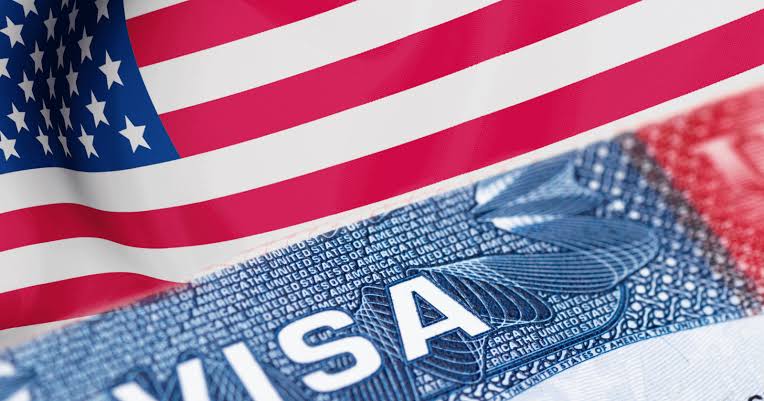
Nigerian experts in diplomacy and international affairs have called on the Federal Government to invoke the principle of reciprocity in response to the United States’ new visa bond policy, describing the measure as discriminatory and unfair to Nigerians and other African travellers.
The policy, which takes effect on Monday, August 3, requires certain applicants for US business and tourist visas from Nigeria and other African countries to post refundable visa bonds of between $10,000 and $20,000 as a guarantee that they will leave the United States before their authorised stay expires.
The Donald Trump administration said the decision was prompted by concerns over visa overstays and inadequate information sharing by some countries.
The policy establishes a permanent Visa Bond Programme following a pilot scheme launched in August 2025.
According to the US Department of State, the programme is intended to address the growing number of non-immigrant visitors who remain in the country beyond the validity of their visas.
The department said the policy applies to applicants from countries with high overstay rates, inadequate information sharing, weak identity verification systems and deficiencies in travel document security and criminal record screening.
It added that the programme was introduced under Executive Order 14159, titled “Protecting the American People Against Invasion,” which directs US agencies to strengthen visa bond administration under immigration laws.
Meanwhile, the US Embassy in Nigeria has warned visa applicants against using artificial intelligence (AI)-generated or digitally altered passport photographs.
“Your photo should be recent (taken within the past six months) and look like you. The TSA or CBP agent must be able to tell it’s you,” the embassy said.
Reacting to the new visa bond policy, former Nigerian High Commissioner to Singapore, Ambassador Ogbole Ode, described the measure as an attempt by an increasingly restrictive US administration to discourage travel from Nigeria and other African countries.
He urged the Nigerian government to respond by applying the principle of reciprocity, including imposing similar bond requirements on American visa applicants.
Public affairs analyst Dr. Katch Ononuju also criticised the policy, describing it as punitive, abnormal and discriminatory.
He called on the Federal Government to respond appropriately while urging Nigerians to remain calm.
International constitutional law expert, Livingstone Wechie, said the development should prompt Nigeria and other African countries to rethink their engagement with the United States and focus on strengthening intra-African economic cooperation.
“The US has just told Africa to stand up and take their destiny in their own hands instead of seeking validation from the West. It is a window for Africa’s turnaround and to rise to its full potential by implementing the African Continental Free Trade Area (AfCFTA),” he said.
The countries affected by the policy include Nigeria, Algeria, Tunisia, Benin, Cabo Verde, Côte d’Ivoire, The Gambia, Guinea, Guinea-Bissau, Mauritania, Senegal, Togo, São Tomé and Príncipe, Angola, Burundi, the Central African Republic, Djibouti, Gabon, Ethiopia, Tanzania, Uganda, Botswana, Lesotho, Malawi, Mauritius, Mozambique, Namibia, Seychelles, Zambia and Zimbabwe, among others.
During the pilot phase, the US expanded the programme to 50 countries, requiring eligible B-1/B-2 visa applicants to pay bonds of up to $15,000 at the discretion of consular officers.
According to the State Department, the pilot programme contributed to a significant decline in visa overstays, with fewer than 50 overstays recorded from participating countries during the first 10 months, compared to 45,488 overstays recorded throughout 2024.
The department also said visa issuance to applicants from participating countries dropped by 83 per cent between August 2025 and July 2026, with nearly half of about 20,000 applicants opting not to proceed after the bond requirement was introduced.
It said total bond payments during the pilot phase amounted to about $115 million.
US authorities explained that the bond would be refunded, without interest, once immigration records confirmed that the traveller departed the country on time and complied with all visa conditions. However, the bond would be forfeited if the holder violated the terms of the visa.
The State Department maintained that the programme is not punitive but a diplomatic tool intended to encourage countries to strengthen document security, improve data sharing and reduce visa overstays.
Under the new rules, consular officers will determine whether applicants should pay a bond of $10,000, $15,000 or $20,000 after assessing factors such as the purpose of travel, employment status, income and the applicant’s ties to their home country.
—————————————————————————————————————————————
Your help to our media platform will support the delivery of the independent journalism and broadcast the world needs. Support us by making any contribution. Your donation and support allows us to be completely focus, deeply investigative and independent. It also affords us the opportunity to produce more programmes online which is a platform universally utilised.
Thank you.
Please click link to make – DONATION