


There was laughter at the Mayor of London’s Black History Month dinner in City Hall. But behind one of Sir Sadiq Khan’s jokes was a line that may prove far more significant than the laughter it generated.
“At this rate, Davy is on track to be the next Mayor of London. Dawn (was in the Hall – Living room)!”
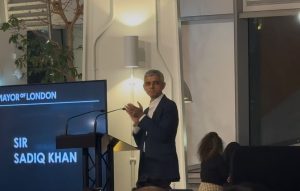
Sir Sadiq Khan
The Mayor was referring to the evening’s personalities, but his playful acknowledgement of Dawn Butler – the Labour MP who has already made clear that she intends to seek the Labour nomination if Khan does not stand again; immediately added another dimension to a conversation that London politics is likely to have increasingly over the coming months.
Could London finally be approaching the moment when a woman occupies City Hall?
Since the Mayor of London position was created in 2000, London has elected three men: Ken Livingstone, Boris Johnson and Sadiq Khan.
Khan’s victory in 2024 gave him an unprecedented third term, making him the first person to achieve that feat and the longest-serving Mayor of London.
The next election is scheduled for May 2028.
Khan has not announced whether he will seek a fourth term. Consequently, his Black History Month remark should not be interpreted as a declaration of retirement. But coming from the man currently occupying the office, his public reference to Dawn Butler inevitably adds interest to the succession question.
And there is something historically unusual about that question.
Britain has already had women at the very highest levels of public life. Margaret Thatcher, Theresa May and Liz Truss have served as Prime Minister (The Conservative Party is led by Kemi Badenoch). Queen Elizabeth II reigned for more than seven decades.
Yet the capital’s directly elected executive mayor has always been a man.
It is not that women cannot be mayors
This is not an argument that Britain has never entrusted women with significant mayoral power.
It has.
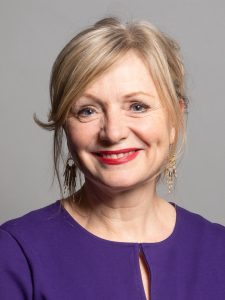 Tracy Brabin became Mayor of West Yorkshire, one of England’s powerful metro-mayoral positions. Joanne Anderson became Liverpool’s first woman directly elected mayor and the UK’s first directly elected Black female mayor.
Women now occupy several strategic mayoral positions across England.
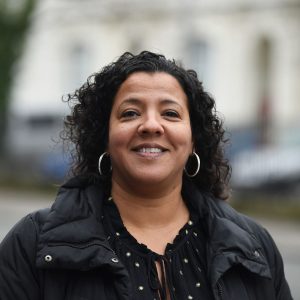
Joanne Anderson
So the question is not whether women can exercise executive mayoral authority.
London simply has not yet elected one.
That distinction matters and counts.
The Mayor of London is not a ceremonial position. The office has substantial responsibility for transport, policing, housing, planning, economic development, the fire service and other areas affecting the daily lives of millions of people.
The woman who eventually occupies that office would therefore not merely be making history as a woman.
She would be leading one of the world’s great cities.
Dawn Butler brings an interesting history to the conversation.
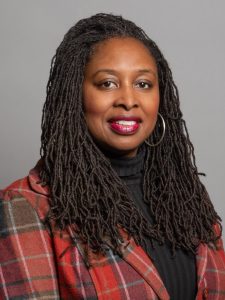
Dawn Butler
The Brent East MP entered Parliament in 2005 and became the first elected African-Caribbean woman to serve as a UK Government minister. She has subsequently become one of the more recognisable Black women in British politics.
Her interest in City Hall is not entirely new. She has previously said she would put herself forward if Khan did not seek another term, and that position has since been reiterated. Current reporting identifies her as a potential Labour contender should Khan step aside.
That makes the Mayor’s words at the Black History Month dinner particularly intriguing.
He did not announce his political future.
He did something more subtle.
He publicly placed Dawn Butler inside the conversation.
And she was there.
The setting could hardly have been more appropriate.
 The Mayor was speaking about Black history, Black Londoners and the generations of people who have opened doors for others.
He spoke about pioneers, community builders and those who have challenged barriers that once appeared immovable.
He celebrated the 60th anniversary of Notting Hill Carnival and paid tribute to the people whose work transformed an event born from resistance to racism into one of London’s great cultural celebrations.
Then, almost in passing, came the reference to Dawn.
There is an irony worth considering.
A Black History Month dinner was celebrating the people who opened doors for future generations. Yet London is still waiting for a woman to walk through one of its most important political doors.
Why now?
The timing is significant.
Khan has already achieved something no previous Mayor of London has achieved: a third elected term. There is no statutory limit preventing another candidacy, and he has not formally ruled one out.
But whatever decision he eventually makes, the succession conversation has begun.
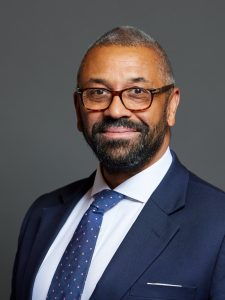
James Cleverly
Other names are emerging across the political spectrum. Conservative James Cleverly has entered the race for his party’s nomination, while Liberal Democrat Sarah Olney has publicly expressed interest. Reform UK has also selected Laila Cunningham.
And within Labour, Dawn Butler’s name is already firmly part of the discussion.
That does not make her the next Mayor.
Londoners will ultimately decide who occupies City Hall.
But it does mean that the possibility of London’s first woman mayor is no longer an abstract question.
Perhaps the bigger question is bigger than Dawn.
The real story may not ultimately be about whether Dawn Butler becomes Mayor.
It may be about whether London is finally ready to see a woman in the job.
A city that has elected women to Parliament, supported women in government, witnessed a woman monarch reign for more than 70 years and seen women increasingly take powerful regional mayoral offices has never yet elected a woman to lead London.
Perhaps that is the unfinished chapter.
And perhaps the next election gives London an opportunity to write it.
For Dawn Butler, the journey may now depend on the decision of one man, the Labour selection process and ultimately millions of London voters.
But one thing is already clear.
At a dinner celebrating Black history, London’s longest-serving Mayor looked across the room and joked:
“Sorry, Dawn!” He may still be interested in the post or …..!
It was a joke.
But sometimes, in politics, the joke tells you where the serious conversation is about to begin.
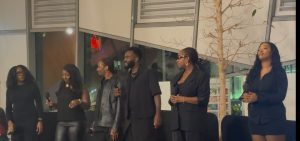
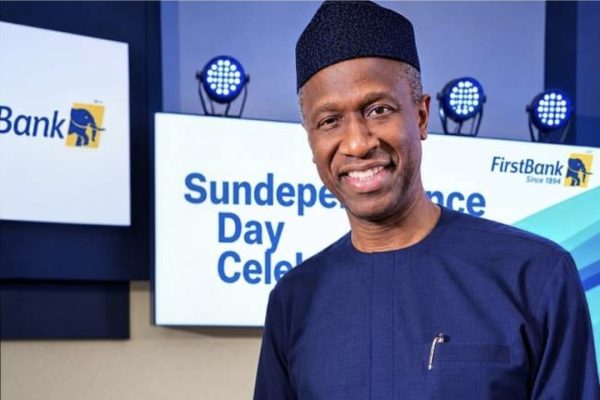
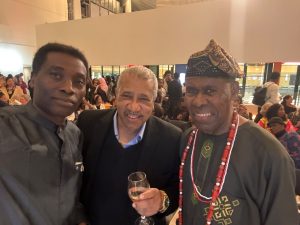
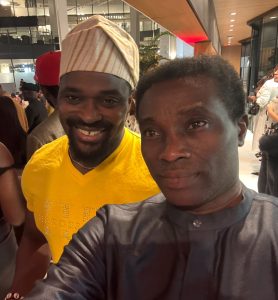
Guests at the ceremony includes Yomi Adegoke, First Bank Nigeria UK CEO – Mr Korede Adenowo, The Voice Newspapers Executives, Students from various institutions, Smade among others.
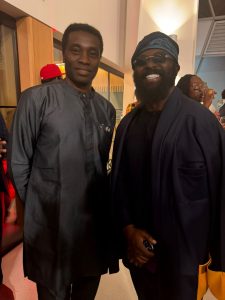
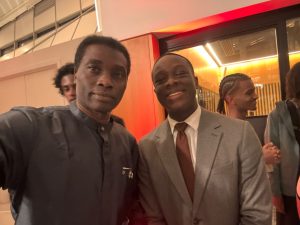
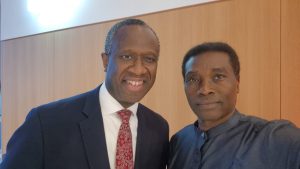
Olukorede Adenowo (CEO) of FirstBank UK in ties
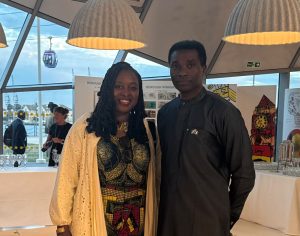
MP Dawn Butler
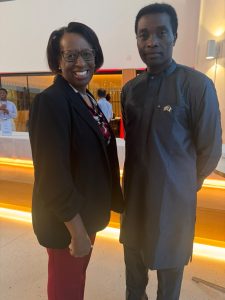
Paulette Simpson, CBE – executive who serves as the DCE Officer of JN Bank Executive Director of The Voice, the UK’s leading national British Afro-Caribbean newspaper and Mentoring Commandant Alistair
#BHM #blackhistory #blackhistorymonthuk #nottinghillcarnival
—————————————————————————————————————————————
Your help to our media platform will support the delivery of the independent journalism and broadcast the world needs. Support us by making any contribution. Your donation and support allows us to be completely focus, deeply investigative and independent. It also affords us the opportunity to produce more programmes online which is a platform universally utilised.
Thank you.
Please click link to make – DONATION