

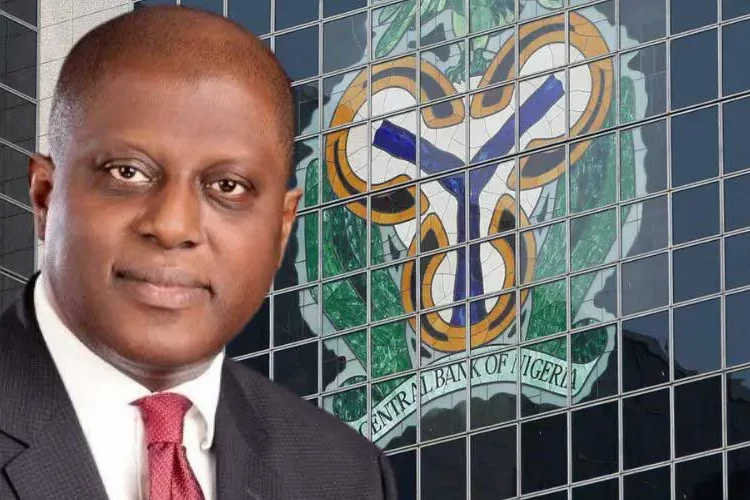
The Central Bank of Nigeria (CBN) has called on African countries to embrace structural reforms, deepen regional integration and strengthen institutional credibility to position the continent for sustainable growth amid a rapidly changing global economic landscape.
The call was made at the 7th Africa Emerging Markets Forum in Abuja, where policymakers, economists and development experts examined how Africa can build resilience and seize opportunities arising from shifts in global trade, investment and economic cooperation.
Leading the discussions were CBN Governor, Olayemi Cardoso, and Director-General of the World Trade Organisation (WTO), Dr. Ngozi Okonjo-Iweala, who urged African leaders to rethink traditional development models and adopt strategies that promote industrialisation, value addition and stronger regional markets.
Opening the forum, Cardoso said the world was moving away from an era defined by unrestricted globalisation to one shaped by geopolitical competition, fragmented trade, selective capital flows and technological disruption.
“The global system that has long shaped relations among nations is changing before our eyes. Trade is becoming more fragmented; capital is becoming more selective and impatient; and the long-standing rules-based international system is being stretched and tested,” he said.
According to him, the challenge for African economies is no longer whether the global order is changing but how to transform those changes into opportunities for growth and shared prosperity.
“The question is no longer whether the global order is changing, but how we turn that change from a source of vulnerability into a source of growth and shared prosperity,” Cardoso stated.
He identified stronger regional integration as critical to Africa’s economic future, lamenting that intra-African trade still accounts for only about 16 per cent of the continent’s total trade.
Cardoso urged African countries to maximise the opportunities offered by the African Continental Free Trade Area (AfCFTA) by removing practical barriers to cross-border commerce.
“We must build stronger regional value chains, produce more of what we consume and trade more with one another,” he said.
He added that governments must complement trade agreements by improving transport infrastructure, harmonising customs procedures and making cross-border payment systems faster and more affordable.
On her part, WTO Director-General Ngozi Okonjo-Iweala challenged Africa’s long-standing dependence on exporting raw materials, arguing that the extract-and-export model has limited industrialisation and weakened economic resilience.
“For Africa in particular, instead of the extract-and-export model that has been the source of so much volatility, economic underperformance and, let me be blunt, corruption, the goal should be higher value, higher productivity growth driven by the development of sub-regional value chains and integration into global supply networks,” she said.
Okonjo-Iweala noted that Africa, which holds about 30 per cent of the world’s critical mineral reserves, must seize growing global demand for lithium, cobalt, graphite and other strategic minerals by processing them locally rather than exporting them in raw form.
“The time to seize this opportunity is now. As geopolitics exerts demand pressure for critical mineral supply chain diversification, African countries must move quickly to add value to their critical minerals,” she said.
She also urged African governments to adopt coordinated regional strategies and harness the continent’s renewable energy resources to support mineral processing and industrial development.
The forum also highlighted the growing importance of institutional credibility in attracting investment.
Cardoso said investors are increasingly prioritising economies with transparent institutions, predictable policies and macroeconomic stability over those offering high returns but greater uncertainty.
“The era of abundant liquidity chasing returns regardless of risk is over. Investors now have more choices and less tolerance for uncertainty,” he said.
Using Nigeria as an example, the CBN governor cited recent reforms, including exchange-rate unification, restoration of price discovery in the foreign exchange market, tighter monetary policy and improved transparency, as measures aimed at rebuilding investor confidence.
He stressed that credibility is built through consistent policy implementation and clear communication.
The forum further underscored the need for Africa to mobilise domestic capital through pension funds, insurance assets, savings and diaspora investments to finance long-term development as global borrowing conditions become more challenging.
Participants also identified artificial intelligence, digital innovation and human capital development as essential pillars of Africa’s future competitiveness.
Cardoso urged African countries to move beyond consuming imported technologies and begin developing homegrown innovations capable of addressing the continent’s unique development challenges while competing globally.
—————————————————————————————————————————————
Your help to our media platform will support the delivery of the independent journalism and broadcast the world needs. Support us by making any contribution. Your donation and support allows us to be completely focus, deeply investigative and independent. It also affords us the opportunity to produce more programmes online which is a platform universally utilised.
Thank you.
Please click link to make – DONATION