

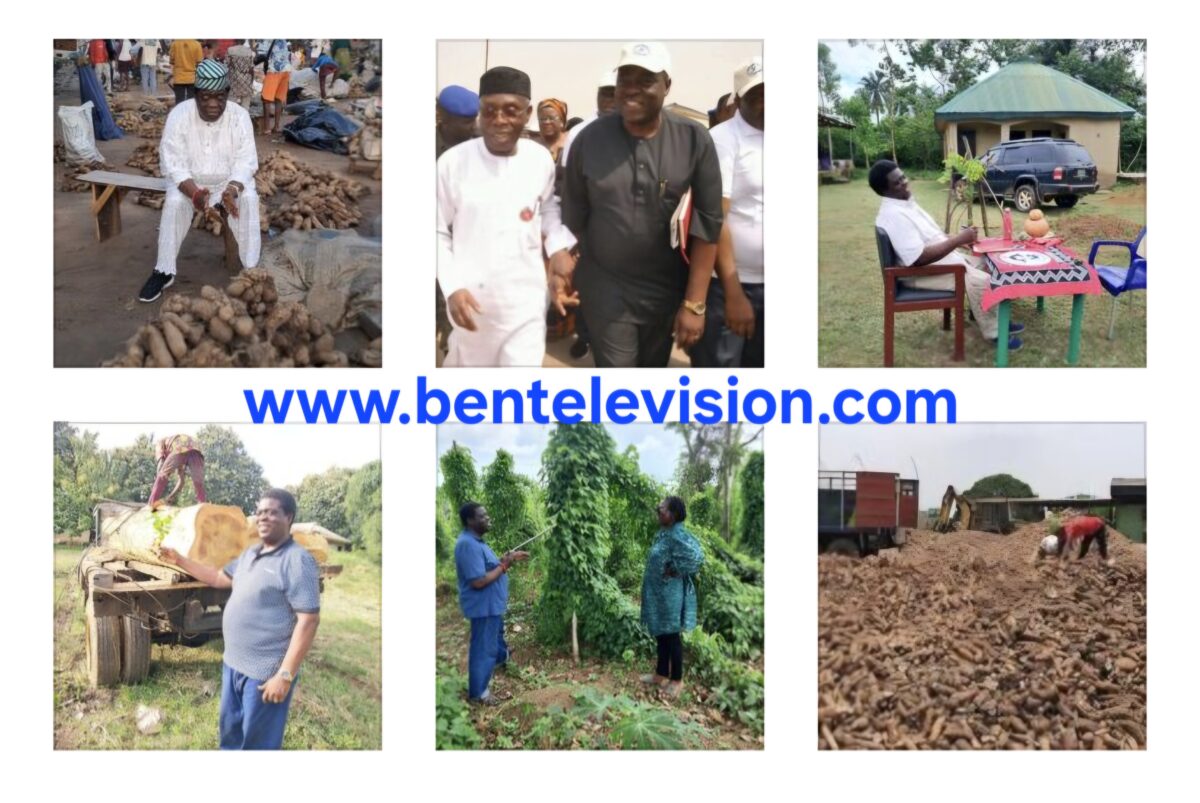
 Cassava is one of Nigeria’s quiet powerhouses — the world’s largest producer, a vital food-security crop, and increasingly, a global industrial asset used in ethanol, starch, sweeteners, pharmaceuticals, and biodegradable products. Yet for decades, Nigeria struggled with low yields, limited research adoption, and rising fertiliser costs. It was within this global conversation that one Nigerian family — driven by passion, science, and sheer resilience — set out to prove that cassava could do far more.
 Fifteen years ago, Dr Adeola Odedina and his family travelled to Berlin, Germany, entirely self-funded, to present findings from experiments carried out on their own farm. Their work, Integrated Nutrient Management for Sustainable Production of Cassava in Southwestern Nigeria, struck a chord with international soil scientists concerned about declining organic fertiliser use, weak crop integration systems, and the urgent need for climate-resilient farming. Returning home, the family decided to practise what they had preached — implementing those methods on their own land, season after season, without fail.
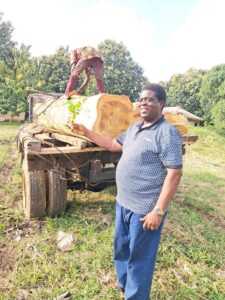 But commitment attracted challenges. When his college grew uncomfortable with “too many truckloads of cassava” leaving the staff farmland, Dr Odedina was issued a quit notice. Rather than slowing down, the family expanded — leasing 50 hectares across Uso and Ita Ogbolu near Akure. Earlier, they had also taken their research to South Africa, presenting Influence of Improved Planting Materials on Jumping the Yield of Cassava Five Folds. When their data revealed yields of 50 tonnes per hectare — at a time when Africa averaged 6–10 tonnes — some delegates walked out shouting, “This is not possible!” Only the insistence of a Kenyan scientist allowed the presentation to continue. Today, that same work remains cited globally and forms a basis for modern cassava agronomy.
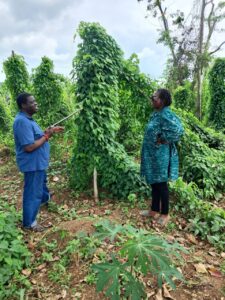 Back in Nigeria, husband and wife divided roles: she would deepen research, he would commercialise the results. They built one of sub-Saharan Africa’s pioneering cassava stem-production enterprises. By 2012–2014, they became major suppliers of fresh cassava roots to Matna Starch Company in Ondo State — winning Best Farmer of the Year for three consecutive years. When the company discovered he was also a lecturer, USAID stepped in, recruiting him as a highly paid consultant to help cassava processors across Nigeria meet capacity by improving farmers’ yields.
This success soon expanded beyond Nigeria. Dr Odedina became Productivity Adviser under the Bill & Melinda Gates Foundation’s CAVA programme, supporting farmers and industries across Ghana, Malawi, Tanzania, Uganda, and Nigeria. He also worked with CIAT Colombia to introduce Vitamin A cassava to Ogun State — part of a broader global push to strengthen nutrition through crop biofortification.
 So when he was appointed Commissioner for Agriculture in Ogun State, it wasn’t a leap — it was a continuation. He had already worked with Ogun’s agricultural systems for decades: as an extension agent as far back as 1986, a trainer under FAO/South–South Cooperation, and a consultant for productivity projects in cassava, fisheries, and rural development. His “fast start” as commissioner was not speed but experience.
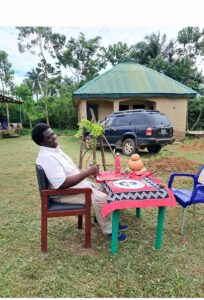
Even as he consulted globally — from Colombia to the UK, USA, and Brazil — the family farm kept expanding, with 30-tonne trucks distributing cassava stems nationwide and a growing outgrower network. Yet one moment stands out. Watching a Nollywood actor say on TV, “This is not a proceed from the farm — I worked for it,” Dr Odedina laughed and thought: Why can’t farm proceeds buy a house in Lekki? Though the family had no desire for Lagos property, he decided to make a point. With his wife’s agreement, he bought a brand-new Toyota Prado in Lagos — paying ₦14 million cash — and fixed a sticker on it: “PROCEED FROM THE FARM.” A nod to the late Apala legend Ayinla Omowura, who once celebrated paying cash for his vehicles from music earnings.
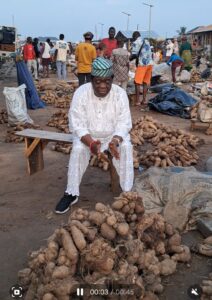 His message to young and senior scientists is simple: research should not end in journals — it should change your life. There is dignity in contributing to knowledge and dignity in earning from it. Challenges will come — eviction, disbelief, even hostile resistance — but none should stop genuine work. “Find another place to play your game,” he says. “It is legal.”
From presenting cutting-edge research to transforming Nigeria’s cassava value chain, from global consultancy to public service, Dr Odedina’s journey shows what happens when science meets persistence — and when a Nigerian farm becomes a global classroom.
Dr Adeola Odedina is Former Provost of the Federal College of Agriculture, Akure; Former Rector of Moshood Abiola Polytechnic, Abeokuta; and Immediate Past Honourable Commissioner for Agriculture, Ogun State, Nigeria.
—————————————————————————————————————————————
Your help to our media platform will support the delivery of the independent journalism and broadcast the world needs. Support us by making any contribution. Your donation and support allows us to be completely focus, deeply investigative and independent. It also affords us the opportunity to produce more programmes online which is a platform universally utilised.
Thank you.
Please click link to make – DONATION