

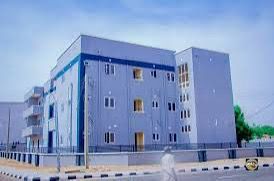
Nigeria’s Minister of Education, Maruf Tunji Alausa, on Tuesday commissioned the Katsina State Smart Model Secondary School in Radda, describing it as a major step toward building a future-ready and globally competitive education system.
The inauguration, conducted alongside Katsina State Governor Dikko Umaru Radda, underscores growing collaboration between the Federal Government and states to modernize education infrastructure and improve learning outcomes.
Speaking at the event, Alausa said the smart school represents more than physical infrastructure, noting that it embodies innovation, opportunity, and strategic investment in human capital needed to prepare Nigerian students for a technology-driven global economy.
He commended the Katsina State Government for its commitment to education under its development blueprint, highlighting strides in expanding access, improving infrastructure, and strengthening teacher capacity.
The minister reiterated that the initiative aligns with the Renewed Hope Agenda of President Bola Ahmed Tinubu, adding that it forms part of broader reforms under the Nigerian Education Sector Renewal Initiative (NESRI).
According to him, the Federal Government has made significant progress in the sector, with over ₦106 billion in Universal Basic Education Commission (UBEC) matching grants accessed by states in the past 18 months. He also cited investments exceeding ₦22 billion in teacher development, ₦2.035 billion disbursed to School-Based Management Committees, the renovation of more than 10,000 classrooms, and the training of 978,000 teachers nationwide.
Alausa further disclosed that more than 7.8 million textbooks have been distributed across the country, while a revised Primary Education Curriculum is already in use nationwide. He added that a new Secondary Education Curriculum will be introduced in the next academic session.
On skills development, the minister revealed that over 160,000 youths are currently undergoing training in more than 1,200 Technical and Vocational Education and Training (TVET) centres, with over one million applications recorded in the latest phase.
He also highlighted ongoing digital reforms, including the rollout of a cloud-based Annual School Census and the introduction of a Learner Identification Number (LIN), aimed at enhancing data-driven planning, transparency, and accountability in the education system.
Reaffirming the government’s commitment to inclusive education, Alausa said efforts are being intensified to address the challenge of out-of-school children through sustained collaboration with states.
In his remarks, Governor Radda said the establishment of the smart model secondary school reflects his administration’s belief that no government can succeed if it neglects the education of its children.
“We will not rest until every zone in the state has access to the same high standard of education,” the governor said, noting that his administration has implemented far-reaching reforms in the education sector since assuming office.
The Katsina Smart Model Secondary School is expected to serve as a national benchmark for smart education and a catalyst for transformative change in Nigeria’s education landscape.
—————————————————————————————————————————————
Your help to our media platform will support the delivery of the independent journalism and broadcast the world needs. Support us by making any contribution. Your donation and support allows us to be completely focus, deeply investigative and independent. It also affords us the opportunity to produce more programmes online which is a platform universally utilised.
Thank you.
Please click link to make – DONATION