

Africa stands at a pivotal moment in its economic history as shifting global trade patterns, technological disruption and changing investment flows create fresh opportunities for the continent to move from reacting to global events to shaping them.
That was the central message from leading policymakers and economists at the recent Economic Forum, where speakers urged African governments to seize the opportunities emerging from a rapidly evolving global economy through deeper reforms, stronger institutions and greater regional integration.
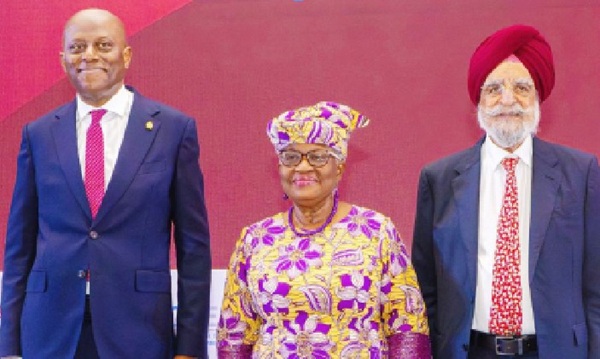
Governor of the Central Bank of Nigeria (CBN), Olayemi Cardoso, said the international economic order is undergoing one of its most profound transformations in decades.
“The question is no longer whether the global order is changing, but how we turn that change from a source of vulnerability into a source of growth and shared prosperity,” he said.
Cardoso identified three forces that will shape Africa’s economic future: the fragmentation of global trade, changing investor expectations and the rapid rise of artificial intelligence (AI).
Turning trade disruption into opportunity
According to Cardoso, the restructuring of global supply chains presents Africa with an opportunity to strengthen regional manufacturing and expand intra-African trade rather than remain dependent on external markets.
Despite the launch of the African Continental Free Trade Area, trade among African countries remains relatively low, underscoring the need for improved transport infrastructure, harmonised customs systems and faster cross-border payment platforms.
He argued that regional integration must move beyond political declarations to practical implementation capable of making African businesses more competitive and resilient.
Credibility as Africa’s greatest economic asset
Cardoso noted that global investors have become increasingly selective, prioritising policy consistency, transparency and institutional strength over short-term returns.
He urged African governments to mobilise domestic capital—including pension funds, insurance assets and diaspora investments—while creating stable macroeconomic environments that encourage long-term investment.
“Credibility is no longer only a central bank concern. It is a national economic asset,” he said.
He also described AI as a transformative technology capable of reshaping agriculture, healthcare, manufacturing, education and financial services, stressing that Africa must become a producer of technology rather than merely a consumer.
Achieving that goal, he said, would require sustained investment in electricity, broadband infrastructure, digital connectivity and education.
“Africa must move beyond being consumers of technology. We must become creators,” Cardoso added.
Stability remains the foundation
The CBN governor maintained that no country has achieved sustained industrialisation amid persistent inflation, exchange-rate instability and weak institutions.
Drawing on Nigeria’s recent reforms, he said the apex bank had restored its focus on price stability through foreign exchange market reforms, tighter monetary discipline and measures aimed at improving transparency.
Although the reforms involved difficult adjustments, Cardoso argued they were necessary to rebuild investor confidence.
He identified macroeconomic stability, deeper regional integration, stronger domestic capital mobilisation and greater investment in young people and women as the pillars of Africa’s long-term economic transformation.
Opportunity in global disruption
Director-General of the World Trade Organization, Ngozi Okonjo-Iweala, echoed the call for Africa to view global uncertainty as an opportunity rather than a crisis.
“We should always ask ourselves what opportunities exist within every crisis,” she said.
Okonjo-Iweala noted that Africa possesses many of the critical minerals required for renewable energy technologies and electric vehicle production but warned that exporting raw materials alone would not transform the continent’s economies.
She called on governments to create business-friendly environments supported by reliable infrastructure, transparent regulation and efficient institutions while eliminating bureaucratic bottlenecks that discourage investment.
She also stressed that attracting domestic investment is just as important as securing foreign capital.
“When domestic investors believe in their country, they become its strongest ambassadors,” she said.
Nigeria’s reform agenda
The forum also examined Nigeria’s ongoing economic reforms, with the Minister of Finance and Coordinating Minister of the Economy, Taiwo Oyedele, describing them as part of a long-term strategy to reposition the country for sustainable growth.
He said reforms targeting multiple exchange rates, fuel subsidies, tax administration and public finances were designed to improve competitiveness, restore investor confidence and strengthen economic stability.
Among the measures highlighted were expanded VAT credits for manufacturers, the removal of withholding tax on manufacturing activities, VAT exemptions for essential goods and the establishment of the Office of the Tax Ombudsman.
“Our goal is competitiveness, not simply higher taxation,” Oyedele said.
He pointed to stronger capital inflows, improved external reserves, banking sector recapitalisation and renewed investor confidence as early signs that the reforms were beginning to yield results.
However, he acknowledged that stronger economic indicators must eventually translate into better living standards through job creation, higher productivity and poverty reduction.
“A reform that improves national figures but does not improve people’s daily lives has not completed its work,” he said.
Accountability and inclusive growth
Addressing concerns over fuel subsidy savings, borrowing and fiscal discipline, Oyedele said the government plans to publish a comprehensive account of how savings from subsidy removal have been utilised.
He explained that much of the fiscal space created had been redirected toward debt servicing, implementation of the new minimum wage, student loans, social protection programmes and other priority expenditures.
Looking ahead, he identified revenue optimisation, economic growth and fiscal discipline as the government’s key priorities while emphasising the need for better data, improved policy coordination and a more predictable business environment.
A defining opportunity
The forum concluded that while the global economy is becoming more uncertain, Africa has an unprecedented opportunity to strengthen its economic position by deepening reforms, expanding regional trade, investing in innovation and maintaining policy credibility.
For Nigeria, Africa’s largest economy, participants agreed that sustained implementation of reforms and stronger institutions will determine whether the country can translate economic stability into inclusive growth and help shape the continent’s role in the emerging global economic order.
—————————————————————————————————————————————
Your help to our media platform will support the delivery of the independent journalism and broadcast the world needs. Support us by making any contribution. Your donation and support allows us to be completely focus, deeply investigative and independent. It also affords us the opportunity to produce more programmes online which is a platform universally utilised.
Thank you.
Please click link to make – DONATION