

The debate over Nigeria’s economic direction has intensified ahead of the 2027 presidential election, with African Democratic Congress (ADC) candidate, Atiku Abubakar, and Peoples Redemption Party (PRP) candidate, Donald Duke, faulting aspects of President Bola Tinubu’s economic policies.
At the same time, Accord Party candidate, Gbenga Olawepo-Hashim, and the ruling All Progressives Congress (APC) have rejected Atiku’s proposal for targeted intervention in petrol pricing, setting the stage for a fierce debate over subsidy, fiscal sustainability and the cost of economic reforms.
Hashim challenged Atiku over what he described as a reversal of his earlier position on subsidy removal, while APC National Chairman, Prof. Nentawe Yilwatda, and House of Representatives member, Dr Wale Ahmed, warned that restoring subsidy could undermine Nigeria’s economic recovery.
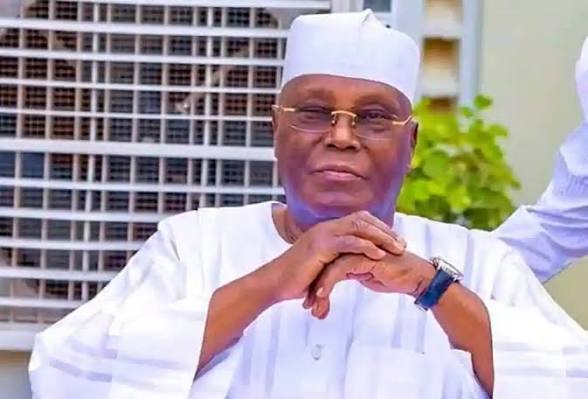
Atiku, through his Senior Special Assistant on Public Communication, Phrank Shaibu, accused the Tinubu administration of imposing the burden of subsidy removal on consumers while granting tax credits and other fiscal incentives to petroleum investors.
He argued that government could not reject intervention to cushion petrol prices for Nigerians while simultaneously providing fiscal support to oil companies.
“Tinubu stood at Eagle Square and declared that subsidy was gone. Petrol prices exploded, transportation costs soared, food prices followed, businesses buckled and household purchasing power collapsed,” Atiku said.
He cited incentives under the government’s Deep Offshore Oil and Gas Projects Incentives framework, arguing that qualifying petroleum developments could receive production tax credits and other benefits.
Atiku also questioned expenditure classified by the Nigerian National Petroleum Company Limited as energy-security expenses and related shortfalls.
According to him, NNPC’s 2023 accounts recorded about N4.84 trillion under energy-security expenses and related shortfalls, while its 2024 audited financial statements recorded approximately N7.13 trillion.
He argued that the spending showed government continued to absorb petroleum-related price differentials after the formal removal of subsidy.
“Whether government calls it subsidy, under-recovery, shortfall or energy security, public resources were being used to bridge a gap between economic cost and the price at which petrol was sold,” he said.
Atiku said his proposed Atiku Economic Recovery Plan did not envisage a return to the old subsidy regime but a targeted, capped and transparently budgeted intervention backed by independent auditing, accelerated domestic refining, increased competition and mass transportation.
He also demanded greater disclosure of the beneficiaries and value of petroleum tax credits, remissions and other incentives granted by government.
Duke calls for change in economic direction
Duke, meanwhile, extended the criticism beyond the subsidy debate, declaring that Nigeria would not benefit from a continuation of the Tinubu administration’s economic policies.
The former Cross River State governor said the country needed an economic model focused on converting its natural resources and human capital into productive capacity.
“The Nigerian economy will not benefit from the continuation of the Tinubu administration’s economic policies,” Duke said.
He argued that economic performance should be measured primarily by employment, income and living standards rather than government revenue or foreign reserves.
“The yardstick of measuring the wellbeing of our economy shall not be based on the manipulated volume of our foreign reserves, but rather on employment indices and income per capita,” he said.
Duke called for “imaginative, strategically-designed policies” to stimulate growth, develop Nigeria’s natural resources and harness its human capital.
He also criticised the handling of fuel subsidy, arguing that the arrangement in place before the Tinubu administration had been replaced by another system that had failed to protect Nigerians from rising costs and currency depreciation.
Hashim tackles Atiku over subsidy U-turn
Hashim, however, turned his criticism towards Atiku, challenging the ADC candidate over his current position on subsidy removal.
He described Atiku as one of the early major political advocates of subsidy removal and wholesale privatisation during the Fourth Republic, arguing that his current position required an explanation.
“Atiku’s recant on subsidy removal without an apology is dishonesty. If you change your position because circumstances or evidence have changed, tell Nigerians why you changed,” Hashim said.
“There is nothing wrong with changing your mind. What is wrong is pretending that you never held the position in the first place.”
Hashim said Atiku, Tinubu and former Anambra State governor Peter Obi campaigned on subsidy removal during the 2023 presidential election, while he, Omoyele Sowore and Adewole Adebayo opposed the policy.
He recalled that the administration of former President Olusegun Obasanjo, in which Atiku served as vice president and headed the economic team, increased petroleum prices and removed subsidy in 1999.
Hashim said he and other PDP officials publicly opposed the move before the National Assembly subsequently passed resolutions against the policy and the executive reversed the decision.
“We opposed subsidy removal when it was politically inconvenient to do so. We did not suddenly discover the suffering of Nigerians because another election is approaching,” he said.
Hashim, however, supports government intervention in the petroleum sector, proposing what he described as a targeted and transparent subsidy regime.
He said intervention should focus on strategic products and sectors where price shocks have wider economic consequences, with clear eligibility criteria, published fiscal costs, disclosure of beneficiaries and regular assessment.
“Our position is simple: restore subsidy on petroleum products and other strategic products where necessary, but do it intelligently. Subsidy should be targeted at protecting the Nigerian economy and Nigerian people, not at enriching intermediaries,” he said.
He also called for increased domestic production to accompany any future subsidy arrangement.
APC rejects subsidy reversal
The ruling APC has rejected Atiku’s proposal, with its National Chairman, Prof. Nentawe Yilwatda, describing the suggestion as a troubling policy reversal.
Speaking during a visit to the headquarters of the City Boy Movement in Abuja, Yilwatda said any proposal to restore subsidy must be subjected to scrutiny because of the fiscal burden and economic distortions associated with the previous regime.
“Economic policy cannot be reduced to election-season promises. Nigerians deserve to know precisely where the money will come from, what sectors will bear the cost and whether such a policy can be sustained without reopening the fiscal pressures that necessitated reform in the first place,” he said.
Yilwatda defended subsidy removal as a difficult but necessary decision, arguing that its consequences should instead be addressed through measures to cushion hardship, expand social intervention and strengthen productive sectors.
He warned that reversing the reforms without a credible alternative could undermine investor confidence, increase fiscal pressures and jeopardise the gains being pursued by the Tinubu administration.
The APC chairman also urged Nigerians to scrutinise the records and policy positions of presidential candidates ahead of the 2027 election.
Lawmaker warns against return to subsidy
Ahmed, the APC member representing Agege Federal Constituency of Lagos State, also rejected Atiku’s proposed subsidy intervention, warning that it could derail Nigeria’s economic recovery.
“Nigeria cannot afford to return to the subsidy era. What we need is to consolidate reforms and ensure their benefits reach ordinary Nigerians,” he said.
Ahmed argued that subsidy removal had increased government revenues by freeing resources previously committed to keeping petrol prices artificially low.
“The question should be how these additional resources are deployed to improve infrastructure, healthcare, education, transportation and security, not how we recreate an unsustainable subsidy regime,” he said.
He challenged Atiku to explain how his proposed subsidy arrangement would be financed without worsening the country’s fiscal position.
“Where will the money come from? Will government borrow again to finance subsidy? Will allocations to states and local governments be reduced? Nigerians deserve clear answers,” he asked.
Ahmed acknowledged the hardship caused by the reforms but maintained that returning to the previous policy would not address the underlying economic problems.
“Nobody is denying the hardship. It is real. But returning to the policies that contributed to our fiscal problems cannot be the solution,” he said.
He called for accelerated measures to reduce production and transportation costs, including improvements in electricity supply and increased investment in agriculture.
The widening debate has produced sharply contrasting positions ahead of the 2027 presidential election.
Atiku is advocating targeted intervention to cushion consumers while questioning the government’s use of fiscal incentives for investors; Duke is calling for a broader change in economic direction; Hashim supports targeted intervention but is challenging Atiku over his shift on subsidy; while the APC is defending Tinubu’s reforms and rejecting a return to the subsidy regime.
With the 2027 campaign gathering momentum, the dispute is increasingly centred not only on whether petrol subsidy should return, but also on who should bear the cost of economic adjustment, how public resources should be deployed and whether Nigeria should consolidate or reverse the reforms introduced by the Tinubu administration.
—————————————————————————————————————————————
Your help to our media platform will support the delivery of the independent journalism and broadcast the world needs. Support us by making any contribution. Your donation and support allows us to be completely focus, deeply investigative and independent. It also affords us the opportunity to produce more programmes online which is a platform universally utilised.
Thank you.
Please click link to make – DONATION