

President Bola Ahmed Tinubu has given Nigeria’s defence, intelligence and security chiefs 90 days to produce a comprehensive National Threat Assessment and a Five-Year Strategic Defence Operations Plan aimed at fundamentally reshaping the country’s response to evolving security threats.
The directive comes amid persistent kidnapping, banditry and insurgency across parts of the country and barely 24 hours after Tinubu ordered security agencies to launch a coordinated operation to rescue victims of a mass abduction in Niger State.
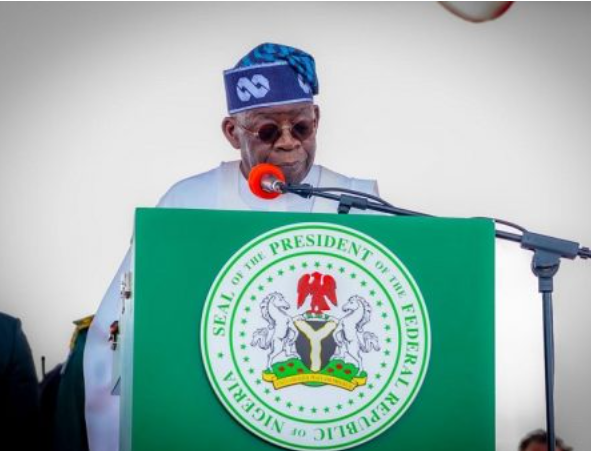
Secretary to the Government of the Federation, George Akume, announced the deadline on Wednesday while inaugurating the Presidential Committee on National Threat Assessment and Five-Year Strategic Defence Operations Plan on behalf of the President.
Akume charged members of the committee to approach the assignment with urgency, professionalism, objectivity and patriotism, stressing that both documents must be submitted within 90 days for presidential consideration and approval.
However, the SGF did not disclose whether sanctions would apply if the committee fails to meet the deadline.
The committee’s inauguration followed Tinubu’s directive to the Armed Forces, Nigeria Police Force, Department of State Services and other security agencies to immediately coordinate efforts to rescue victims of the Niger State abduction.
The President also ordered service chiefs to provide regular updates on the operation until all abducted persons are accounted for.
Tinubu described the perpetrators as “enemies of peace and enemies of humanity” and vowed that they would face the consequences of their actions.
From Reaction to Prevention
Akume said the new strategic framework was designed to move Nigeria’s security architecture away from responding to threats after they occur towards anticipating risks, prioritising national security challenges and aligning resources with clearly defined objectives.
He said the increasingly complex nature of contemporary security threats made it necessary for defence, intelligence and security institutions to operate from a shared understanding of the national security environment.
According to him, operational requirements are sometimes considered independently without sufficient reference to a unified threat assessment or capability plan, a situation that could weaken coordination and lead to inefficient deployment of scarce resources.
“We must establish a clear path from threat to objective, from objective to capability, from capability to resource, and from resource to measurable outcome,” Akume said.
The National Threat Assessment is expected to identify existing and emerging threats, assess their strategic implications and determine how they could evolve, while recommending appropriate government responses.
It will also help security agencies distinguish between immediate threats requiring urgent intervention and emerging risks that demand early investment in intelligence, technology, infrastructure and training.
The Five-Year Strategic Defence Operations Plan will translate the assessment into specific operational requirements, including personnel, equipment, intelligence, logistics, infrastructure and technology needed across the country’s various theatres of operation.
The plan is also expected to identify capability gaps and establish procurement priorities based on assessed threats and operational needs rather than individual institutional preferences.
Akume said the five-year framework would support long-term force development, equipment acquisition, infrastructure, training, maintenance, research and development, as well as efforts to strengthen Nigeria’s defence industrial base.
However, the plan will operate on a rolling basis and be reviewed annually to reflect emerging threats, technological developments and lessons from ongoing operations.
The committee will also develop implementation timelines, assign responsibilities and establish monitoring and evaluation mechanisms for measuring outcomes.
Committee Membership
The committee is coordinated and supported by the Office of the President’s Special Adviser on Homeland Security, Major General Adeyinka Famadewa (retd.).
Its members include National Security Adviser Nuhu Ribadu; Minister of Defence, General Christopher Musa (retd.); Minister of State for Defence, Bello Matawalle; Chief of Defence Staff, General Olufemi Oluyede; Chief of Army Staff, Lt. General Waidi Shaibu; Chief of Air Staff, Air Marshal Sunday Kelvin Aneke; and Chief of Naval Staff, Vice Admiral Idi Abbas.
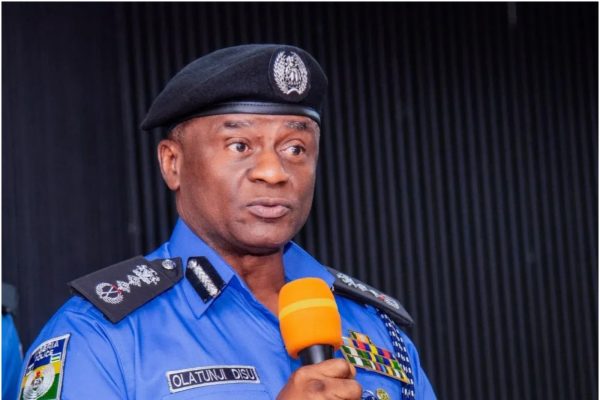
Others are Inspector-General of Police Olatunji Rilwan Disu; Director-General of the DSS, Tosin Ajayi; and Director-General of the National Intelligence Agency, Ambassador Muhammed Muhammed.
Famadewa described the assignment as a shared national responsibility and said his role would be to facilitate collaboration and harness the expertise of members.
He disclosed that subcommittees would be established to handle specialised areas and ensure that the assignment is completed within the 90-day deadline.
The initiative comes at a time of heightened concern over recurring attacks and abductions, particularly in parts of the North-West and North-Central, where armed groups have continued to target communities, highways and other vulnerable locations.
The government is now seeking to place intelligence, planning, procurement and operational deployment under a more coordinated strategic framework, with the ultimate goal of strengthening Nigeria’s capacity to anticipate and prevent security threats.
—————————————————————————————————————————————
Your help to our media platform will support the delivery of the independent journalism and broadcast the world needs. Support us by making any contribution. Your donation and support allows us to be completely focus, deeply investigative and independent. It also affords us the opportunity to produce more programmes online which is a platform universally utilised.
Thank you.
Please click link to make – DONATION