

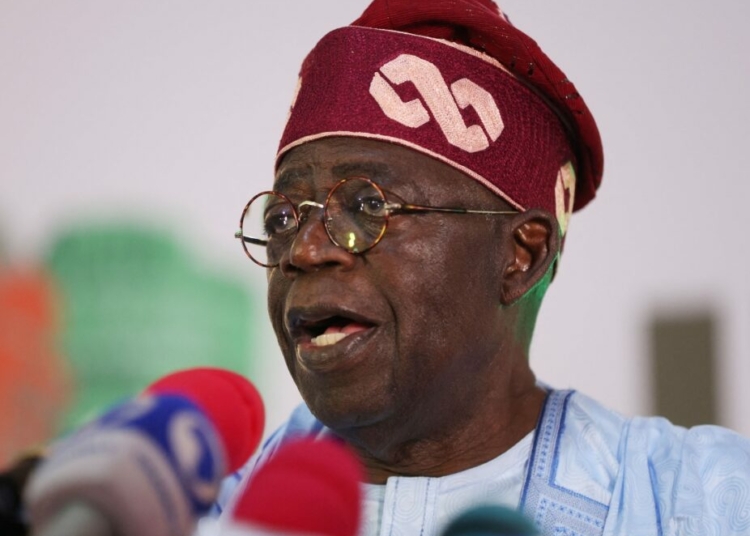
President Bola Tinubu has announced plans to reform the Nigerian National Petroleum Company (NNPC) and list it on the capital market as part of his administration’s broader economic reforms aimed at driving growth and building a $1 trillion economy.
Tinubu disclosed this at the State House, Abuja, while receiving the Board and Management of the Nigerian Exchange Group (NGX), who briefed him on the rebound of Nigeria’s stock market.
According to a statement by the President’s Special Adviser on Information and Strategy, Bayo Onanuga, the value of the Nigerian stock market has risen from about N30 trillion in 2023 to N160 trillion.
Tinubu said the positive assessments of the Nigerian economy and improving economic indicators were evidence that the reforms undertaken by his administration were beginning to yield results.
He maintained that the reforms were aligned with global best practices and had helped stimulate economic activity while laying the foundation for sustainable long-term growth.
“The goal of a one trillion-dollar economy is achievable, given the nation’s population, the brilliance and audacity of its people,” the President said.
He added: “The NNPC will be reformed and listed in the capital market.”
The President commended members of his Economic Management Team, including the Minister of Finance and Coordinating Minister of the Economy, Taiwo Oyedele; Minister of Budget and Economic Planning, Atiku Bagudu; Governor of the Central Bank of Nigeria, Olayemi Cardoso; and Chairman of the National Revenue Service, Zacch Adedeji, for their contributions to the reforms.
Reflecting on the state of the economy when his administration assumed office, Tinubu said the government inherited significant economic and monetary challenges.
He praised Cardoso for his role in implementing monetary reforms and stabilising the economy, stressing that the government remained committed to building a prosperous nation.
“If the stock market is doing well, then we are doing well,” Tinubu said.
The President also reaffirmed the importance of the private sector in creating jobs and driving economic growth, citing the Dangote Refinery as an example of the role of private investment in strengthening the economy.
He assured members of the economic team of his continued support, saying he would continue to “read, think and support” their efforts.
Earlier, Oyedele said Nigeria’s capital market had recorded significant growth in recent years, attributing the performance to the administration’s economic reforms.
He described the Nigerian capital market as one of the best-performing markets globally and said it could serve as an important vehicle for wealth creation.
Oyedele urged the NGX and the Securities and Exchange Commission to simplify the listing process and introduce innovations capable of attracting more young Nigerians into the capital market.
He also proposed growing Nigeria’s capital market to $1 trillion.
The Chairman of the NGX, Umaru Kwairanga, expressed confidence that Nigeria could achieve the $1 trillion economy target before 2030, saying the country possessed the human and material resources required to achieve the goal.
He attributed the stock market’s improved performance partly to the administration’s reforms and said international stakeholders had taken note of the turnaround.
The Group Managing Director and Chief Executive Officer of NGX, Temi Popoola, said the total value of stocks listed on the Exchange had risen from nearly N30 trillion when Tinubu assumed office in 2023 to about N160 trillion.
He projected that the market could reach N230 trillion by the end of the year.
Popoola also said the NGX All-Share Index had risen from about 52,000 points to 244,000 points, while between 500,000 and 900,000 millionaires had reportedly been created through the market’s growth.
He added that other African markets were increasingly looking to Nigeria as a model for developing their capital markets.
Adedeji said the President’s economic vision was becoming clearer as economic data continued to show signs of growth.
He described the removal of the petrol subsidy as a major step towards correcting what he called decades of economic distortions.
Cardoso, meanwhile, said the successful recapitalisation of the banking sector, despite initial scepticism, had demonstrated growing confidence in Nigeria’s financial system.
He said continued economic stability would attract more investment into the country and support growth in the real sector.
—————————————————————————————————————————————
Your help to our media platform will support the delivery of the independent journalism and broadcast the world needs. Support us by making any contribution. Your donation and support allows us to be completely focus, deeply investigative and independent. It also affords us the opportunity to produce more programmes online which is a platform universally utilised.
Thank you.
Please click link to make – DONATION