



 The Osun State governorship election has come and gone, but its significance extends far beyond the boundaries of the state. It has offered Nigerians an important democratic lesson: political power ultimately derives its legitimacy from the people, and an electorate that is informed, organised and determined can resist intimidation, inducement and the overwhelming influence of powerful political interests.
 Governor Ademola Adeleke of the Accord Party was declared re-elected after polling 511,067 votes against the 444,815 secured by Bola Oyebamiji of the ruling All Progressives Congress. Adeleke won 19 of the state’s 30 local government areas, while his APC challenger prevailed in 11. The African Democratic Congress came a distant third with 17,180 votes. Channels Television reported the officially declared figures.
The importance of this result lies not merely in who won or lost. It lies in what the election says about the possibilities of Nigerian democracy.
Adeleke entered the contest on the platform of the Accord Party, having left the Peoples Democratic Party, under which he was first elected. He therefore confronted the ruling party at the centre without the traditional machinery of one of Nigeria’s two dominant parties. Yet the electorate returned him to office.
This demonstrates that political parties remain important, but they do not possess absolute ownership of the electorate. Where a candidate has built a recognisable relationship with the people, established a credible local structure and persuaded voters that their mandate is worth defending, even a smaller political platform can become electorally competitive.
It is equally significant that the APC, despite controlling the Federal Government and possessing substantial political resources, could not automatically convert federal influence into victory. The result challenges the increasingly dangerous belief that every election is decided beforehand by those who control Abuja.
Federal power may provide access, visibility and institutional advantages, but it cannot permanently extinguish an awakened electorate.
However, we must resist the temptation to romanticise the election or present it as flawless. Civil-society observers described the exercise as largely peaceful and reported that INEC officials commenced proceedings at the prescribed time in most observed polling units. Nevertheless, there were also reports of vote-buying, isolated violence, intimidation and malfunctioning BVAS devices. Nigeria Civil Society Situation Room and Premium Times documented these strengths and shortcomings.
The correct lesson, therefore, is not that the people’s will shall always prevail automatically. Popular will prevails when citizens participate in sufficient numbers, resist inducement, protect their votes and insist that electoral institutions follow the law. It also requires responsible conduct by INEC, professional neutrality from security agencies, vigilant party agents, independent observers and transparent collation.
Democracy is not self-executing. A mandate that is not organised, defended and accurately counted can still be frustrated.
Lessons for the 2027 general elections
First, voter education must move beyond slogans. Nigerians need practical information about voter registration, Permanent Voter Card collection, accreditation, ballot procedures, result documentation and lawful channels for reporting irregularities. Education must reach rural communities, markets, schools, religious institutions, professional associations and young voters through languages they understand.
Second, political participation must not begin and end on election day. Citizens should interrogate candidates, examine their records and demand clear commitments on security, economic recovery, education, healthcare, national unity and institutional reform. Elections should be contests of ideas and competence—not merely ethnicity, religion, regional sentiment or financial inducement.
Third, opposition parties must learn the correct lesson from Osun. The victory of a candidate on a smaller platform demonstrates the value of grassroots organisation, but it should not become an excuse for further national fragmentation. A governorship contest in one state is fundamentally different from a presidential election requiring broad geographical acceptance across the federation.
For 2027, opposition coordination must therefore become concrete. Agreements should cover candidate selection, dispute resolution, campaign financing, polling agents, data management and protection of results. Announcing a coalition is not enough. Personal ambition must be subordinated to a transparent and credible process capable of producing a candidate acceptable across regions and constituencies.
Fourth, INEC must treat Osun as a rehearsal, not a final certificate of success. The Commission should publicly evaluate the performance of BVAS, explain delays in uploading polling-unit results and disclose the corrective measures it will implement before the general elections. Electoral confidence grows through verifiable transparency, not assurances alone.
Fifth, security agencies must remain loyal to the Constitution rather than to any party or candidate. Their responsibility is to protect voters, officials, observers and electoral materials—not to influence the political direction of the country. Any officer found intimidating voters, assisting political thugs or enabling malpractice should face prompt and visible sanctions.
Sixth, vote-buying must be confronted as an attack on national sovereignty. Poverty makes citizens vulnerable to inducement, but the money offered at polling units is not charity; it is an advance payment for years of neglect. Political parties, anti-corruption agencies and law-enforcement bodies must pursue both the buyers and their sponsors—not merely arrest impoverished voters while powerful financiers remain untouched.
Finally, every result must be protected from the polling unit to the final collation centre. Parties and civic organisations should train agents properly, maintain independent records of declared results and use lawful technology to preserve documentary evidence. Citizens must remain peaceful but vigilant throughout voting and collation.
The road ahead
Osun has shown that no political fortress is impregnable and that incumbency at the federal level does not make electoral competition meaningless. But one state election cannot guarantee the integrity or outcome of a nationwide contest. Nigeria’s 2027 general elections will be larger, more complex and more intensely contested.
The enduring lesson is that sovereignty remains with the people—but sovereignty must be exercised.
When citizens are informed, organised and courageous; when political parties present credible choices; when INEC acts transparently; when security agencies remain neutral; and when the judiciary protects the law rather than political convenience, the ballot can become stronger than money, intimidation and federal might.
Osun has spoken. The responsibility now falls upon Nigerians everywhere to ensure that, in 2027, Nigeria speaks—and that its voice is respected.
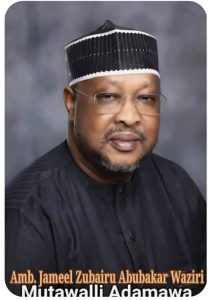 Ambassador M. J. Abubakar-Waziri
Ambassador’s Desk
—————————————————————————————————————————————
Your help to our media platform will support the delivery of the independent journalism and broadcast the world needs. Support us by making any contribution. Your donation and support allows us to be completely focus, deeply investigative and independent. It also affords us the opportunity to produce more programmes online which is a platform universally utilised.
Thank you.
Please click link to make – DONATION