

Osun State goes to the polls on Saturday in a closely watched governorship election that has assumed significance beyond the boundaries of the South-West state.
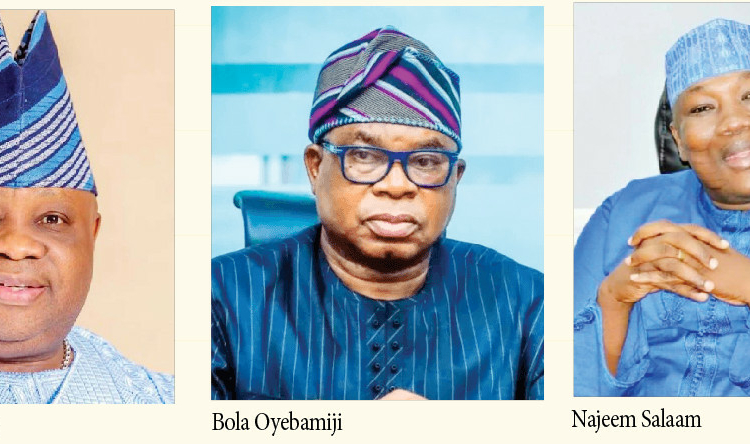
Although 15 political parties are participating, the contest is expected to be dominated by three major candidates: incumbent Governor Ademola Adeleke of the Accord Party, the APC candidate, Bola Oyebamiji, and the African Democratic Congress candidate, Najeem Salaam.
The election follows weeks of tension, allegations of political violence, clashes and arrests, heightening concerns about the prospects of a peaceful and credible poll.
It is also the second governorship election to be conducted by the Independent National Electoral Commission under its current chairman, Prof. Joash Amupitan (SAN), following the June 20 Ekiti governorship election, which was generally adjudged peaceful.
The Osun poll will therefore provide another major test of INEC’s preparedness and its ability to strengthen public confidence ahead of the 2027 general elections.
Why Is the Osun Election Important?
A Bellwether for 2027
Saturday’s election could offer an early indication of voter sentiment ahead of the 2027 general election.
With Osun known for its competitive and sometimes unpredictable voting patterns, the outcome will be closely watched by political parties as they assess their strengths, voter preferences and campaign strategies.
A Political Grudge Match
Beyond the candidates, the election has brought several influential political figures with long-standing relationships and rivalries into direct competition.
The APC candidate, Bola Oyebamiji, is backed by former Governor Adegboyega Oyetola, who is seeking to reclaim Osun for the APC after losing the 2022 election to Adeleke.
The ADC’s Najeem Salaam has the backing of former Governor Rauf Aregbesola, now the party’s National Secretary. Aregbesola previously aligned with Adeleke in the 2022 election that ended Oyetola’s tenure.
For Adeleke, Saturday’s poll is an opportunity to retain power and consolidate his political influence in the state.
A Major Test for INEC
The election will provide another opportunity for the Amupitan-led INEC to demonstrate its ability to conduct credible elections under intense political pressure.
The commission’s handling of logistics, the deployment of electoral materials, the performance of the Bimodal Voter Accreditation System and the management of results will be closely scrutinised.
Its performance will also offer valuable lessons ahead of the 2027 general elections.
Security and Voter Apathy
Security remains one of the biggest concerns surrounding the election.
The campaign period has been characterised by allegations of politically motivated violence, arrests and inflammatory rhetoric, raising fears that some voters may stay away from polling units.
The ability of security agencies to protect voters, electoral officials and materials could therefore have a direct impact on turnout and the credibility of the election.
Seven Things That May Decide the Vote
1. Security
The effectiveness of security agencies in preventing violence and guaranteeing the safety of voters, electoral officials and election materials will be crucial.
2. INEC Preparedness
The timely deployment of electoral materials, effective functioning of BVAS and the competence of polling officials could significantly influence the conduct and credibility of the election.
3. Ground Game and Polling Agents
Political parties will need strong polling agents capable of monitoring voting, accreditation, counting and the collation of results at every stage.
4. Money
Although financial resources do not automatically guarantee victory, access to funds can provide candidates with an advantage in mobilisation and last-minute campaigning in a tightly contested election.
5. Last-Minute Political Deals
Late alliances, negotiations and attempts to win over influential politicians or former opponents could prove decisive in an election where the margin between the leading candidates may be narrow.
6. Voter Turnout
Turnout could ultimately determine who wins. Candidates are expected to depend heavily on strong participation in their traditional political strongholds.
7. Vigilance During Collation
The battle will not end when voting closes.
Parties and candidates will need to closely monitor the collation process from polling units through wards and local government areas to the state collation centre.
Given past allegations of discrepancies during result collation in Nigerian elections, transparency and vigilance at every stage will be critical.
What to Expect
With the race too close to call, Saturday’s election is likely to be decided by turnout, security, grassroots mobilisation, the efficiency of INEC’s machinery and the ability of candidates to protect their votes.
Beyond determining who occupies the Osun Government House, the election could provide an important snapshot of Nigeria’s political landscape ahead of 2027.
—————————————————————————————————————————————
Your help to our media platform will support the delivery of the independent journalism and broadcast the world needs. Support us by making any contribution. Your donation and support allows us to be completely focus, deeply investigative and independent. It also affords us the opportunity to produce more programmes online which is a platform universally utilised.
Thank you.
Please click link to make – DONATION