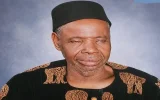


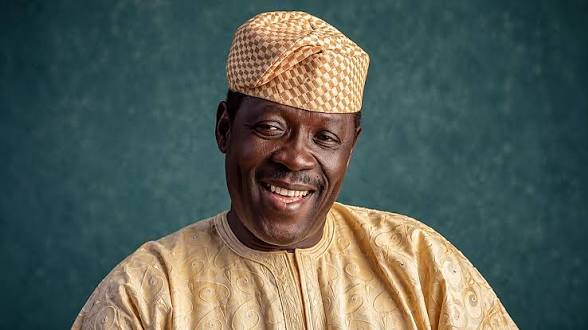
The Nigerian film industry has been thrown into mourning following the death of veteran Yoruba actor, Taiwo Hassan, popularly known as Ogogo, at the age of 66.
Hassan died on Sunday, August 23, 2026, after battling cancer. His daughter, Kira Taiwo, confirmed his death during an emotional Instagram Live session, days after she and her sister, Lima, appealed publicly for help with their father’s treatment.
Ogogo’s death marks the end of a career spanning more than four decades and leaves a significant void in the Yoruba-language film industry, where he established himself as an actor, filmmaker and one of the genre’s most recognisable faces.
As tributes pour in, here are seven things to know about the life and career of the late actor.
1. He was born in Ilaro, Ogun State
Taiwo Hassan was born on October 31, 1959, in Ilaro, Ogun State.
He began his early education in his hometown before moving to Lagos, where he continued his studies and later trained in automobile mechanics.
His early years were far removed from the glamour of the Nigerian entertainment industry, but the skills and discipline he acquired during that period would become part of the foundation of his eventual career.
2. He worked as an automobile mechanic before becoming an actor
Before gaining fame as Ogogo, Hassan trained as an automobile technician.
He attended a technical college in Lagos and later joined the Lagos State Water Corporation, where he worked for about 13 years.
For several years, he combined his government job with his growing interest in theatre and acting before eventually taking the decision to pursue entertainment as a full-time career.
3. His acting career began in the early 1980s
Hassan began his acting journey in the early 1980s while still working at the Lagos State Water Corporation.
He received practical theatre training under theatre practitioner Awo Ademola Fagbemi and began participating in stage productions.
After more than a decade of combining employment with acting, Hassan left his government job in 1994 to devote himself fully to the entertainment industry.
That decision would ultimately launch a career that made him one of the most recognisable actors in Yoruba cinema.
4. He became a major figure in Yoruba cinema
Ogogo built his reputation through memorable performances in Yoruba-language films, earning recognition for his commanding screen presence and versatility.
Beyond acting, he was also involved in other areas of filmmaking, including production, directing and screenwriting.
Over the decades, his performances and contribution to the industry helped cement his status as one of the veteran figures who shaped modern Yoruba-language cinema.
5. He was associated with the Odunfa Caucus
Hassan was one of the prominent practitioners associated with the Odunfa Caucus, a theatre and film collective in Lagos that played an important role in the development of Yoruba entertainment.
The caucus brought together several actors and theatre practitioners who later became influential figures in the Nigerian film industry.
Ogogo worked alongside established names including Yinka Quadri, building professional relationships that stretched across several decades.
6. His career included several notable film productions
Ogogo’s filmography covered several decades and included Yoruba-language productions as well as projects that attracted audiences beyond the traditional Yoruba film market.
Among the productions associated with him are Owo Blow, Agbelebu, Omin and Wicked Boy.
He also appeared in Kunle Afolayan’s 2022 epic film Aníkúlápó, where he played Alaafin Ademuyiwa. The production earned multiple nominations at the 2023 Africa Magic Viewers’ Choice Awards, including a Best Supporting Actor nomination for Hassan.
The role introduced the veteran performer to another generation of Nigerian film audiences while underscoring his ability to remain relevant across different eras of the industry.
7. His final days were marked by a battle with cancer
Ogogo’s final days were overshadowed by a serious health crisis.
Earlier in August, his daughters, Kira and Lima, revealed that their father was battling stage-four cancer and appealed to medical professionals and members of the public who could assist with his treatment.
The family also had to contend with false reports of his death before his passing was eventually confirmed by Kira on August 23.
His death brings to a close a career that spanned more than 40 years and saw him evolve from an automobile mechanic and government employee into one of the most celebrated veterans of Yoruba-language cinema.
For generations of Nigerian film lovers, Ogogo will be remembered not only for the characters he portrayed on screen but also for his contribution to the growth and evolution of the Yoruba film industry.
—————————————————————————————————————————————
Your help to our media platform will support the delivery of the independent journalism and broadcast the world needs. Support us by making any contribution. Your donation and support allows us to be completely focus, deeply investigative and independent. It also affords us the opportunity to produce more programmes online which is a platform universally utilised.
Thank you.
Please click link to make – DONATION