

Nigeria is set to commence local production of armoured vehicles, anti-drone systems and other specialised military equipment as part of efforts to strengthen the country’s defence manufacturing capacity and reduce dependence on imported hardware.
The Chief Executive Officer of the Defence Industries Corporation of Nigeria–D7G (DICON-D7G), Osman Chennar, disclosed this while highlighting the outcome of a two-day inspection tour of factories and military production facilities in Cairo, Egypt.
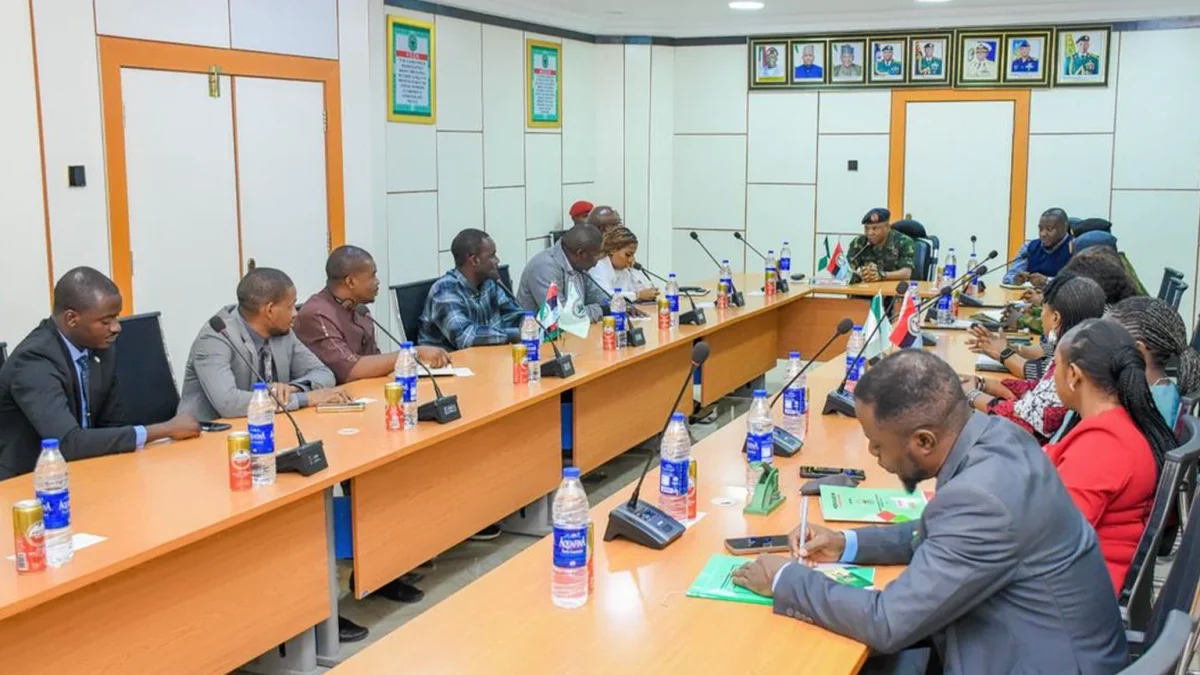
The inspection was carried out by a Nigerian delegation led by the Minister of State for Defence, Bello Matawalle, as part of efforts to expand Nigeria’s indigenous defence manufacturing capabilities.
Chennar said the initiative, being pursued in partnership with Eagles International for Defence Systems, would facilitate technology transfer, strengthen local production capacity and create employment opportunities.
He said the partnership was expected to create jobs for more than 200 workers while providing opportunities for about 100 retired military personnel.
According to him, the delegation inspected various military equipment and production systems that could support Nigeria’s growing defence manufacturing ambitions.
He said the arrangement would enable Nigeria to acquire advanced defence technologies and gradually develop the capacity to manufacture a wider range of military platforms locally, with the potential to export some of the equipment to other African countries.
Among the platforms being considered for local production are the Armoured Multi-Purpose Vehicle BR6, a modular multi-mission defence platform; Armoured Personnel Carrier cabin; 120mm manual mortar launcher cabin; and medical evacuation and ambulance cabins.
Others include the MRAP-Buffalo U.10 and M.12 armoured vehicles, MRAP-Buffalo F-4, Rhino Guard GXR anti-drone and RPG-protected vehicle, APC Moon PT6, GXR Phantom light vehicle and BMP-2 Infantry Fighting Vehicle.
The initiative comes amid intensified efforts by the Federal Government to reduce Nigeria’s reliance on imported military hardware while strengthening the Armed Forces’ capacity to respond to the country’s security challenges.
Chennar also disclosed that the Nigerian Army had begun receiving locally manufactured armoured vehicles as part of efforts to enhance its operational capacity and promote domestic defence production.
He said DICON-D7G was also planning to develop a dedicated military jetty in Lagos to strengthen the logistics chain supporting local defence manufacturing.
According to him, the proposed facility would facilitate the movement of raw materials, components and finished military equipment while serving as a strategic hub for distributing defence equipment across Nigeria and potentially to other African countries.
Chennar said construction of the jetty was expected to commence in about two months.
When fully operational, he said, the facility could create employment opportunities for more than 200 retired military personnel and over 1,000 civilians.
The planned production lines and logistics facility are expected to further deepen Nigeria’s indigenous defence industry and position the country as a potential supplier of military equipment within the African market.
—————————————————————————————————————————————
Your help to our media platform will support the delivery of the independent journalism and broadcast the world needs. Support us by making any contribution. Your donation and support allows us to be completely focus, deeply investigative and independent. It also affords us the opportunity to produce more programmes online which is a platform universally utilised.
Thank you.
Please click link to make – DONATION