


…1.4 million applications recorded in two weeks as FG provides ₦30,000 monthly stipends, starter packs
The Federal Government has disclosed that nearly 250,000 Nigerians are currently undergoing skills training across more than 1,200 accredited centres nationwide under its Technical and Vocational Education and Training (TVET) programme.
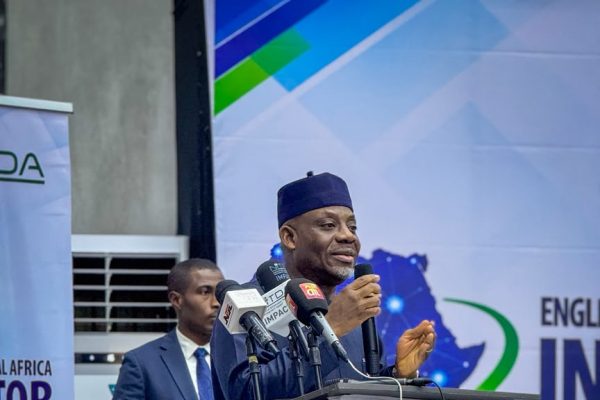
The Minister of Education, Dr Maruf Tunji Alausa, CON, disclosed this during an engagement with the House of Representatives Committee on Polytechnic and Higher Technical Education, chaired by Hon. Fuad Kayode Laguda.
Alausa, who briefed the lawmakers on the programme’s implementation, funding, enrolment and accountability mechanisms, said the initiative was designed to equip Nigerian youths with practical, industry-relevant skills to promote employment, entrepreneurship and economic growth.
He revealed that the latest TVET application portal recorded nearly 1.4 million applications within two weeks, surpassing the 1.3 million applications received during the first cohort within ten days.
According to the Minister, the rising number of applications reflects growing public interest in technical and vocational education as an alternative pathway to economic empowerment and self-reliance.
He commended President Bola Ahmed Tinubu for prioritising technical and vocational education, describing the programme as a strategic investment in human capital development and national economic transformation.
The Minister explained that the Federal Government was rebuilding the TVET ecosystem to enable young Nigerians to acquire practical competencies, secure employment, establish businesses and compete in an increasingly skills-driven global economy.
On the programme’s financial framework, Alausa disclosed that each trainee receives a monthly stipend of ₦30,000, while accredited training centres receive ₦50,000 per student monthly to support training delivery.
He said biometric attendance verification had been introduced to strengthen accountability and ensure that government funds were tied to actual participation in training activities.
The Minister explained that the initial delays in payments resulted from the implementation of the biometric verification system, noting that the Ministry prioritised verifiable attendance records over manual documentation.
He, however, confirmed that the challenges had been resolved and payments to trainees and training centres were up to date as of September 2026.
Alausa further stated that the National Board for Technical Education (NBTE) was responsible for verifying the capacity of centres seeking accreditation, adding that only institutions that met the prescribed requirements were approved to participate in the programme.
He said the accreditation process was designed to safeguard training standards, ensure quality delivery and expand access through qualified public and private-sector providers.
The Minister also disclosed that beneficiaries would receive starter packs and relevant equipment upon completing their training to enable them to put their newly acquired skills into practice.
He cited tailoring and electrical installation as examples of vocational trades in which graduates would receive the tools needed to begin providing services within their communities.
According to him, the provision of starter packs would help beneficiaries establish businesses, generate income and contribute to economic development at the grassroots.
Beyond conventional vocational trades, Alausa disclosed that the Federal Government was supporting a Digital Technology Academy currently training 36,000 Nigerians in specialised fields, including software development, cybersecurity, natural language processing, information technology automation, artificial intelligence, machine learning and quantum computing.
He said participants had access to international learning platforms and professional certification opportunities associated with Coursera, Google and IBM.
The initiative, he explained, was aimed at equipping young Nigerians with globally competitive digital skills that would enable them to access employment opportunities and provide services to clients within and outside the country.
The Minister added that the Ministry was improving training infrastructure, upgrading equipment and strengthening instructors’ capacity to ensure that beneficiaries received training that met industry requirements.
He also disclosed that a TVET job portal was being introduced to connect graduates with prospective employers and improve the transition from skills acquisition to employment.
Alausa further stated that education in federal technical colleges, as well as in one designated state technical college in each state, was free, with the Federal Government bearing the associated training costs.
Providing details of the programme’s geographical spread, the Minister said Bauchi State had 4,888 trainees across 50 accredited centres, including 520 in Katagum.
Akwa Ibom State recorded 5,885 trainees across 57 accredited centres, while Kogi State had 5,144 trainees across 42 centres.
In Katsina State, approximately 1,800 trainees were undergoing training in eight newly established technical centres adopted into the programme.
The Minister also highlighted ongoing efforts to rehabilitate and develop technical education infrastructure, including facilities in the Federal Capital Territory, while improving the quality of instruction through specialised training programmes.
He disclosed that some lecturers were participating in a train-the-trainer programme in Lagos with experts from the Singapore Institute of Technical Education, aimed at strengthening instructors’ capacity and improving the quality of technical and vocational education.
Alausa acknowledged the need for more regular engagement between the Ministry and the National Assembly, saying sustained communication would enable lawmakers to understand the programme’s implementation and communicate its benefits to their constituents.
He assured the Committee that the Ministry would provide detailed statistics on enrolment, accredited training centres and ongoing training activities across states and local government areas.
He also encouraged lawmakers to visit accredited centres in their constituencies to assess implementation and interact directly with trainees and training providers.
The Minister emphasised that the TVET programme was intended to serve as a sustainable human capital development strategy rather than a temporary social intervention, with the ultimate objective of equipping beneficiaries with the skills and resources needed to achieve economic independence.
In his remarks, the Chairman of the House Committee on Polytechnic and Higher Technical Education, Hon. Fuad Kayode Laguda, described the engagement as fruitful and purposeful.
Laguda said the meeting provided an opportunity for constructive discussions on developments in the education sector and progress in the implementation of technical and vocational education initiatives.
He reaffirmed the Committee’s commitment to strengthening collaboration with the Federal Ministry of Education, improving legislative understanding of the programme and sustaining effective oversight to enhance performance in the sector.
The lawmaker expressed optimism that continued engagement and cooperation between the Committee and the Ministry would promote meaningful progress within the remaining period of the 10th National Assembly.
Alausa urged members of the Committee to support the programme by raising public awareness, engaging their constituents and monitoring accredited training centres in their respective constituencies.
He reaffirmed the Federal Government’s commitment to expanding access to quality technical and vocational education, strengthening accountability and equipping Nigerian youths with practical, industry-relevant and globally competitive skills to drive employment, entrepreneurship and national development.
—————————————————————————————————————————————
Your help to our media platform will support the delivery of the independent journalism and broadcast the world needs. Support us by making any contribution. Your donation and support allows us to be completely focus, deeply investigative and independent. It also affords us the opportunity to produce more programmes online which is a platform universally utilised.
Thank you.
Please click link to make – DONATION