


Lassa Fever Death Toll Hits 224 as Nigeria Records 936 Confirmed Cases in 23 States
Nigeria has recorded 936 confirmed cases of Lassa fever and 224 deaths so far in 2026, with infections spreading across 23 states and 113 local government areas, according to the Nigeria Centre for Disease Control and Prevention (NCDC).
The latest Lassa fever situation report for Epidemiological Week 27 showed that the country recorded 14 new confirmed cases, down from 31 infections reported in the previous week. The new cases were identified in Ondo, Edo, Bauchi, Benue and Kogi states.
Despite the decline in new infections, the disease remains a major public health concern, with the case fatality rate rising to 23.9 per cent, compared to 18.9 per cent during the same period in 2025.
According to the NCDC, five states accounted for 85 per cent of all confirmed cases reported this year. Ondo State recorded the highest burden with 30 per cent of infections, followed by Bauchi (25 per cent), Taraba (14 per cent), Edo (10 per cent) and Benue (six per cent). The remaining 15 per cent of confirmed cases were reported across 18 other states.
The agency said the outbreak continues to affect mostly young adults, with people aged 21 to 30 years accounting for the highest number of confirmed infections. Patients ranged in age from one to 93 years, with a median age of 30 years, while the male-to-female ratio among confirmed cases stood at 1:0.9.
The report also indicated that both suspected and confirmed cases have increased compared with the corresponding period in 2025. However, no healthcare worker was infected during the latest reporting week.
To contain the outbreak, the NCDC said its National Lassa Fever Incident Management System remains activated to coordinate response efforts nationwide.
During the reporting period, the agency and its partners trained healthcare workers in Bauchi, Taraba, Ondo and Ebonyi states on case management, infection prevention and control (IPC), screening and triage.
Community sensitisation campaigns were also conducted in Edo and Ondo states, targeting religious and traditional leaders, farmers and market women to promote early detection and encourage prompt healthcare seeking.
Other response measures included active case searches, contact tracing in high-burden states, the distribution of personal protective equipment (PPE) to health facilities, expanded laboratory testing to support early diagnosis, and the activation of emergency response systems in Benue, Plateau, Kebbi, Kano, Gombe and Oyo states.
The NCDC also developed a 30-day healthcare worker protection plan aimed at reducing infections among frontline health personnel and reviewed the national Lassa fever case management guidelines with support from development partners.
Despite these interventions, the agency said several factors continue to drive the high fatality rate, including the late presentation of patients at health facilities, poor healthcare-seeking behaviour linked to treatment costs, inadequate environmental sanitation, low public awareness and infections among healthcare workers recorded earlier in the outbreak.
The NCDC urged state governments to sustain year-round public awareness campaigns and community engagement on Lassa fever prevention. It also advised healthcare workers to maintain a high level of suspicion for the
disease, promptly refer suspected cases for treatment and strictly adhere to infection prevention and control measures.
The agency further called on development partners to continue supporting states in strengthening their capacity to prevent, detect and respond rapidly to Lassa fever outbreaks.
Lassa fever is an acute viral haemorrhagic disease caused by the Lassa virus, which is primarily transmitted through contact with food or household items contaminated by the urine or faeces of infected rodents. The virus can also spread through direct contact with the bodily fluids of infected persons.
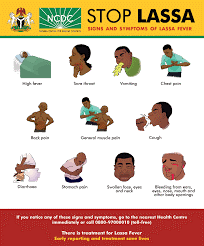
Symptoms typically begin with fever, weakness and headache but can progress to severe complications, including bleeding, breathing difficulties, swelling and multiple organ failure if left untreated.
—————————————————————————————————————————————
Your help to our media platform will support the delivery of the independent journalism and broadcast the world needs. Support us by making any contribution. Your donation and support allows us to be completely focus, deeply investigative and independent. It also affords us the opportunity to produce more programmes online which is a platform universally utilised.
Thank you.
Please click link to make – DONATION