


The Joint Admissions and Matriculation Board (JAMB) has commenced moves to reform the Unified Tertiary Matriculation Examination (UTME) by exploring the integration of life skills and critical thinking into the assessment of candidates seeking admission into tertiary institutions.
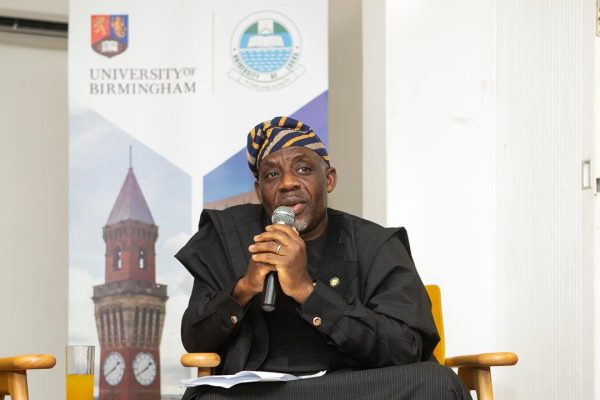
The JAMB Registrar, Prof. Segun Aina, disclosed this on Wednesday in Abuja at the inauguration of a committee of education stakeholders and experts tasked with developing a framework for incorporating the competencies into the UTME.
Aina said the proposed reform was driven by the need to ensure that the examination remained relevant to the changing demands of tertiary education and effectively performed its role as a selection and ranking examination.
According to him, UTME should not simply duplicate the subject-based assessments candidates have already undergone at the Senior Secondary School level through examinations conducted by bodies such as the West African Examinations Council (WAEC) and the National Examinations Council (NECO).
He explained that candidates who sit for UTME already possess O-Level qualifications, making it necessary for JAMB to examine whether its assessment should place greater emphasis on competencies that could help predict candidates’ readiness for tertiary education.
“So ours is a ranking task. It’s not necessarily to test your subject matter expertise. So we feel for the UTME examination to be purely subject matter is a duplicity of effort of sorts,” Aina said.
He challenged the committee to determine whether the current UTME format and assessment methods remained valid in predicting candidates who would perform well in universities, polytechnics and colleges of education.
The registrar noted that the UTME format had remained largely unchanged for more than three decades, stressing that the examination system must be periodically reviewed in line with developments in education and society.
“The biggest room in the house is the room for improvement. So we want the committee to help us take a look at this,” he said.
Aina said the committee was deliberately constituted to include representatives from different segments of the education sector, arguing that JAMB needed the views of stakeholders who would be affected by any changes to the examination.
“We cannot be judges in our own matter,” he said, adding that the committee had been given an initial four weeks to examine the proposal from a conceptual perspective.
The Minister of Education, Dr Tunji Alausa, represented at the event by his Technical Assistant to the Acting Permanent Secretary, Federal Ministry of Education, Mr Oni Adedeji, said the initiative was consistent with ongoing efforts by the Federal Government to strengthen assessment practices in the education sector.
Alausa charged the committee to develop assessment modalities that would be standardised, fair and transparent, with capacity to measure candidates’ analytical, logical and verbal reasoning abilities beyond the recall of subject content.
He said the committee would also determine how the proposed competencies would be introduced, including whether they should constitute a separate component of UTME or be embedded into existing subject areas.
The minister said the objective was to develop an assessment system capable of determining not only what candidates know but also how effectively they can think, reason and solve problems.
“I strongly believe getting these rights will shape how Nigeria evaluates readiness for tertiary education now and in years to come,” he said.
The chairman of the committee, Prof. Boniface Nworgu of the University of Nigeria, Nsukka, said the effectiveness of UTME should be assessed by its ability to identify candidates with strong prospects of succeeding in tertiary education.
Nworgu explained that JAMB conducts a selection examination rather than a certificate examination, making the predictive validity of the assessment particularly important.
He said changes in tertiary education curricula, including the transition from the Benchmark Minimum Academic Standards (BMAS) to the Core Curriculum and Minimum Academic Standards (CCMAS), had increased the emphasis on skills and critical thinking.
“The focus now is the area of skills and then critical thinking,” he said.
Nworgu, however, said the committee would consider other measures that could improve the predictive validity of UTME if such measures emerged during its deliberations.
He assured that the committee would rely on evidence in assessing any proposed reform and would seek measurable indicators to determine whether changes to the examination achieved their intended objectives.
The committee comprises representatives from universities, examination bodies, professional regulatory councils, secondary schools, students’ organisations and development agencies.
Among its members are Prof. Boniface Nworgu (Chairman), Prof. M. Yakasai of Bayero University, Kano, Afolabi S. Imoukhuedе, Prof. Idris Mohammed of the Medical and Dental Council, Zakariyau Abdullahi of WAEC, Engr. Prof. Aaron Aboshio of the Council for the Regulation of Engineering in Nigeria, Dr. Murtala Aliyu Sakwa of the National Board for Technical Education, Prof. Duke Okoro of the Council of Heads of Polytechnics and Colleges of Technology in Nigeria, and Jiya Umar Mohammed of the All Nigerian Conference of Principals of Secondary Schools.
Other members are drawn from the Nigerian Educational Research and Development Council, Nursing and Midwifery Council of Nigeria, National Universities Commission, Teachers Registration Council of Nigeria, National Commission for Colleges of Education, Committee of Vice-Chancellors of Nigerian Universities, National Business and Technical Examinations Board, Nigerian Union of Teachers, National Association of Nigerian Students and other professional and development organisations.
The committee is expected to submit its initial recommendations within four weeks.
The recommendations will guide the next stage of the proposed reform, including further work by assessment experts on the development and possible implementation of any framework adopted by JAMB.
—————————————————————————————————————————————
Your help to our media platform will support the delivery of the independent journalism and broadcast the world needs. Support us by making any contribution. Your donation and support allows us to be completely focus, deeply investigative and independent. It also affords us the opportunity to produce more programmes online which is a platform universally utilised.
Thank you.
Please click link to make – DONATION