

The Federal Government has unveiled plans for the establishment of the Nigeria Genomic City, a landmark initiative aimed at transforming the country into a knowledge and innovation-driven economy through cutting-edge genomic research, biotechnology and precision medicine.
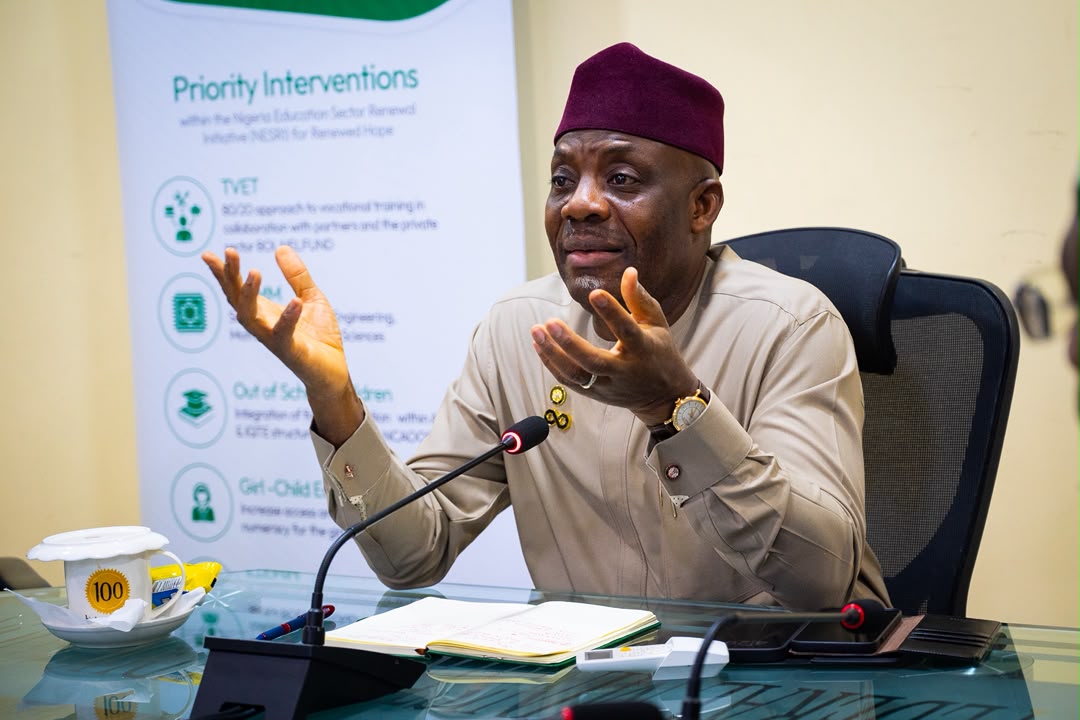
Speaking at a high-level stakeholders’ meeting in Abuja on Thursday, the Minister of Education, Dr. Maruf Tunji Alausa, said the project would position Nigeria as a global leader in genomics while advancing healthcare, food security, scientific research and economic development.
Alausa warned that Nigeria’s rapidly growing population could become a national burden if the country failed to make strategic investments in research, science and innovation.
“The biggest demographic dividend ever witnessed anywhere in the world could become a demographic calamity for us if we fail to act. We do not have a choice,” the minister said.
He explained that the Nigeria Genomic City was conceived over 20 months ago as a multi-agency, multi-ministerial initiative because of its strategic importance to national development. According to him, although the concept originated while he served as Minister of State for Health and continued after his appointment as Minister of Education, he deliberately resisted placing the project under a single ministry, insisting it should remain a national asset driven through broad collaboration.
The minister said the initiative aligns with President Bola Ahmed Tinubu’s vision of moving Nigeria from a resource-based economy to one driven by knowledge, research, technology and innovation.
He noted that while developed nations have built trillion-dollar industries around genomics and biotechnology, Nigeria continues to underutilise its rich genetic resources, with valuable African genomic data often generating enormous value abroad without corresponding benefits to the continent.
Alausa stressed the need for Nigeria to protect its scientific resources, strengthen data sovereignty and attract global partnerships that guarantee mutual benefits.
He also disclosed that the Federal Government is finalising the establishment of the National Research and Innovation Development Fund, expected to mobilise about 500 million dollars annually to support research and innovation nationwide.
According to him, the University of Abuja has been selected to host the Nigeria Genomic City, while the National Information Technology Development Agency (NITDA), the National Board for Technology Incubation (NBTI) and other strategic partners will provide technology and innovation support for the project.
The Minister of State for Education, Prof. Suwaiba Said Ahmad, described the initiative as a unique opportunity for Nigeria to emerge as a global leader in scientific innovation.
She said Nigeria’s large population, expanding research capacity and growing pool of technical experts provide a strong foundation for the project’s success, assuring stakeholders of the ministry’s commitment to mobilising partnerships for its implementation.
Presenting the technical framework, the Pioneer Director of the Centre for Genomic and Precision Medicine, University of Ibadan, Prof. Mayowa Ojo Owolabi, described the Nigeria Genomic City as a transformative investment that would revolutionise healthcare, agriculture, biotechnology and economic development.
He said the project would establish a sustainable national platform for genomic, biological and health data to support the discovery, development and commercialisation of innovative solutions for disease prevention, diagnosis and treatment.
Owolabi added that the initiative would also improve crop and livestock production, strengthen food security, develop a world-class scientific workforce, deepen collaboration with Nigerian researchers in the diaspora and position the country as an exporter of biotechnology innovations.
He noted that the project would safeguard Nigeria’s genomic resources through strong data sovereignty and intellectual property protection while leveraging emerging technologies such as artificial intelligence and bioinformatics.
Alausa reaffirmed the Federal Government’s commitment to providing the leadership and coordination needed for the successful delivery of the Nigeria Genomic City, expressing confidence that collaboration among government, academia, industry, development partners and the private sector would unlock Nigeria’s scientific potential and strengthen its global competitiveness.
—————————————————————————————————————————————
Your help to our media platform will support the delivery of the independent journalism and broadcast the world needs. Support us by making any contribution. Your donation and support allows us to be completely focus, deeply investigative and independent. It also affords us the opportunity to produce more programmes online which is a platform universally utilised.
Thank you.
Please click link to make – DONATION