

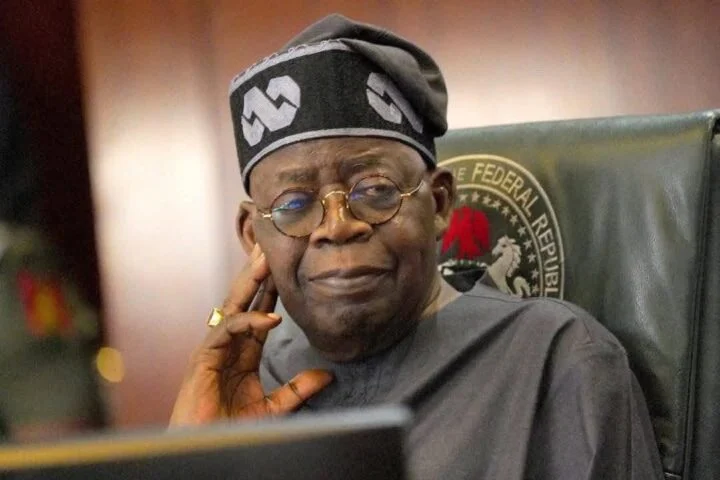
N8.05bn for churches, mosques sparks backlash as critics question Tinubu government’s priorities
The Federal Government’s plan to spend N8.05 billion on the construction and renovation of churches and mosques across Nigeria has triggered widespread criticism, with opponents questioning the timing, transparency and priority of the allocation amid rising poverty, insecurity and economic hardship.
The proposed spending, contained in the 2026 budget, has drawn criticism from political opponents, civil society groups and analysts who argue that scarce public resources should be directed towards critical sectors such as healthcare, education, infrastructure and job creation.
However, some defenders of the allocation have argued that the controversy should not overshadow broader fiscal challenges facing the country, noting that the religious projects represent only a small fraction of the overall budget.
Atiku demands transparency
Former Vice-President and African Democratic Congress presidential candidate, Atiku Abubakar, was among the first to criticise the allocation.
In a statement by his Senior Special Assistant on Public Communication, Phrank Shaibu, Atiku said it was insensitive for the government to earmark billions of naira for religious projects while millions of Nigerians struggle with poverty and rising living costs.
Citing analysis by public accountability organisation Tracka, Atiku said N6.14 billion was allocated for mosque-related projects, while N1.91 billion was earmarked for church-related projects.
He argued that while religion remains important in Nigeria’s social life, public funds must be managed with transparency and accountability.
Atiku demanded that the government publish details of all beneficiary institutions, project locations, implementing agencies and the legal basis for the allocations.
He said Nigerians had a right to know which churches and mosques would benefit from public funds and where the projects would be executed.
“The government cannot invoke the sanctity of religion to evade the standards of openness demanded in the management of public resources,” he said.
The former vice-president also warned against involving religious leaders in what he described as questionable budgetary practices, insisting that places of worship should not become channels for non-transparent public spending.
‘Schools, hospitals should come first’
Project Lead of Calabar and Gulf of Guinea Municipal and Trade Centre, David Etim, described the allocation as misplaced, arguing that government spending should focus on projects with broader social impact.
He said investments in schools, hospitals and industries would benefit more Nigerians than funding religious structures.
Etim noted that millions of Nigerians were currently facing poverty and hardship, arguing that improving living conditions should be the government’s priority.
“If the government was to choose between building that church and building a school or a hospital, putting that money into a hospital and funding it well, or into a school and funding it well, and impacting millions of lives, I personally think that God will appreciate that more,” he said.
Group shifts focus to fiscal crisis
The Alliance for Economic Research and Ethics (AERE) also criticised the inclusion of religious projects in government budgets but argued that the debate should not overshadow Nigeria’s wider financial challenges.
The group’s chairman, Kelvin Oye, said the N8.05bn allocation represented only a tiny portion of the proposed N68.32tn 2026 budget.
According to AERE, the allocation accounts for about 0.0118 per cent of total spending and would have little impact on the country’s projected N31.45tn budget deficit if removed.
The organisation said greater attention should be paid to issues such as rising debt, borrowing and the cost of servicing government obligations.
It noted that N15.8tn had been set aside for debt servicing, describing the figure as a major pressure on public finances.
The group also questioned why religious projects appeared under the budgets of ministries that do not have direct responsibility for religious affairs, warning that such practices could weaken transparency and accountability.
AERE called for stronger revenue generation, improved fiscal discipline and a shift towards spending that supports economic growth and development.
Opposition alleges political motive
A chieftain of the Peoples Democratic Party in Lagos State, Chief Lanre Adebowale, accused the Tinubu administration of using the allocation as a political strategy ahead of the 2027 elections.
Adebowale alleged that the government was seeking to win support from Christian and Muslim voters through the projects.
“They think that when they say they have earmarked N8.05bn to renovate churches and mosques and possibly build new ones, Christians and Muslims would cast their votes for the APC,” he said.
He argued that Nigerians were more concerned about security, food prices, employment and access to healthcare than the construction or renovation of worship centres.
“What Nigerians want today is security of their lives and property. They want food on their tables, jobs for their children and hospitals to attend to their sick ones,” he added.
The controversy over the allocation continues to fuel debate over the role of government in funding religious projects and whether public resources should be prioritised towards social and economic interventions.
—————————————————————————————————————————————
Your help to our media platform will support the delivery of the independent journalism and broadcast the world needs. Support us by making any contribution. Your donation and support allows us to be completely focus, deeply investigative and independent. It also affords us the opportunity to produce more programmes online which is a platform universally utilised.
Thank you.
Please click link to make – DONATION