

Andy Burnham’s First Day as UK Prime Minister: Bold Promises, New Style and a Test of Leadership
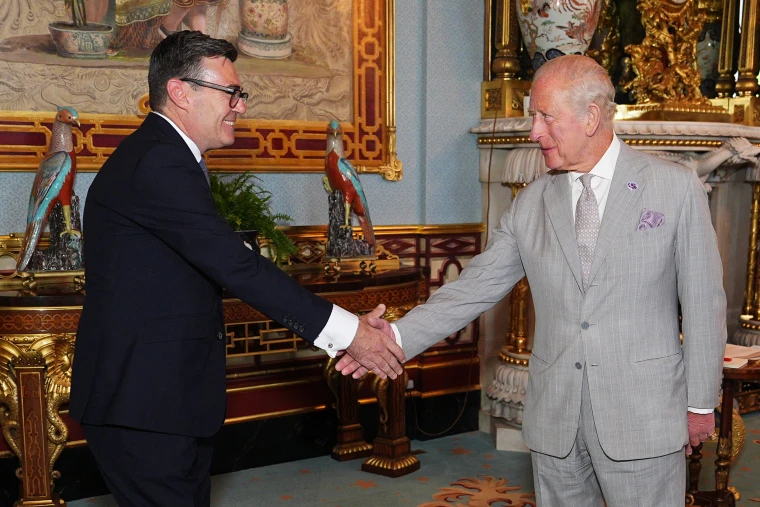
London — Britain’s new Prime Minister Andy Burnham entered 10 Downing Street on Monday with few detailed policy announcements but offered a clear glimpse into the style and priorities that could define his premiership.
From his first hours in office, Burnham focused on symbolism as much as substance, making ambitious pledges, adopting a more informal leadership style and seeking to create a more optimistic atmosphere around the government.
Bold ambitions and a focus on homelessness
Alongside promises of major reforms in areas including welfare, regional power and public services, Burnham announced his first policy move would target homelessness.
“I will soon go through that door behind me and issue my first instruction to end rough sleeping in our country,” he said at the conclusion of his first address as prime minister.
Shortly afterward, his government announced an additional £340 million ($457 million) funding package aimed at supporting the effort.
“The prime minister rejects the notion that ending rough sleeping will take decades or that it can’t be done at all,” a statement from his team said, underlining the scale of his ambition.
At least 4,600 people in England sleep rough every night, according to homelessness charity Shelter, though the broader number of people facing homelessness is significantly higher.
Burnham’s approach represents a contrast with his predecessor, who generally favoured narrower targets designed to be more achievable. Whether Burnham’s larger promises can be delivered — and whether failure to meet them could damage public confidence — remains a key challenge.
The pledge also carries personal significance for Burnham, who previously promised to end homelessness in Manchester after becoming mayor in 2017. While local government figures showed rough sleeping in the city nearly halved by 2024 compared with 2017 levels, numbers have begun rising again after reaching a low point in 2021.
“I will give this my all,” Burnham told supporters gathered outside Downing Street. “Let’s build a new national sense of unity, of common purpose, and positivity.”
He said he would present a 10-year plan later this year, while promising immediate measures to provide “some help with the cost of living.” He also highlighted priorities including helping more young people into work, building more council homes and shifting power away from Westminster.
Repeating a long-standing argument, Burnham said Britain had taken “some wrong turns” in the 1980s when “political power was centralized (and) economic power privatized.”
Devolution at the centre of Burnham’s agenda
Burnham’s northern background has been central to his political identity and his image as a leader connected to ordinary voters. Devolution — transferring more authority from London to regions across the UK — has been a major part of his platform.
Although he did not specifically mention northern England in his first speech, he stressed his intention to spread decision-making power beyond Westminster.
His goal, he said, was “to take power out of here and carry it into every postcode in the land.”
New Cabinet signals direction
Later on Monday, Burnham announced a series of Cabinet appointments that offered further clues about his government’s priorities.
Former Defence Secretary John Healey, who resigned last month following a dispute over military spending, was appointed Chancellor of the Exchequer, while Wes Streeting became the new Defence Secretary.
Former Labour leader Ed Miliband was named Foreign Secretary, replacing Yvette Cooper, who moves to the role of Health Secretary. Shabana Mahmood remains Home Secretary, while former Deputy Prime Minister Angela Rayner, who resigned last year following a property tax controversy, was appointed Housing Secretary.
Despite a busy first day, Burnham also held calls with several world leaders.
During a conversation with US President Donald Trump, Burnham stressed his commitment to defence and security, with Downing Street saying he highlighted the importance of protecting the UK and its allies.
Trump said the call was productive and said the two leaders discussed issues including North Sea oil, trade, military cooperation and security arrangements.
Burnham also reaffirmed Britain’s support for Ukraine in a call with President Volodymyr Zelensky, who thanked him for his words of support and condolences following recent Russian attacks.
A more informal leadership style
Signs of Burnham’s intention to present a different style of leadership were visible from his first public appearance.
Unlike many predecessors, he delivered his first speech outside Downing Street without a traditional lectern, notes or a prepared script, creating a more relaxed and personal impression.
However, despite his reputation for informality, Burnham adopted the conventional appearance of a prime minister for the occasion, wearing a suit and tie rather than his more familiar casual style.
Starmer’s graceful exit and a warning for Burnham
Before Burnham arrived at Downing Street, outgoing Prime Minister Keir Starmer departed with what he described as “good grace” and a smile, offering his successor his full support.
“As I now cast the baton to Andy Burnham, I wish him every success,” Starmer said.
The former prime minister’s exit marked a dramatic turnaround from his landslide election victory just over two years earlier. His government’s popularity declined following a series of political setbacks, reversals and frustration over the pace of promised change.
The contrast between the two leaders was evident in their farewell speeches. While both spoke about national renewal and Britain’s place in the world, they adopted noticeably different tones, with Burnham emphasising optimism and stability while Starmer highlighted Britain’s improved international standing.
For Burnham, however, Starmer’s downfall serves as a reminder of the pressures facing any government. With challenges including economic uncertainty, political instability and competition from the right-wing Reform UK party, the new prime minister faces a difficult task.
Burnham has promised a different style of leadership. Whether that approach can deliver lasting change will determine whether his premiership succeeds where recent governments have struggled.
—————————————————————————————————————————————
Your help to our media platform will support the delivery of the independent journalism and broadcast the world needs. Support us by making any contribution. Your donation and support allows us to be completely focus, deeply investigative and independent. It also affords us the opportunity to produce more programmes online which is a platform universally utilised.
Thank you.
Please click link to make – DONATION