

By ifeoma Onyekachi
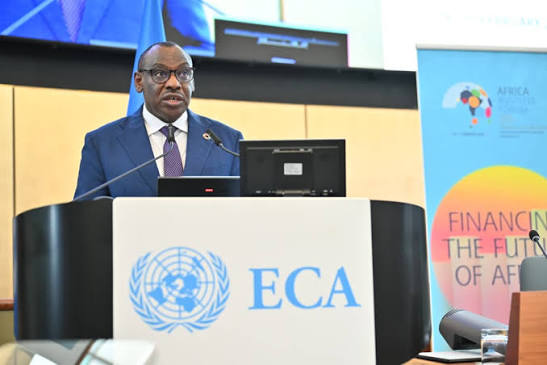
Africa’s future economic growth will depend largely on its ability to embrace innovation, technology and productivity-driven development rather than relying on commodities and traditional growth patterns, the Executive Secretary of the United Nations Economic Commission for Africa, Mr Claver Gatete, has said.
Gatete spoke after the 58th session of the Economic Commission for Africa and the Conference of African Ministers of Finance, Planning and Economic Development held in Tangier, Morocco, where discussions focused on the continent’s economic transformation and job creation.
He explained that while Africa had recorded steady growth over the past two decades, the growth had not significantly transformed economies because it was largely driven by labour expansion, capital investment and commodity exports instead of innovation and productivity improvements.
According to him, one of the major challenges facing the continent is the slow transition of workers from subsistence agriculture to higher-productivity sectors, a situation he said continues to limit job opportunities for millions of young Africans entering the labour market.
He said discussions at the Africa Business Forum in Addis Ababa emphasised the urgent need for African countries to prioritise innovation, digital technology, data and emerging technologies to remain competitive in the global economy.
Gatete stressed that innovation-led growth had become essential for economic resilience, inclusive development and sustainability, especially at a time of climate change pressures, tightening global financing conditions and rapid technological changes worldwide.
He also raised concerns about the growing skills gap across Africa, noting that low literacy levels, weak technical and vocational training enrolment and limited tertiary education were major barriers to participation in the global digital economy.
He called for urgent reforms in education systems across the continent, including the introduction of national skills programmes focusing on Science, Technology, Engineering and Mathematics (STEM), digital literacy and problem-solving skills.
He said school curricula should place greater emphasis on coding, data literacy and creativity, while governments should invest in teacher training and strengthen partnerships between educational institutions and industries.
Gatete noted that some African countries were already making progress in aligning education, technology and industrial policies to support job creation, citing Kenya’s digital economy growth, Rwanda’s investments in broadband and digital services, and industrial expansion in Egypt, Morocco and South Africa in automotive and renewable energy sectors.
He, however, emphasised that skills development alone would not create jobs unless supported by productive companies and strong innovation ecosystems, adding that businesses require enabling policies and infrastructure to innovate and expand.
The ECA boss also said future agricultural employment would increasingly focus on climate-smart agriculture, agricultural data services and digital advisory platforms, which would require investment in irrigation, rural broadband and agricultural technology innovation.
He further called for the development of industrial zones and special economic zones to attract technology-driven manufacturing, promote technology transfer and support local industries.
Gatete stressed that Africa must begin to treat data as a strategic economic asset, warning that exporting raw data while importing digital services could create a new form of commodity dependence in the digital economy.
He also advocated new financing models such as blended finance, venture capital and innovation-focused public procurement to support technology start-ups and small businesses.
While noting that emerging technologies could create new opportunities, Gatete warned that they could also increase inequality and job displacement if governments failed to implement social protection programmes, skills retraining and inclusive policies.
He said Africa still had strong advantages, including a youthful population, abundant mineral resources and renewable energy potential, which could support green industrialisation and future jobs.
Gatete added that frameworks such as the African Continental Free Trade Area would provide opportunities for African countries to expand markets, strengthen regional integration and support economic transformation across the continent.
He warned that Africa must act quickly to take advantage of these opportunities or risk remaining a consumer of foreign technology and a supplier of low-value labour in the global economy.
—————————————————————————————————————————————
Your help to our media platform will support the delivery of the independent journalism and broadcast the world needs. Support us by making any contribution. Your donation and support allows us to be completely focus, deeply investigative and independent. It also affords us the opportunity to produce more programmes online which is a platform universally utilised.
Thank you.
Please click link to make – DONATION