


ABUJA — The Nigerian Geological Survey Agency (NGSA) has assured residents of the Federal Capital Territory that the earth tremor recorded in parts of Abuja on August 4 has completely subsided, with no evidence of further seismic activity or threat to lives and property.
The agency, however, called for stronger national capacity to monitor seismic activities and manage geological hazards across the country.
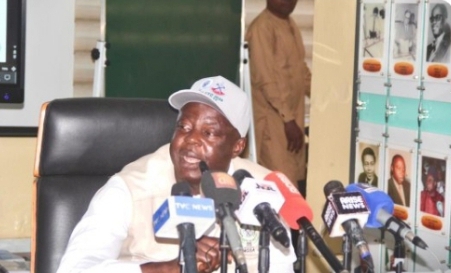
Director-General of the NGSA, Prof. Olusegun Ige, gave the assurance after more than five days of continuous monitoring following the tremor.
According to a statement by the Special Assistant on Media to the Minister of Solid Minerals Development, Lara Owo-eye Wise, the agency’s monitoring station in Utako detected the tremor at 11:23:27 a.m. on August 4.
Ige said the seismic event lasted approximately five seconds and originated from a depth of less than one kilometer.
He described it as a “low-energy, transient micro-event”, stressing that its characteristics did not suggest the likelihood of a destructive earthquake.
“Our message to residents of Abuja is clear: there is no cause for alarm. The tremor was a very low-energy, isolated event, and our monitoring has confirmed that the seismic activity has completely subsided,” he said.
No Structural Damage Recorded
The NGSA combined instrumental monitoring with physical assessments of locations where the tremor was reportedly felt.
The locations inspected included the Defense Intelligence Agency facility at Mambila Barracks, Asokoro, the NNPC Towers and selected buildings within the Central Business District.
Ige said the assessments recorded no structural damage, injuries or serious discomfort attributable to the tremor.
He explained that preliminary geological analysis suggested the incident may have resulted from the release of accumulated stress within the earth’s crust through existing geological structures.
Although Nigeria is not located along an active major tectonic plate boundary, he said geological stresses could occasionally be released through existing fault systems, resulting in localized seismic events.
“The fact that a tremor was felt does not mean that a destructive earthquake is imminent. What matters is the nature and energy of the event,” Ige said.
He added that the energy released during the Abuja incident was extremely low and insufficient to cause structural failure or trigger secondary hazards.
NGSA Seeks Stronger Monitoring Network
Despite the reassuring findings, the agency said the incident had highlighted the need for greater investment in seismic surveillance infrastructure.
Ige called for an expansion of Nigeria’s seismic monitoring network, improved logistics and the deployment of modern monitoring equipment, particularly around major mining and quarrying areas.
He also urged authorities to incorporate geological and seismic data into the planning and construction of major infrastructure, including dams, bridges, railways, airports, mines and quarries.
The Minister of Solid Minerals Development, Dr Dele Alake, had earlier directed the NGSA to provide hourly updates on the seismic situation following the Abuja tremor and escalate any significant development to relevant government agencies.
The agency subsequently maintained surveillance for more than five days, with waveform records showing only baseline seismic noise and no indication of continuing tremor activity.
Agency Demonstrates Monitoring Equipment
As part of efforts to improve public understanding of seismic monitoring, the NGSA also demonstrated its surveillance operations to journalists, showcasing equipment used to detect, record and analyze seismic signals.
Ige said the demonstration was intended to show that the agency’s assessment was based on scientific evidence.
“We want Nigerians to see that our assurance is based on evidence. The instruments recorded the event, our experts analyzed the data, our field team inspected the affected locations, and we have continued to monitor the situation,” he said.
The agency also called for sustained public education on tremor and earthquake safety protocols, as well as continuous training for personnel in modern seismic monitoring and data analysis.
The NGSA assured residents that it would continue monitoring seismic activity in Abuja and other parts of the country and provide timely updates when necessary.
“For now, residents of Abuja should remain calm and go about their normal activities,” Ige said.
The agency urged residents to rely on verified information from competent authorities and report unusual ground vibrations or other seismic concerns through its emergency channels.
—————————————————————————————————————————————
Your help to our media platform will support the delivery of the independent journalism and broadcast the world needs. Support us by making any contribution. Your donation and support allows us to be completely focus, deeply investigative and independent. It also affords us the opportunity to produce more programmes online which is a platform universally utilised.
Thank you.
Please click link to make – DONATION