


The National Chairman of the All Progressives Congress (APC), Nentawe Yilwatda, the Sultan of Sokoto, Muhammad Sa’ad Abubakar, and Christian scholar, Rev. Dr Demas Sam Sarki, have warned against using religion to divide Nigerians ahead of the 2027 general elections.
Their warnings came as stakeholders of the African Democratic Congress (ADC) condemned recent comments attributed to Islamic cleric, Sheikh Sani Yahaya Jingir, which they said could inflame religious tensions.
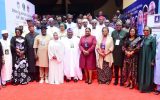
Yilwatda and the Sultan spoke at an international conference on “Diversity and Social Peace: A Partnership for a Promising Future”, organised by the Muslim World League in Abuja, while Sarki addressed the controversy in an open letter titled “Beyond Religious Politics: A Sober Call for Moral Leadership, Mutual Respect, Justice and National Unity.”
The conference brought together religious leaders, government officials, traditional rulers, diplomats, academics and civil society groups to discuss religious diversity, interfaith relations and sustainable peace.
Yilwatda described Nigeria’s diversity as a national asset, urging citizens to transform differences in faith, ethnicity, language and culture into sources of strength rather than division.
He said Nigerians must look beyond religious and ethnic identities and recognise their shared humanity and common destiny.
“Religious difference does not have to produce human distance. Indeed, our differences should not prevent us from recognising what we share,” Yilwatda said.
The APC chairman warned that Nigeria’s diversity could become dangerous when citizens were encouraged to dehumanise people of other faiths or ethnic backgrounds.
He identified terrorism, banditry, farmer-herder conflicts, communal violence, ethnic suspicion, religious intolerance, hate speech and the political manipulation of identity as major threats to national cohesion.
Yilwatda said lasting peace could not be achieved through security measures alone, stressing the need for justice, education, responsible leadership, economic opportunities, dialogue and moral courage.
He called on religious leaders to use their influence to promote tolerance and reconciliation and urged political leaders to resist exploiting religious and ethnic sentiments for electoral gains.
He also proposed a “Nigerian Covenant for Coexistence”, involving religious leaders, politicians, traditional institutions, civil society organisations and citizens in a collective commitment to reject violence, hate speech, religious intolerance and the politicisation of identity.
Responding to Yilwatda’s remarks, Sultan Muhammad Sa’ad Abubakar commended the APC chairman for what he described as a comprehensive intervention on Nigeria’s religious and social challenges.
The Sultan recalled the establishment of the Nigerian Inter-Religious Council as a platform for Christian-Muslim dialogue and peaceful coexistence.
He urged Nigerians to stop insulting and demonising one another, stressing that all human beings were created equal.
“Nobody is better than another person,” he said.
The Sultan also identified a lack of honesty and trust among Nigerians as one of the major challenges confronting the country.
At the conference, Deputy Senate President, Senator Barau I. Jibrin, who represented President Bola Tinubu, reaffirmed the Federal Government’s commitment to strengthening security and preserving national unity despite Nigeria’s religious and ethnic diversity.
Meanwhile, stakeholders of the ADC, under the Grassroots Mobilisation Network, condemned comments attributed to Sheikh Sani Yahaya Jingir at a mass wedding ceremony in Kano State.
Jingir was reported to have described Muslims as superior to Christians, referred to Christians as infidels and declared that Nigeria was a Muslim country.
In a statement issued in Abuja by the group’s Secretary-General, Usman Bala Idris, the ADC stakeholders described the remarks as divisive and urged Nigerians to reject statements capable of threatening national peace.
The group said religious leaders must avoid inflammatory comments, adding that Jingir’s views did not represent Islam or Nigerian Muslims.
The stakeholders also criticised the reported push for a Muslim-Muslim presidential ticket, describing it as contrary to Nigeria’s pluralistic character.
They urged voters to prioritise competence, character and good governance over religious identity.
“What is important to the North is good governance whether led by a Muslim or a Christian, provided it delivers justice, security, food and jobs for our people,” the group said.
The ADC stakeholders further called on the Nigerian Supreme Council for Islamic Affairs and the Christian Association of Nigeria to caution clerics against hate speech and divisive sermons.
Adding his voice to the controversy, Sarki called on Jingir and other religious leaders to embrace moral leadership, mutual respect, justice and national unity.
In his open letter, the Christian scholar said statements allegedly labelling Nigerian Christians as “infidels”, advocating a Muslim-Muslim ticket for 2027 and suggesting that opponents of such a ticket should leave the country represented a dangerous departure from responsible religious leadership.
Sarki warned that inflammatory statements by religious leaders could undermine Nigeria’s fragile interfaith relations.
He also argued that religious terminology should not be weaponised for political purposes, citing Islamic teachings on justice, freedom of conscience, respectful dialogue and human diversity.
According to him, Nigeria’s socio-economic challenges affect Christians and Muslims alike, making religious supremacy an inadequate response to poverty, insecurity, unemployment, inflation and poor infrastructure.
“Our primary responsibility as religious leaders, whether Sheikhs or Pastors, is not to act as political partisans or champion specific electoral tickets,” Sarki said.
He urged religious leaders to demand good governance, hold political authorities accountable and use their platforms to promote justice, reconciliation and peaceful coexistence.
The interventions have renewed debate over the role of religion in Nigeria’s politics ahead of the 2027 elections, with political and religious figures increasingly calling for restraint, interfaith dialogue and an end to the exploitation of religious and ethnic identities for political gain.
—————————————————————————————————————————————
Your help to our media platform will support the delivery of the independent journalism and broadcast the world needs. Support us by making any contribution. Your donation and support allows us to be completely focus, deeply investigative and independent. It also affords us the opportunity to produce more programmes online which is a platform universally utilised.
Thank you.
Please click link to make – DONATION