

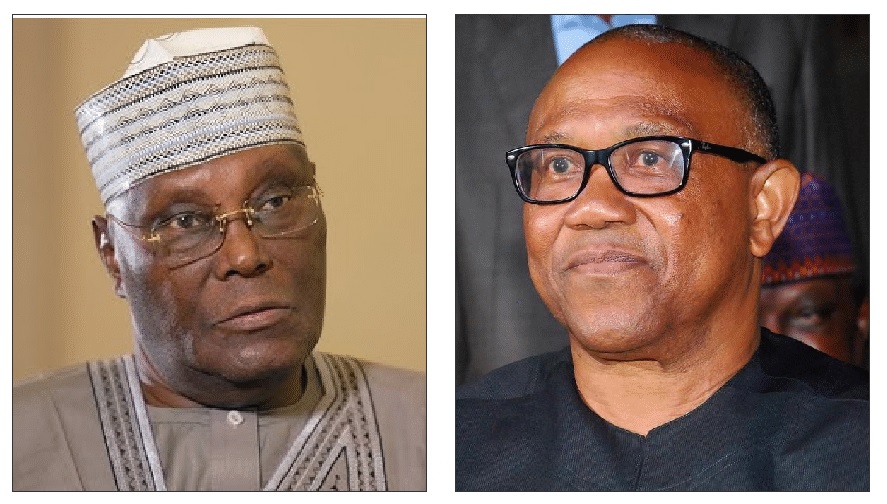
Opposition presidential candidates yesterday disagreed sharply over the removal of petrol subsidy, with Peter Obi defending the policy, Atiku Abubakar proposing a return to targeted subsidies and Omoyele Sowore rejecting subsidy removal altogether.
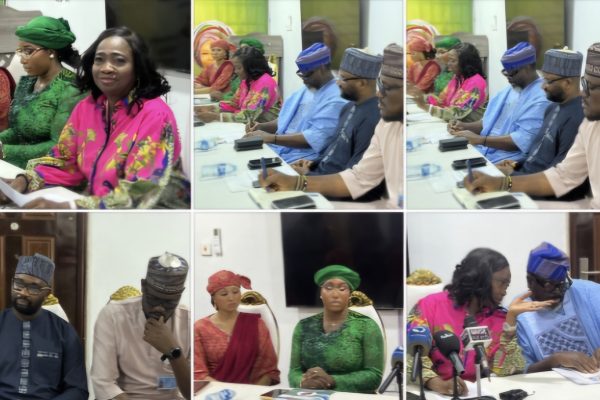
The presidential candidates of the Nigeria Democratic Congress (NDC), African Democratic Congress (ADC) and African Action Congress (AAC) presented contrasting positions during a plenary session at the ongoing Nigerian Bar Association (NBA) Annual General Conference in Port Harcourt.
Obi maintained his long-standing position that fuel subsidy is unsustainable and said he would retain the policy of President Bola Ahmed Tinubu if elected president on January 16.
The NDC candidate, however, faulted the Tinubu administration over what he described as the mismanagement and alleged diversion of funds saved from subsidy removal.
“For the subsidy, what we have today is that the removal and the additional resources being recovered is also being mismanaged and stolen,” Obi said.
He said he had always supported the removal of subsidy but insisted that the policy must be implemented in an organised manner, with the savings invested in critical sectors of the economy.
“I will say it before, go to my manifesto and say I will remove subsidy. We will do it in an organised manner. And whatever we recover will be invested appropriately,” he said.
Obi proposed investing the savings in healthcare, particularly the expansion of primary healthcare centres across the country.
He said government could establish primary healthcare centres in every ward, estimating the cost of each facility at about N100 million.
The former Anambra State governor also proposed investing in kidney treatment infrastructure, arguing that Nigeria had an acute shortage of dialysis centres and machines.
He further suggested that some of the savings could be channelled into the country’s sovereign wealth fund instead of being spent without accountability.
“If you have saved the money and decide to do like any other country, you will have $10 billion added to our sovereign wealth fund,” Obi said.
His position contrasted with that of Atiku, who supported petrol subsidy removal during his presidential campaigns in 2019 and 2023 but recently announced that he would restore subsidy if elected.
Atiku, who was represented at the NBA conference by his running mate, Rotimi Amaechi, argued that a properly structured subsidy regime could help stimulate local production and reduce the cost of essential goods and services.
Amaechi said the proposal was not simply a return to the previous subsidy system but an attempt to use government support to boost domestic production.
“What Vice President Atiku is proposing is not to deviate from a proven subsidy or not,” Amaechi said.
He explained that an Atiku administration would prioritise subsidies for local production, particularly in sectors capable of reducing the cost of food and energy while creating jobs.
“The how is we will encourage local production. We will only subsidise local production,” he said.
Amaechi argued that Nigerians were already suffering from rising electricity, transportation and other living costs as a result of the current economic situation.
Sowore, however, took a more radical position, rejecting the argument that subsidy removal had benefited Nigerians.
The AAC candidate argued that poor Nigerians were the primary beneficiaries of petrol subsidy and maintained that government should provide support for the vulnerable rather than remove subsidies.
“That is what removal of subsidies is all about. The poor people of this country only benefit from subsidies from petrol, gasoline,” Sowore said.
He questioned the impact of the removal of other subsidies, including those on kerosene and aviation fuel, asking what the government had achieved with the resources saved.
Sowore warned Nigerians against what he described as misleading explanations from politicians on the subsidy debate.
“Please, please, don’t let these politicians lie to you,” he said.
He maintained that there was nothing inherently wrong with subsidising essential commodities if the benefits were targeted at ordinary Nigerians.
“I will not remove subsidies because the poor in Nigeria need to be subsidised instead of the rich,” Sowore said.
—————————————————————————————————————————————
Your help to our media platform will support the delivery of the independent journalism and broadcast the world needs. Support us by making any contribution. Your donation and support allows us to be completely focus, deeply investigative and independent. It also affords us the opportunity to produce more programmes online which is a platform universally utilised.
Thank you.
Please click link to make – DONATION