

The battle for Nigeria’s presidency in 2027 has entered a decisive phase, with political parties now free to openly court voters, sell their programmes and test the strength of their political structures ahead of the general election.
The Independent National Electoral Commission (INEC) officially lifted the ban on campaign activities on August 19, opening a six-month window for presidential and other candidates to make their cases to Nigerians.
For President Bola Ahmed Tinubu and the ruling All Progressives Congress (APC), the election is essentially a referendum on the administration’s record and its controversial economic reforms.
For the opposition, it is an opportunity to convert widespread frustration over the cost of living, insecurity, unemployment and declining purchasing power into a demand for political change.
The emerging contest is therefore shaping up as a battle between continuity and change, reform and reversal, experience and alternatives.
But while the APC has incumbency, a nationwide political structure and the advantage of being in government, opposition parties are banking on public dissatisfaction to overcome the ruling party’s organisational strength.
The question confronting both sides is no longer simply who can make the loudest promises. It is who can convince Nigerians that they possess the competence, structure and credible plan to address the country’s problems.
Battle lines drawn
President Tinubu is seeking a second term and the APC is expected to make continuity, consolidation and the delivery of ongoing reforms the centrepiece of its campaign.
The argument is straightforward: the administration inherited deep structural problems, undertook painful reforms and now needs more time to deliver the benefits of those reforms.
But that argument faces a difficult test.
For millions of Nigerians, the immediate reality remains the cost of food, transportation, electricity and other necessities. The removal of fuel subsidy and the reforms in the foreign exchange market may have been presented as necessary structural interventions, but their impact on household finances has made them politically sensitive.
The opposition has seized on that discomfort.
Across their various platforms, opposition politicians have repeatedly highlighted inflation, fuel prices, unemployment, insecurity and what they describe as the failure of government to translate economic reforms into improved living standards.
For the APC, however, the challenge is to persuade voters that the pain of reform is temporary and that the promised benefits are beginning to emerge.
The party has already indicated that its campaign will focus heavily on what it describes as measurable achievements and the next phase of reform implementation.
APC National Publicity Secretary Felix Morka said the party’s decision not to immediately commence rallies was deliberate, explaining that it was consulting stakeholders before unveiling a comprehensive campaign programme.
“The party is coming up with a comprehensive and well-thought-out nationwide campaign schedule after necessary consultation with critical stakeholders and affected candidates. There is no law that says we must start on Wednesday,” he said.
That delay may be strategic, but it also means the opposition has an opportunity to seize the early political narrative.
APC bets on delivery
The APC’s emerging campaign strategy is centred on moving from macroeconomic stabilisation to what it describes as tangible household-level benefits.
Speaking through the Special Adviser on Media and Communication Strategy to the APC National Chairman, Prof Nentawe Goshwe Yilwatda, Abimbola Tooki said the party would campaign on its record while acknowledging the economic difficulties confronting Nigerians.
The party’s message is that economic growth must ultimately translate into jobs, lower business costs and greater purchasing power.
On inflation and the cost of living, the APC plans to emphasise increased agricultural production, improved supply chains, lower logistics costs and targeted interventions for vulnerable households.
Its poverty reduction strategy is also expected to focus less on permanent dependency and more on skills acquisition, affordable financing, agriculture and enterprise development.
On security, the party is proposing greater use of intelligence, technology, inter-agency cooperation and stronger border management in the fight against terrorism, banditry, kidnapping and crude oil theft.
But the political challenge is clear: Nigerians will judge the APC not by the sophistication of its policy language but by whether they can actually feel an improvement in their daily lives.
The ruling party therefore faces a difficult task of converting economic statistics and policy achievements into a political message that resonates with households.
Opposition sees opening
The opposition, meanwhile, sees the 2027 election as its best opportunity to turn public anger into electoral momentum.
But it faces a problem of its own: fragmentation.
The proposed opposition coalition remains one of the biggest variables in the election. The G-100 group, led by former APC National Vice Chairman (North-West), Dr Salihu Lukman, has scheduled a Unity Summit for August 31 to explore how opposition forces can work together.
Lukman has warned that continued fragmentation could repeat the experience of 2023 and hand another advantage to the ruling party.
“As opposition parties, we seem to be fragmented,” he said, arguing that unless the various parties find common ground, they risk returning to the same political situation after the election.
The proposed alliance brings together figures and interests associated with parties including the PDP, ADC, NDC, APM, PRP and SDP.
Whether the initiative will produce a genuine electoral alliance or become another failed attempt at opposition unity could have a significant bearing on the 2027 contest.
Atiku targets Tinubu’s economic record
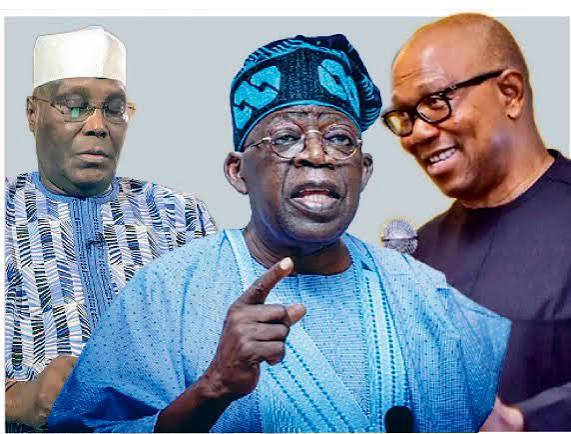
Among the opposition figures, former Vice President Atiku Abubakar remains one of the most experienced contenders.
Running under the African Democratic Congress (ADC), Atiku has positioned himself as an alternative capable of resetting the economy and changing the direction of the Tinubu administration.
Much of his recent criticism has focused on fuel subsidy removal and the government’s economic reforms.
In a recent interview, Atiku said he would restore fuel subsidy if elected, arguing that the savings from subsidy removal had not translated into meaningful relief for Nigerians.
“I did not oppose the removal of the oil subsidy, but where is the money? Where did it go?” he asked.
His position, however, raises a fundamental policy question: how would a new administration restore subsidy without recreating the fiscal burden and governance problems that successive governments have struggled to control?
That question could become one of the defining economic debates of the campaign.
Oil expert Martin Onovo criticised both the former vice president and the Tinubu administration, arguing that neither side had adequately addressed the structural problems in Nigeria’s petroleum sector.
Onovo described Atiku as desperate and untrustworthy while also faulting Tinubu’s approach to petrol pricing.
He argued that Nigeria needed to confront corruption and inefficiency in the petroleum sector rather than simply transferring international market costs to Nigerian consumers.
For voters, the debate will ultimately come down to a practical question: which candidate has a credible plan to provide affordable energy while protecting government revenue and eliminating the corruption associated with petroleum subsidies?
Obi and the search for an alternative
Peter Obi also remains a major player in the opposition equation.
The former Labour Party presidential candidate, now running under the Nigeria Democratic Congress (NDC), retains significant political capital from his 2023 campaign, particularly among young Nigerians.
His political message has consistently emphasised production, fiscal discipline, reduced cost of governance and greater investment in human capital.
The NDC says its economic strategy will focus on moving Nigeria from consumption to production.
According to the party’s National Publicity Secretary, Osa Director, the party intends to prioritise industrial revival, including the reopening of moribund factories and creating conditions for local businesses to expand.
The party also says it will tackle foreign exchange instability, arguing that increased domestic production would expand supply, reduce inflation and create employment.
On security, the NDC has pledged better welfare, equipment and training for security personnel, while promising stronger accountability for the management of security funds.
The challenge for Obi, however, is moving from broad political messaging to detailed implementation.
It is one thing to identify Nigeria’s problems; it is another to explain precisely how an incoming government would stabilise the naira, reduce energy costs, revive industries and defeat insecurity while operating within the country’s fiscal and constitutional constraints.
That distinction could become increasingly important as the campaign progresses.
Smaller parties demand space
Other opposition parties are also attempting to carve out space in the emerging contest.
Action Democratic Party (ADP) National Chairman Yabaji Sani said his party would focus its campaign on insecurity and the economy, arguing that both problems could be tackled through stronger political will and accountability.
On security, Sani said commanders and security chiefs should be held responsible for failures within their jurisdictions and that government funding should be tied to measurable results.
He also identified Nigeria’s oil and gas sector as the foundation for economic recovery, arguing that better management of oil revenues could provide resources for investment in agriculture and other productive sectors.
His position reflects a broader opposition argument: that Nigeria’s problems are not necessarily caused by a lack of resources but by poor management, corruption and weak accountability.
The challenge for smaller parties, however, is turning compelling policy arguments into nationwide political structures capable of competing with the APC and larger opposition formations.
Six months of campaigning, billions at stake
Beyond policy, the 2027 election will test the financial endurance of political parties.
Six months of continuous campaigning across 36 states and 774 local government areas will require enormous resources.
Candidates must finance travel, media campaigns, rallies, offices, grassroots mobilisation, digital operations and election-day structures.
That gives parties with strong nationwide structures and deeper financial networks a significant advantage.
The APC’s incumbency and established political machinery give it an organisational edge, while opposition parties must rely heavily on private donations, party structures and the financial strength of individual candidates and supporters.
The longer campaign period therefore presents a double challenge: maintaining political visibility while remaining within the legal limits governing campaign expenditure.
₦10bn spending ceiling under scrutiny
Under Section 92 of the Electoral Act 2026, the spending limit for presidential candidates has been raised to ₦10 billion, while individual contributions to a candidate are capped at ₦500 million.
The law also provides sanctions for candidates who knowingly exceed the prescribed spending limits.
The question, however, is whether the law can be effectively enforced.
With thousands of political actors, support groups, media operations and grassroots structures involved in a presidential campaign, monitoring every expenditure will be a major challenge.
The use of third-party groups, informal donations and cash-based transactions could make it difficult for regulators to establish the true cost of campaigns.
INEC will therefore face significant pressure to demonstrate that the spending limits are not merely figures on paper.
Economy, security and voters
Ultimately, the election will be decided by voters, not campaign headquarters.
Three issues are likely to dominate the electorate’s thinking: the economy, security and trust in the political process.
If food and energy prices remain high, economic hardship could become the strongest argument for change.
If insecurity worsens or continues to affect communities and major transport routes, voters may punish the government for failing to provide safety.
And if young Nigerians remain politically engaged, parties will have to rethink the traditional campaign model.
The new electorate is demanding more than rallies and political slogans. Voters increasingly want direct engagement, credible data, clear policy proposals and evidence that candidates understand the realities of everyday life.
Voter mobilisation will also be critical. Parties that combine campaign messaging with aggressive efforts to ensure supporters are registered and able to vote could gain a significant advantage.
The real battle
The first days of the 2027 campaign have already revealed the central political fault line.
The APC is asking Nigerians to stay the course and allow its reforms more time to produce results.
The opposition is asking Nigerians to reject continuity and give another political force the opportunity to change direction.
But neither side can afford to rely entirely on slogans.
The APC must answer the question of whether Nigerians are better off after three years of its administration and explain when the promised benefits of its reforms will become visible in households.
The opposition, on the other hand, must prove that it has more than criticism to offer. It must provide credible answers on how it would manage the economy, secure the country, create jobs, reduce poverty and maintain fiscal stability.
For the opposition coalition, the biggest question is whether its leaders can suppress individual ambitions long enough to create a genuinely competitive alternative.
For the APC, the challenge is whether incumbency can withstand the accumulated frustration of voters who may judge the government primarily by what is on their dining tables, in their fuel tanks and in their bank accounts.
The 2027 election has therefore moved beyond political preparation. The battle for the Nigerian voter has begun.
And as the six-month campaign unfolds, the decisive question may not be who can make the most noise, but who can convince Nigerians that their plan offers the most credible route from today’s hardship to tomorrow’s hope.
—————————————————————————————————————————————
Your help to our media platform will support the delivery of the independent journalism and broadcast the world needs. Support us by making any contribution. Your donation and support allows us to be completely focus, deeply investigative and independent. It also affords us the opportunity to produce more programmes online which is a platform universally utilised.
Thank you.
Please click link to make – DONATION